

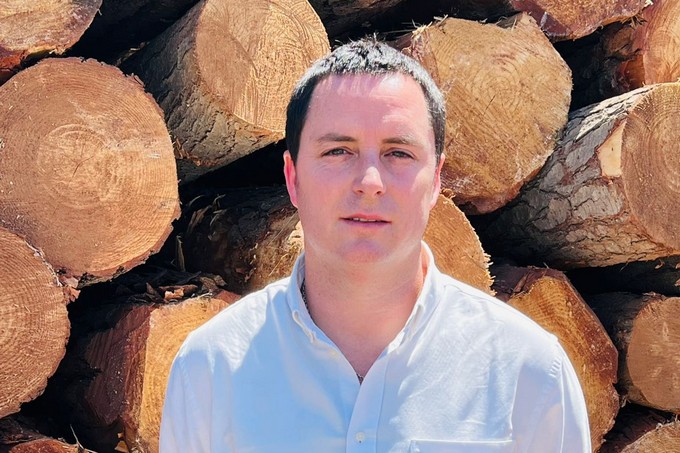
By Ignacio Vera Izquierdo, General Manager of Forestal Santa Blanca
The recent approval of the Fire Law bill in the Senate on January 27, 2026, marks a necessary milestone following the tragedy in the Biobío Region. However, if the discussion in the Chamber of Deputies does not delve into the cracks in the current text, we risk legislating on paper while reality continues to burn us.
We are not just facing a vegetation crisis; we are facing a human fracture that current regulations seem to ignore.
Any regulation that aims to be effective must look into the eyes of the victims. After the mega-fire of 2024, desperation consumed not only homes but also lives: 18 suicides were reported directly linked to the total loss of livelihood and hope. A law that only sanctions and does not incorporate psychosocial support and mental health as pillars of recovery is an incomplete law.
The current legal framework presents contradictions that concern both technicians and rural inhabitants:
• Land Insecurity: The creation of "Buffer Zones" by the Service, without the rigorous procedures required for Interface Zones (ZIURF), generates alarming legal uncertainty regarding rural land use.
• The Error of the Punitive Approach: The landowner is severely punished, but it is ignored that many disasters, as seen in Penco-Lirquén, originate from external negligence: failures in power lines or defective household appliances.
• Operational Weakness: The current approach is exhausted in the inspection by SERNAFOR, neglecting direct firefighting, criminal prosecution of intentionality, and, above all, effective reconstruction.
The opportunity in the Chamber of Deputies and the imminent mixed commission must serve to correct the course. We need to move from a State that only acts as an inspector to one that is a strategic partner. The strategy must be based on:
1. Legal Certainty: That limitations on property rights respect constitutional procedures to avoid unjust patrimonial damage in agriculture.
2. Integrated Planning: Uniting risk management with urban territorial planning as a basic guarantee of safety.
3. Comprehensive Recovery: Mechanisms that ensure that, after the fire, there is a clear path for economic and emotional reconstruction.
The complexity of current fires exceeds the simple legal route. We need a law with a human face and a sense of reality, where responsibility is shared and the protection of life is the only guiding principle.



Comments (0)
No comments yet. Be the first to comment!
Leave a comment