

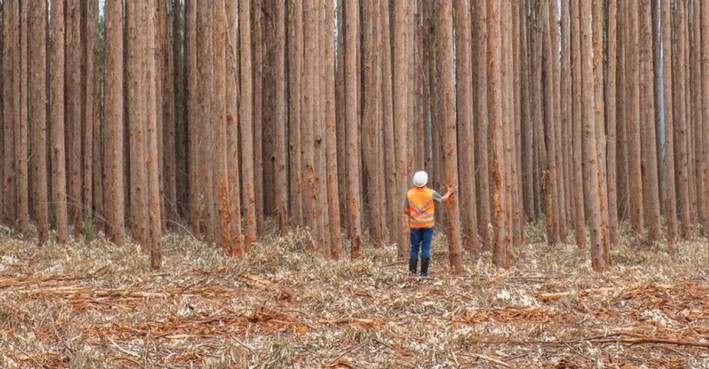
The financial efforts of the forestry company Arauco are focused on its Sucuriú project in Brazil. This is the largest investment in the history of the Angelini group—US$4.6 billion—and involves the construction of a pulp mill with an annual production capacity of 3.5 million tons in Mato Grosso do Sul.
This year alone, Arauco must allocate US$1.9 billion to the construction of this initiative, in addition to the US$1.5 billion disbursed by last December, when the project reached 43% completion, a pace faster than anticipated.
Sucuriú has its financing ready, amounting to approximately US$5 billion. Part of these resources comes from a US$2.2 billion operation that Arauco completed last August. Its structure combined participation from multilateral institutions such as IFC (World Bank Group) and IDB Invest, support from a Finnish export credit agency (Finnvera), and international commercial banks.
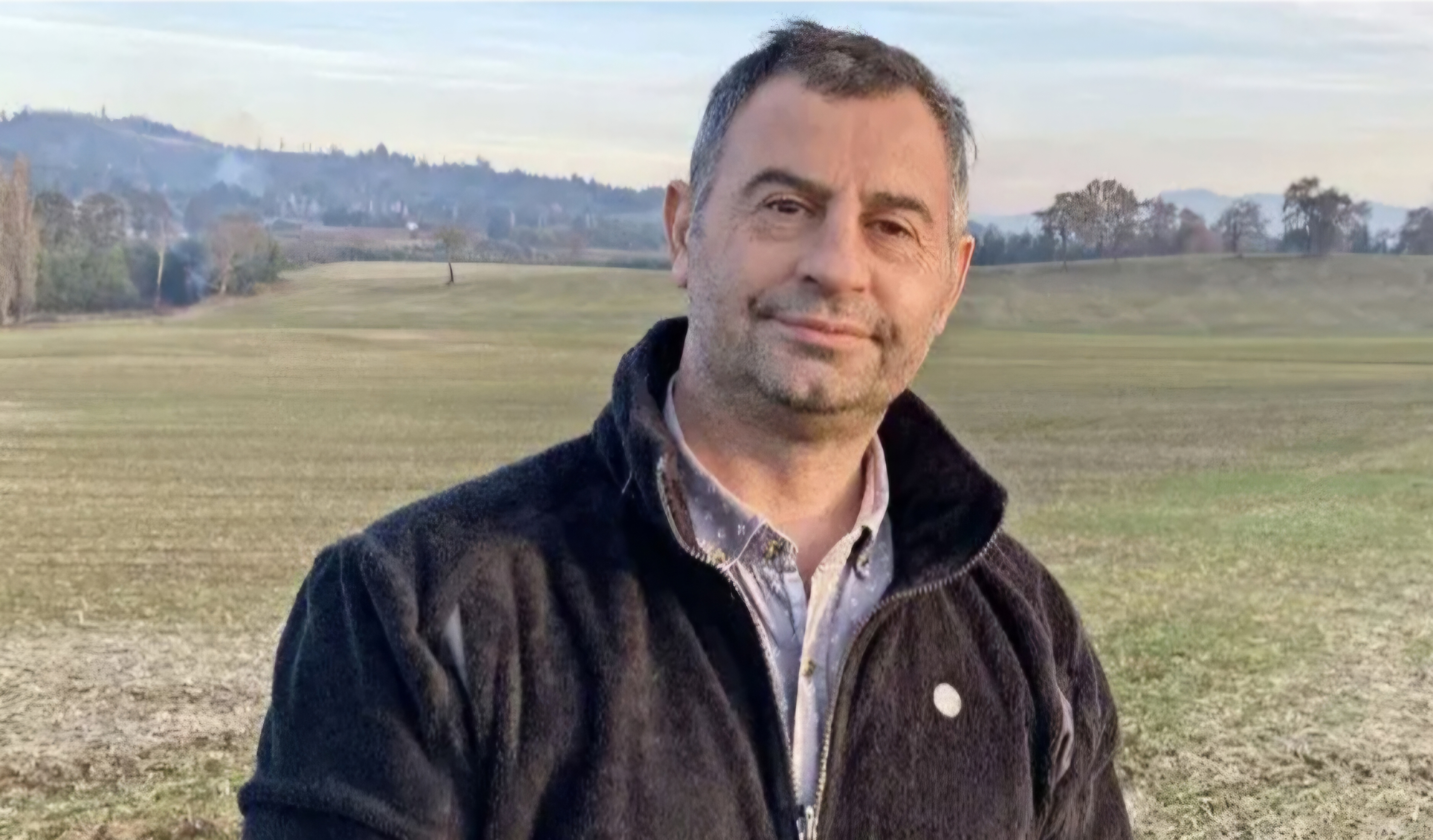
Last week, this operation received the "Development Finance Institution (DFI)-Backed Deal of the Year" award, presented by LatinFinance, a specialized financial media outlet. Gianfranco Truffello, Corporate Finance Manager of Arauco, traveled to New York to receive the award and spoke with "El Mercurio" from that city.
The executive—a civil engineer from UC with an MBA from the Massachusetts Institute of Technology, MIT—detailed that to secure this financing, they had to undergo rigorous environmental due diligence with the multilateral agencies. Among other steps, for nine months, these agencies visited the site where Sucuriú is being built to interview local communities and inspect labor conditions.
Truffello also anticipated that the company is advancing a process to sell forests for approximately US$600 million to US$700 million.
Financing
Truffello recalls that for Sucuriú's financing, a capital increase of US$1.2 billion from Arauco's shareholders, Empresas Copec, was approved. This is supplemented by an international bond of US$500 million and another local hybrid bond of US$850 million. Additionally, there is the aforementioned US$2.2 billion operation.
At the end of 2023, the company also reported an agreement to sell forest assets in Brazil for approximately US$1.16 billion to the company Klabin. However, the executive notes that this operation was primarily to reduce debt.
—Are there no missing financing actions for Sucuriú?
"No. There is a bond maturing at the end of 2027, worth US$500 million. Typically, a year before, we issue another bond and refinance it... The structural financing for the Sucuriú project is already in place."
—When will Sucuriú be operational?
"The plan is for the plant to start up in the last quarter of 2027, and it may take about nine months to reach 100% production. The project is progressing very well; its scale is impressive. The plant site covers 400 hectares, and there is a chimney that is 165 meters tall. About 9,000 people are currently working, and we will reach nearly 15,000 at the peak of construction, which will be this year."
—How much revenue would the Brazil plant generate?
"It depends on the price of pulp. Sales could reach US$2.1 billion, adding to the US$6.5 billion that Arauco sells. Since this plant has very low costs, it could have an EBITDA of US$900 million to US$1 billion per year... It will generate significant cash flow, which will help Arauco reduce its leverage quickly."
—Do you still have assets for sale?
"Yes. One always considers which assets could be used to reduce debt in case price projections do not materialize or problems arise. For forestry companies, forests are the most liquid assets. Arauco owns one million hectares of planted forests and 1.7 million hectares of land. The book value of the forests, the biological assets, alone is about US$3 billion. Then there is the land, which in our case is valued historically, could be another US$1 billion or more, but we know it is worth much more."
"In this case, we are considering selling standing forests with an associated supply contract because we do not have excess fiber to supply our plants. Our idea is perhaps to carry out an operation where we sell a portion of the forest, not very significant, to an investment fund, with a long-term contract to have an option to repurchase that wood when we need it."
—Is this for the short term, or is it simply an alternative?
"We are studying it. The process takes time; it needs to be structured, and we need to talk with investment funds. We are already doing that. Our idea is to have it ready in case we need to execute it this year."
—Would it be an operation on the scale of the US$1.1 billion done some time ago, or smaller?
"No, smaller. That one was large because we sold with land, and they were good forests in Brazil, about 85,000 hectares... I think we will be around US$600 million to US$700 million; that's the plan, but it needs to be seen."
—Would it be finalized this year, then?
"I think so, perhaps in stages, not all at once."
—Would this allow the company to pursue other projects?
"We would do it to reduce debt. Our main goal is to keep debt low to avoid the risk of losing our investment grade."
—And is there market interest in buying forests?
"Yes, there is a lot of interest from investors to take a forestry risk position in Chile, but also in Uruguay and Brazil."
—Apart from the efforts in Brazil, do you have investments in other countries?
"We have two more projects underway. One is an OSB (panel) plant in Chile, in the Ñuble Region, with an investment of about US$100 million, which will start operations in August of this year. The other is the construction of an MDF plant in Mexico, worth about US$300 million, which is finishing construction and will also start in August."
"When Sucuriú starts up, of course, we will continue with other projects in other countries, continuing to grow. But for now, the Sucuriú investment is so large that we have to prioritize our cash flow."
Source:El Mercurio


Comentarios (0)
No hay comentarios aún. ¡Sé el primero en comentar!
Deja un comentario