

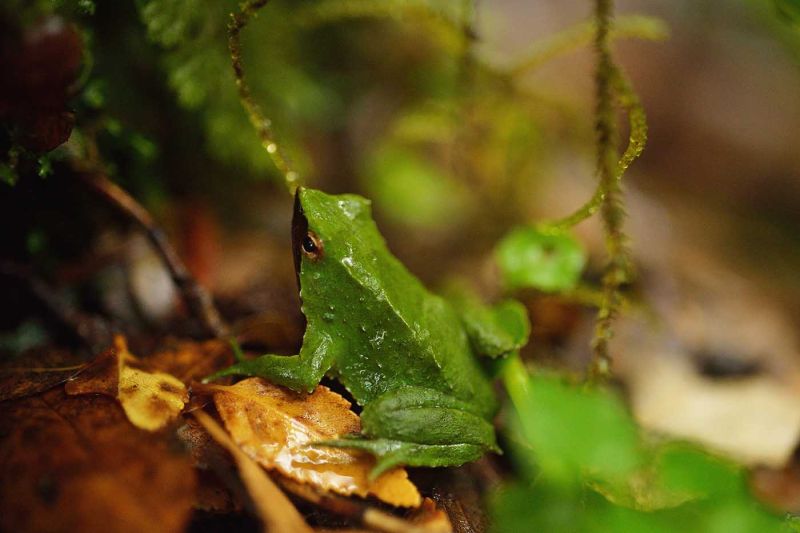
The Huilo Huilo Biological Reserve witnessed a crucial moment for biodiversity conservation: the signing of an international agreement between the Huilo Huilo Foundation, the NGO Ranita de Darwin, Andrés Bello University, and the Leipzig Zoo of Germany.
This agreement aims to strengthen the study, research, and dissemination efforts for the Darwin's frog, an endangered native amphibian that inhabits exclusively Chile and Argentina.
Rodolfo Menichetti, executive director of the Huilo Huilo Foundation, highlighted the importance of the Darwin's frog in the temperate rainforest ecosystem and the need for an active conservation strategy involving the community.
The agreement includes training for park rangers and raising awareness among local residents and visitors, emphasizing the vital role of people in conservation.
Claudio Azat, from the One Health Institute of Andrés Bello University, celebrated the formalization of 15 years of successful collaboration, while Andrés Valenzuela, president of the NGO Ranita de Darwin, highlighted the impact of scientific research on protecting natural heritage. The director of Leipzig Zoo, Jörg Junhold, emphasized the importance of international collaboration to save the species.
The signing institutions are part of the Binational Conservation Strategy for the Darwin's Frog, a network that unites public and private actors from Chile and Argentina. The Darwin's frog faces threats such as habitat loss, climate change, and chytridiomycosis, an amphibian pandemic caused by a microscopic fungus.
The Huilo Huilo Biological Reserve, recognized by UNESCO as a World Biosphere Reserve, is a private conservation area protecting 100,000 hectares of Temperate Rainforests of the Southern Andes. The NGO Ranita de Darwin is dedicated to the research and protection of amphibians and native forests, promoting conservation in collaboration with communities and institutions.






Comments (0)
No comments yet. Be the first to comment!
Leave a comment