

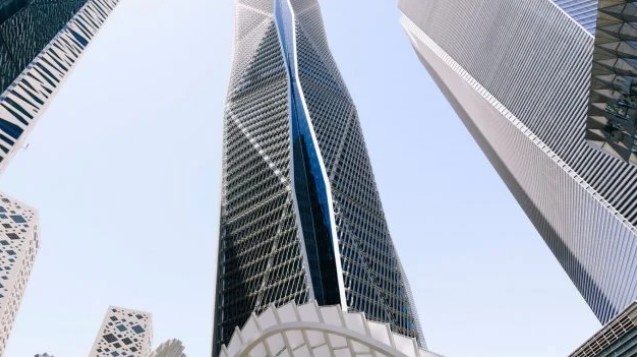
For over a century, skyscrapers have been linked to steel and concrete. However, urban architecture is undergoing a quiet transformation, and the most ambitious example to date is Atlassian Central, a hybrid skyscraper located in the center of Sydney that, with its 183-meter height, aims to become the tallest in the world built with wood. The project, designed by BVN and SHoP Architects, is based on glued laminated timber (glulam) and cross-laminated timber (CLT), both created from layers of solid wood. In total, about 10,000 cubic meters of structural timber will be used, which offers strength comparable to concrete, but with a lower ecological cost.
One of the most notable aspects of the project is the interior layout of the hybrid wooden skyscraper. The architects have designed seven four-story modules that function as small vertical "ecosystems," each housing landscaped terraces, open spaces, and access to natural ventilation. The idea is to recreate conditions similar to a natural environment inside the building: light, air, vegetation, and meeting spaces. This approach responds to biophilic design, a trend that seeks to improve well-being by connecting people with nature; various studies have shown that the presence of vegetation, natural light, and organic materials helps reduce stress and improve productivity.
The new hybrid wooden skyscraper in Sydney
The Atlassian Central skyscraper, designed by the firms BVN and SHoP Architects as part of an ambitious urban regeneration project in central Sydney, uses a hybrid system that combines glued laminated timber (glulam), cross-laminated timber (CLT), structural steel, and concrete in the building cores. This approach allows leveraging the advantages of each material: wood reduces the total weight of the construction and contributes to a significantly lower environmental impact, while steel and concrete reinforce areas requiring greater strength. Furthermore, this design philosophy extends to exterior elements, such as pergolas and wooden structures on terraces and gardens.
The Atlassian Central project is characterized by architecture designed for people's well-being. Instead of a conventional office tower, the architects have arranged several vertical modules that function as small communities within the building. Each of these spaces features terraces with vegetation, open rest areas, abundant natural lighting, and cross ventilation, following the principles of biophilic design, which seeks to improve interior quality by integrating natural elements. Wood plays a prominent role, providing warmth and comfort in both interior and exterior spaces, where decking is used for terraces, gardens, and pools.
The skyscraper also incorporates an intelligent facade that optimizes energy efficiency, including controlled natural ventilation, automated thermal regulation systems, integrated solar panels, and adaptive sun protection, which allows for a significant reduction in energy consumption, something crucial in cities with warm climates like Sydney. Structural timber is a key component in the building's sustainable construction, as it requires less energy for its production, stores carbon throughout the building's lifespan, allows for faster construction processes, and reduces the total weight of the structure.
Carbon emissions in the construction sector
50% of the carbon emissions projected for the construction sector until 2050 are not covered by any decarbonization strategy, as noted in the Building Life project's Roadmap. "50% of emissions are hidden, so if we want to meet the commitment for our buildings to generate zero emissions by 2050, a life cycle analysis vision across the entire sector is essential," argues the General Director of Green Building Council Spain (GBCe), Dolores Huerta. The challenge is enormous, as this sector is responsible for 30.1% of final energy consumption and 25.1% of emissions in Spain. This percentage rises to 40% of energy consumption and 36% of CO2 emissions across Europe.
Sustainable initiatives in Spain
In Spain, by 2028, public buildings will have to guarantee they are carbon neutral, and by 2030 the regulation will extend to all buildings, aiming for total decarbonization by 2050. For this reason, initiatives with the same approach as Sydney's hybrid wooden skyscraper are emerging, such as the Tomás Bretón residential building, the first CO2-neutral building in central Madrid.
"The Tomás Bretón ecological co-housing project, located in the Delicias neighborhood of Madrid's Arganzuela district, is a building designed to minimize environmental impact, reduce energy consumption, and improve quality of life. The building will feature active common spaces that facilitate community building and promote bonds of collaboration and care; meeting places and shared experiences that improve coexistence and integration."
Source:OK Diario





Comments (0)
No comments yet. Be the first to comment!
Leave a comment