

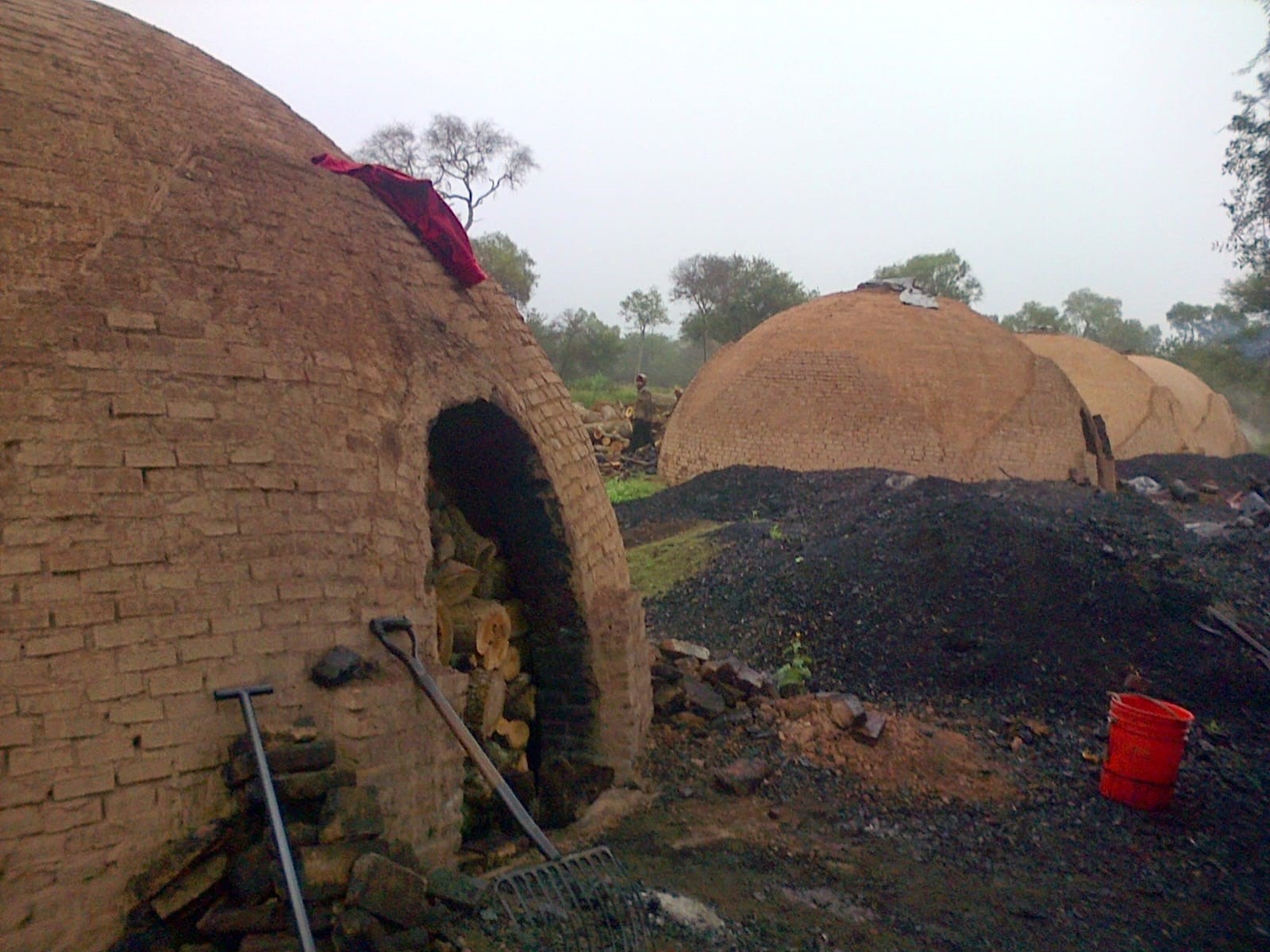
In the search for more efficient and sustainable production systems, biochar is beginning to position itself as a concrete alternative within Argentine agriculture. Using residues from wood carbonization, mainly charcoal fines, this technology makes it possible to transform waste with little commercial value into a strategic input for improving soil quality and crop yields. During 2024, the first evaluations were carried out in the province of Santiago del Estero, developed at the Ing. Francisco Cantos Experimental Field of INTA Santiago del Estero, Argentina.
The work team conducting research on the opportunities and benefits of biochar is made up of Ing. Agr. Msc. Patricio Savino, Ing. Agr. Msc. Yesica Gramajo Domínguez, Chemist Emilio Abel Azar, and Forest Engineer Gonzalo de Bedia, who carry out their activities within the framework of studies aimed at improving the productivity and sustainability of agricultural systems.
Santiago del Estero is the second largest producer of charcoal in the country and generates significant volumes of by-products. With an annual average of around 94 thousand tons between 2009 and 2017, charcoal fines (the finest material with a diameter smaller than 2 cm generated during the carbonization and fractionation process using traditional half-orange kiln technology) represent between 16 and 18% of total production, which currently has a restricted commercial destination for civil construction as thermal insulation, briquette manufacturing, and foreign trade. It is estimated that, of this material, between 5% and 8% is generated during the carbonization and charcoal extraction process from the kiln, and between 9% and 11% during sieving and bagging, primary transport, and fractionation into smaller commercial bags at the storage and remanufacturing plant. "This generates around 15,948 tons of charcoal that is wasted, due in many cases to a lack of proper waste management, causing economic losses and environmental risks such as fires or pollution," indicates Gonzalo de Bedia.
Faced with this scenario, biochar emerges as a solution that integrates productivity and sustainability. "It favors the circular economy. By incorporating carbon into the soil, it helps reduce carbon emissions. It ceases to be waste and becomes established as a by-product," stated de Bedia.
A biological amendment with an impact on the soil
The process consists of grinding the charcoal fines until a fine powder is obtained that can be homogeneously incorporated into the soil. Then, it is activated by combining it with organic waste such as manure, grass, or molasses, through biological interactions with soil and environmental agents and elements, which enhances its biological benefits.
"Biochar improves soil quality and crop yields," highlighted de Bedia. Among its main agronomic benefits are improved soil structure; greater moisture retention (key in drought contexts); increased microbial activity; and greater nutrient availability. Furthermore, its composition rich in carbon, phosphorus, potassium, and other chemical elements makes it a biologically-based amendment with high productive potential.
One of the most notable aspects is its ability to act as a "nutrient magnet," preventing losses and optimizing their use by crops.
From environmental problem to productive opportunity
The development of biochar not only provides agronomic benefits but also opens up a new economic opportunity for forest regions. Currently, thousands of families depend on small-scale charcoal production. "Only in areas surrounding the city of Monte Quemado, Copo Department in Santiago del Estero, around 800 families are dedicated to charcoal production," emphasized de Bedia, who highlighted the potential of this innovation to generate added value at the source.
In this sense, advancing its technological innovation such as standardization, functional stability, efficient forms of presentation and commercialization like pelletizing or briquetting, will be key to its mass adoption.
Although it is still in a product development stage, the initial results of biochar are encouraging. "We believe it is a very promising avenue for the use of charcoal," concluded de Bedia.
With the dual challenge of increasing productivity and reducing environmental impact, biochar is emerging as a strategic tool for agriculture, allowing waste to be transformed into resources, improving soils, and strengthening a production model based on the circular economy.
Source:Expoagro





Comments (0)
No comments yet. Be the first to comment!
Leave a comment