

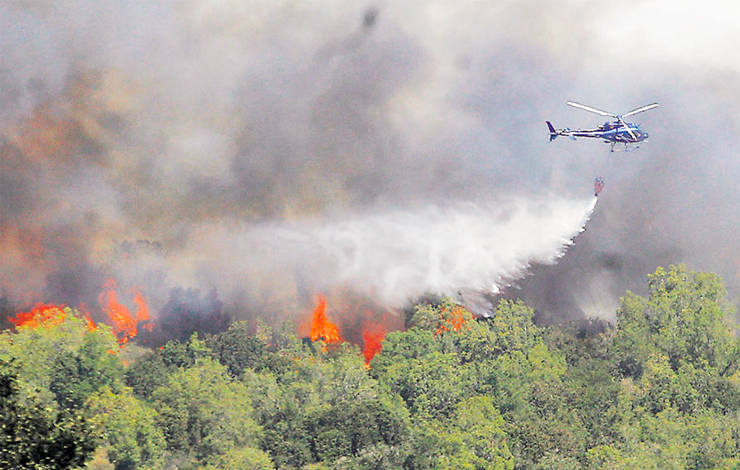
Before the start of the highest-risk wildfire season, authorities and agencies linked to emergency management have already begun coordination efforts to face the 2026-2027 period. In the La Araucanía Region, Senapred led a regional risk management table with the participation of public institutions, emergency agencies, armed forces, police, and representatives from the forestry sector.
This initiative aims to strengthen preparedness and define preventive actions for the coming months, also considering climate projections associated with the El Niño phenomenon, which could influence risk conditions during spring and summer.
From the National Forestry Corporation (Conaf), its regional director, Héctor Tillería, explained that one of the main tasks will be to maintain permanent monitoring of meteorological variables to anticipate complex scenarios.
"We are continuously reviewing weather reports to stay ahead of projections and properly prepare for the season. We are also monitoring factors associated with the El Niño phenomenon, which could lead to greater accumulation of vegetative fuel during spring," he stated.
The official added that coordinated work with various institutions will allow for timely information to better handle potential emergencies. The table included representatives from Senapred, Conaf, Corma, the Army, Carabineros, health authorities, and other agencies linked to risk management.
Meanwhile, the regional director of Senapred in La Araucanía, Ian Gorayeb, highlighted that planning began several months in advance to be prepared for the start of the critical season.
"The idea is to strengthen the system and prepare the Disaster Risk Management Committees (Cogrid) at different levels, especially the municipal one. We want to reach the second half of the year with all measures coordinated and aligned with the National Wildfire Strategy," he indicated.
Gorayeb detailed that over the coming months, drills, simulation exercises, community meetings, and training activities will be carried out to improve prevention and response to such emergencies.
"We also aim to strengthen the preventive culture among the population and increase awareness of the risks associated with wildfires, with the goal of reducing the impact on people, homes, and the territory," he added.
From the forestry sector, they valued that preventive actions are starting during winter, allowing for better preparation for the months of highest risk. However, they insisted on the need to advance specific legislation on wildfires.
The president of Corma Biobío-Ñuble, Alejandro Casagrande, argued that the country requires more robust regulations that prioritize prevention and comprehensively address the causes that favor the occurrence and spread of fires.
"We need a strong law focused on prevention, on avoiding occurrence, and on reducing the spread of wildfires. We must move beyond specific measures and address the problem structurally," he affirmed.
Preparation is not limited to La Araucanía. In the Los Ríos and Los Lagos regions, contingency and coordination plans are also being developed to face the upcoming season. Recent experience has shown that joint work between institutions can yield positive results. In Puerto Montt, for example, coordination between Conaf and the municipality helped maintain low levels of wildfire occurrence during the last summer season.
With the arrival of winter, authorities agree that early prevention, climate monitoring, and coordinated work among public and private agencies and communities will be key to reducing the impact of wildfires during the next summer.



Comments (0)
No comments yet. Be the first to comment!
Leave a comment