

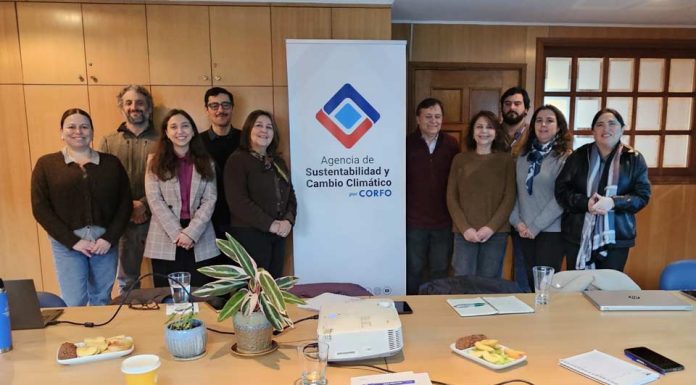
This Tuesday, the formation of the Negotiating Committee for the Clean Production Agreement (APL) "Promotion of sustainable use of the native forest of Biobío through forest management" took place at the regional offices of the Corfo Agency for Sustainability and Climate Change.
The establishment of the committee marks the beginning of the APL negotiation stage, where representatives from the public and private sectors will review and agree on the goals, actions, deadlines, and monitoring mechanisms that will form part of the future agreement.
The proposal is based on a diagnosis developed between November 2025 and April 2026 in the Biobío Region, which identified the main conditions, opportunities, and gaps the sector faces in advancing towards sustainable and economically viable management of native forest.
The objective of the initiative is to promote the sustainable use of regional native forest through the implementation of management plans with forest management criteria, strengthening the technical and commercial capacities of owners and companies, and the necessary inter-institutional coordination to consolidate active forest management as a formalized, profitable, and environmentally responsible activity.
Diagnosis and public-private participation
During the session, the results of the diagnosis carried out on 11 interested companies, which together represent more than 3,400 hectares of native forest, were presented.
The activity included the participation of representatives from Plantae Labs, the leading company of the consortium, and the consultancy Regenerativa. On the public sector side, representatives from the Regional Ministerial Secretariat of the Environment, the National Forestry Corporation (CONAF), the Biodiversity and Protected Areas Service (SBAP), the Agricultural Development Institute (INDAP), Sercotec, and the Agency for Sustainability and Climate Change participated.
The regional director of Sercotec Biobío, Lucía Fernández, highlighted the importance of strengthening the productive and economic dimension associated with native forest management.
"We will continue working to improve productive chains and strengthen the economic dimension linked to timber and native forest. We will keep meeting and collaborating to jointly advance this initiative with potential for the region," she stated.
For his part, Juan Francisco Gajardo, head of the Forests and Climate Change Department of CONAF Biobío, valued the inter-institutional conversation generated during the session.
"We had an interesting conversation about how different institutions can support the process of producing goods and services through native forest management, thereby increasing its value. Currently, there are forests that present degradation conditions, and sustainable management can contribute to their recovery," he stated.
Diego Álvarez Verdugo, regional coordinator of the Agency for Sustainability and Climate Change in Biobío, highlighted the opportunity the agreement represents to reconcile productive development with the recovery of regional ecosystems.
"This APL opens a concrete opportunity to generate value from the sustainable management of native forest, strengthening the capacities of its owners and promoting new development alternatives for the Biobío Region. From the Agency, we want to contribute so that productive activity advances hand in hand with restoration, conservation, and care for these ecosystems, through verifiable commitments and effective collaboration between the public sector, private sector, and communities," he stated.
Gaps and next steps
Among the main gaps identified by the diagnosis are the complexity of administrative procedures, difficulties in accessing financing, and the insufficient availability of specialized technical assistance for owners and companies linked to native forest.
To advance on these matters, the Negotiating Committee agreed to establish a schedule of biweekly meetings aimed at reviewing, adjusting, and validating the proposal for goals and actions of the agreement.
Likewise, its members emphasized the need to maintain permanent coordination between public institutions, the private sector, and owners, in addition to promoting the incorporation of new participants to strengthen the consortium and expand the territorial scope of the initiative.
Clean Production Agreements are voluntary public-private collaboration instruments recognized by Law No. 20.416. Their purpose is to contribute to the sustainable development of companies by defining specific goals and actions related to environmental, productive, sanitary, labor, and resource efficiency matters.
Source:Portal Agro Chile



Comments (0)
No comments yet. Be the first to comment!
Leave a comment