

For years, forest plantations have been at the center of a discussion that tends to divide positions between production and conservation. However, research conducted in south-central Chile proposes looking at these ecosystems from another perspective and paying attention to what often remains hidden beneath the tree canopy.
The study"Plant diversity of the understory inPinus radiataplantations in Chile: The role of stand structural attributes"was developed by Mg. Natalia Gertner, together with researchersDr. Rodrigo Vargas, Dr. Andrés Fuentes, Rafael Rubilar, Juan Pedro Elissetcheand Christian Salas in a collaborative work between academics and professionals linked to the University of La Frontera and the University of Concepción. Gertner, a natural resources engineer and holder of a master's degree in Natural Resource Management from the University of La Frontera, explains that the research is part of a line of work linked to ecosystem restoration.
The motivation arose, among other factors, from the need to understand how to maintain biodiversity in landscapes where productive forestry activity has a relevant presence and will continue to be important.
The work was carried out in two areas of south-central Chile, one in Biobío, in an area near Nacimiento, and another in La Araucanía, near Temuco. Both places had as a characteristic the dominant presence of plantations and small patches of native forest inserted in the productive matrix.
Hidden biodiversity
The results yielded one of the main findings of the research: the plantations studied maintained between 43% and 60% of the diversity of native plants recorded in the adjacent native forests used as reference.
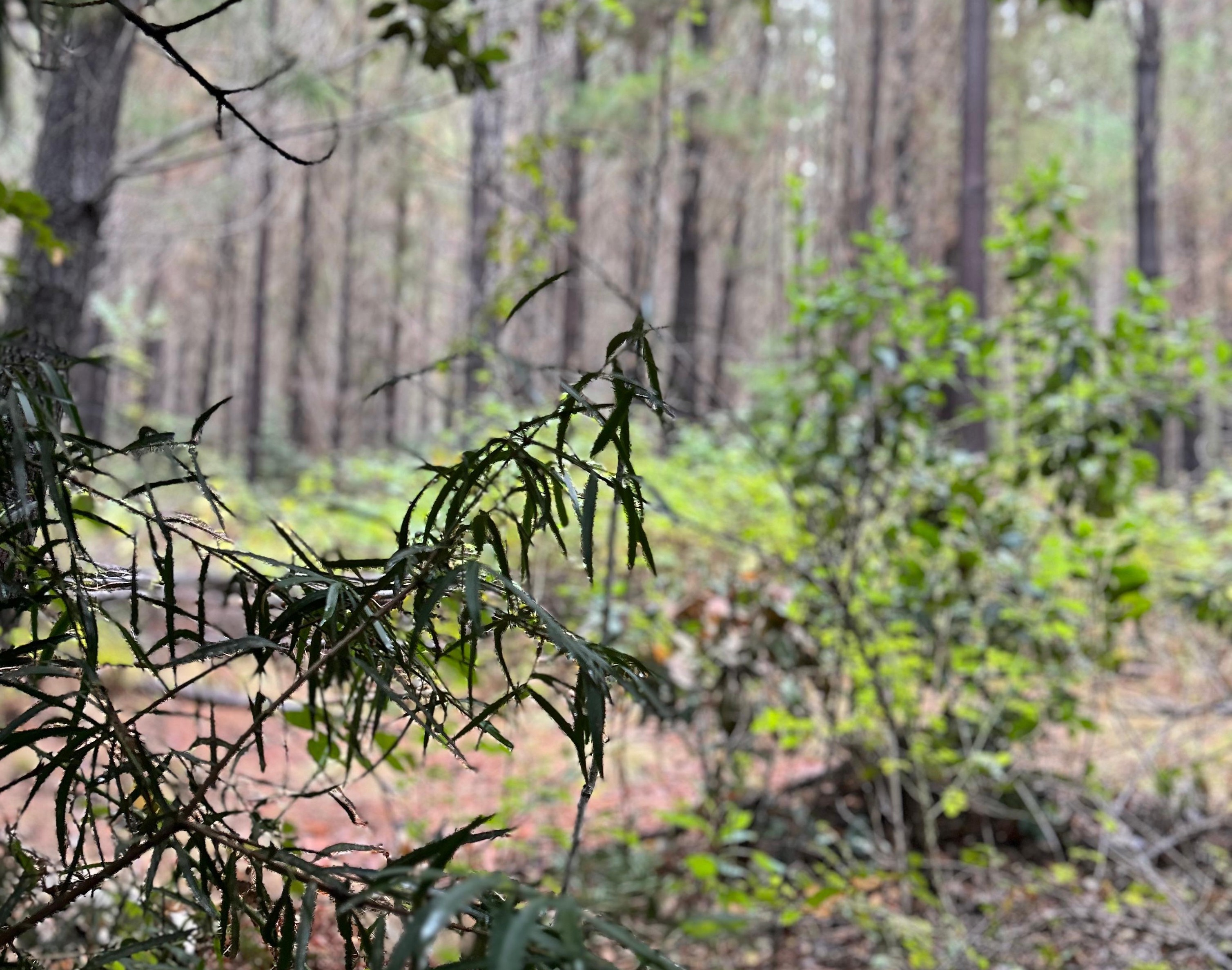
The understory—everything that grows beneath the plantation canopy—showed a diversity that included tree species and other forms of vegetation. Among them were recorded roble, avellano, radal, lingue and maqui, as well as other plant species, vines and vegetation typical of each territory.
For Gertner, these results allow questioning the idea that plantations are necessarily "green deserts," a concept used to describe places where apparently only pines would exist.
The researcher clarifies that there are conditions in which it is indeed difficult for other species to establish, due, for example, to soil characteristics and other environmental factors. But there are also scenarios where conditions allow native plants to arrive, germinate and develop.
In this process, patches of native forest play a fundamental role. These act as a source of seeds and other propagules that reach the plantations and can find there adequate conditions of light, moisture and nutrients to establish themselves.
Future management
One of the most relevant aspects of the study was identifying that stand structure constitutes a significant predictor of plant diversity. The variables related to tree density, basal area, height and diameter at breast height showed an important relationship with the biodiversity found in the understory.
In general terms, structurally more open plantations presented greater plant richness. A greater entry of light and a less homogeneous structure seem to generate favorable conditions for the establishment of native species.
However, Gertner warns that "these results should not automatically be translated into management recommendations. The study corresponds to a case limited to two areas of south-central Chile and, therefore, does not allow stating that a certain practice, such as increasing thinnings, will necessarily produce greater biodiversity."
Precisely, that is one of the questions that the research opens toward the future: determining how silvicultural practices can concretely influence plant diversity.
The researcher also highlights the importance of addressing management at the landscape scale and not only considering each stand in isolation. "The integration of native forests and the existence of different types of cover can contribute to maintaining greater diversity and, with it, strengthen the resilience of ecosystems."
The finding was also significant from a personal perspective for Gertner, because it shows that productivity and conservation do not necessarily have to be incompatible concepts. In fact, one of the surprises of the study was confirming that plantations managed with productive objectives, and that presented lower tree density, could simultaneously favor greater plant diversity.
The challenge now is to deepen that relationship and determine which management tools can contribute to generating more complex and ecologically multifunctional productive systems.
From Acoforag, we value this study because it provides local evidence to a discussion that requires more research and fewer simplifications, showing that forest production and biodiversity can be part of the same conversation.





Comments (0)
No comments yet. Be the first to comment!
Leave a comment