

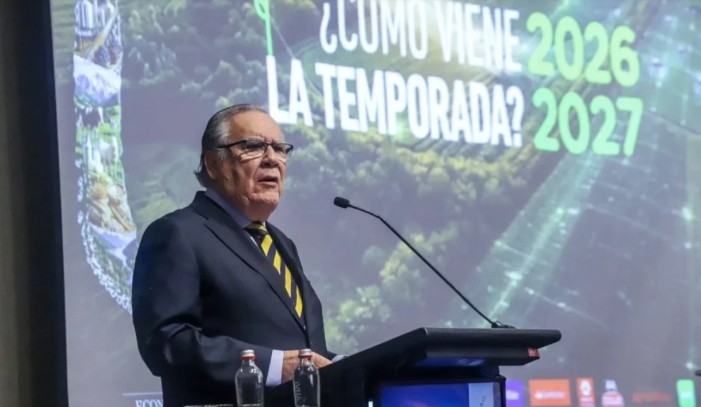
The outlook for Chilean agriculture during the 2026-2027 cycle presents significant structural and external challenges. This was analyzed at the seminar “How is the 2026-2027 season coming?”, an event organized by the National Agriculture Society (SNA) and the Economy and Business section of El Mercurio, where the Minister of Agriculture (Minagri), Jaime Campos, detailed the priorities of his portfolio and plans to revitalize the sector.
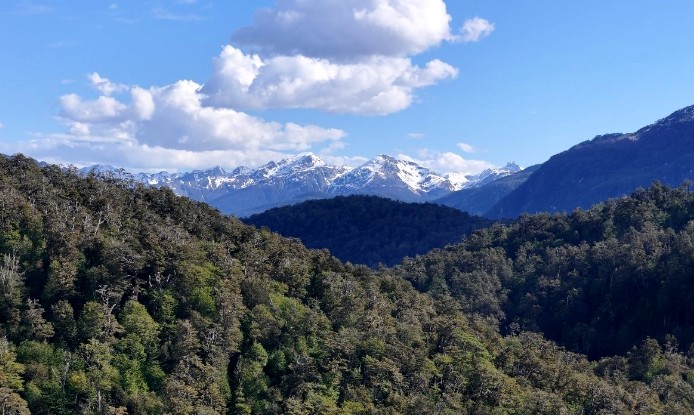
During his speech, one of the main announcements of the day was the progress of the project for a new forestry development law. The initiative seeks to adapt the regulatory framework to current environmental, territorial, and productive demands, and deadlines for its submission to the Executive have already been set.
“Chile needs a new forestry development law. That is why, since I took office at the Ministry, I formed a task force led and directed by Fernando Raga, which is working hard on this project, and according to the information I have received, in about 60 more days we will give the President of the Republic a concrete proposal on this matter,” stated Minister Jaime Campos.
Regarding water issues, the Secretary of State called for broadening the discussion beyond traditional subsidy instruments, stating that: “The water problem is reduced to the irrigation development law, even though there is a prior or greater problem than the availability of water resources.”
Additionally, there is the complex international landscape, marked by trade tensions and climatic factors. Despite the difficulties, the Secretary of State appealed to the historical resilience of local producers to adapt to new conditions in global markets.
“This seminar, which the SNA has organized for about 20 years, is a kind of thermometer to take the sector's temperature and see the projections that farmers have for the upcoming season. And that is why the situation of the country and the world is being analyzed, not only from a macroeconomic point of view, but also sector by sector. It is evident, as has been explained in various presentations, that we are living through a complex moment for humanity,” stated Minister Campos.
External factors conditioning agriculture
The Executive's analysis indicates that the main threats come from abroad. Global economic contractions, geopolitical conflicts, and tariff barriers from the world's major economic powers create a landscape of high uncertainty for Chilean exports.
In this regard, the minister explained that: “There are contractions in the markets, there are phenomena like the Middle East war that impact the national economy, in many cases particularly related to the cost of fertilizers, there are policy measures from some countries due to the trade war between major powers that threaten us with increasing tariffs. In other words, it is a complex world, but agriculture always has the capacity to adapt appropriately to new realities.”
Faced with this, Minagri confirmed that the action plan includes focusing efforts on plant and animal health protection, irrigation management, safeguarding key markets, and developing innovation and technology transfer.
From the private sector, the president of the SNA, Antonio Walker, valued the Government's perspective but focused on the sector's economic activity figures, which show a slowdown compared to previous years.
“The minister gave a very realistic, very objective analysis of what is happening in the sector. Afterwards, we had an important talk. We are concerned about the decline in agriculture that has occurred in the first half of the year. We saw that in 2024 agriculture grew by 9%, in 2025 it grew by 5 point something percent, and in the first quarter of 2026 there is a decline,” warned Walker.
The union leader also pointed to the aggressive commercial strategy adopted by the neighboring country in recent years as a factor to consider in the national strategy.
“The great lesson we draw today is that we must have a public-private alliance, we have to work together to recover the growth of Chilean agriculture. Peru came out to compete with us, we saw the impressive graphs of how Peru has created a public policy to boost the development of Peruvian agriculture. We see that there is a very volatile international concert, and market diversification is absolutely essential to not lose competitiveness in the future,” stated the leader.
A new forestry policy and the debate over watera
One of the main announcements of the day was the progress of the project for a new forestry development law. The initiative seeks to adapt the regulatory framework to current environmental, territorial, and productive demands, and deadlines for its submission to the Executive have already been set.
“Chile needs a new forestry development law. That is why, since I took office at the Ministry, I formed a task force led and directed by Fernando Raga, which is working hard on this project, and according to the information I have received, in about 60 more days we will give the President of the Republic a concrete proposal on this matter,” stated Minister Jaime Campos.
Regarding water issues, the Secretary of State called for broadening the discussion beyond traditional subsidy instruments, stating that: “The water problem is reduced to the irrigation development law, even though there is a prior or greater problem than the availability of water resources.”
Finally, the ministry addressed the specific situations facing sectors such as cherries, viticulture, and sugar beets. For these sectors, the state strategy will focus on supporting productive reconversion, updating current regulations, and seeking new international commercial destinations.



Comments (0)
No comments yet. Be the first to comment!
Leave a comment