

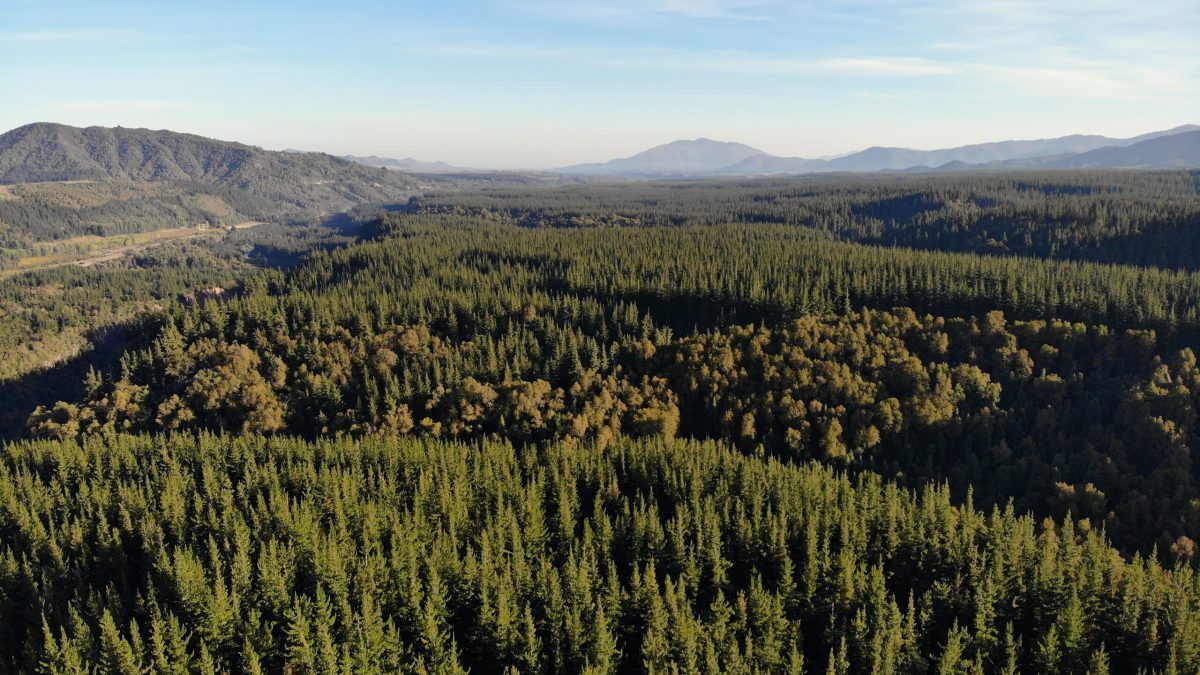
Chile has gone over a decade without a forestry promotion policy, despite having one of the most competitive industries in the world and a growing global demand. The result is an activity that is losing planted area, jobs, and investment, at a time when the country needs precisely the opposite. And the government today has a concrete opportunity to reverse this.
The Minister of Agriculture, Jaime Campos, committed to a proposal for a forestry promotion law within the next 60 days. This is a long-awaited initiative for a sector that directly employs 250,000 people, represents nearly 1.5% of GDP, generates exports of around US$6 billion annually, and constitutes one of the country's main carbon sinks.
The urgency to move forward becomes even more evident in light of global trends. According to the Food and Agriculture Organization of the United Nations (FAO), the global wood market could expand by up to 49% by 2050, driven by industrial demand. Chile also possesses comparative advantages that are hard to match: studies by the Forestry Institute (Infor) show that radiata pine grows locally between 20 and 22 cubic meters per hectare per year, compared to rates of just 5 to 6 cubic meters in developed forestry countries like Canada or Finland.
However, the sector has followed an opposite trajectory. Since its highest level of planted area in 2016, nearly 600,000 hectares have been lost, over 36,000 jobs have disappeared, and around 200 sawmills have closed their doors. Added to this is the fact that more than 1.5 million hectares with forestry potential remain undeveloped.
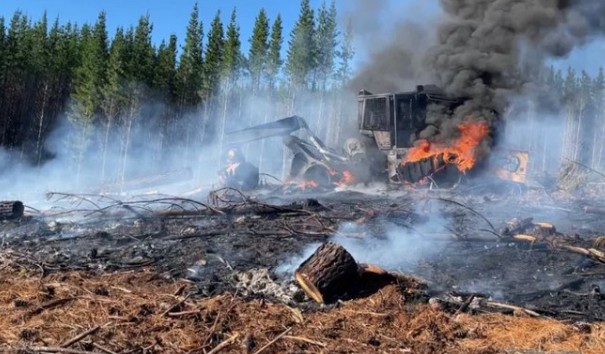
Part of this situation is due to cyclical factors, such as low pulp prices, forest fires, or security issues that have affected producing regions. But none of these variables alone explains a deterioration that has lasted over a decade. The absence of a promotion policy since the end of DL 701 in 2012 has created a regulatory and institutional vacuum that no government has managed to fill. In practice, Chile has gone over a decade without treating the forestry sector as a strategic activity for the country's economic development.
Industry associations have proposed various tools to drive a recovery, from single windows for small and medium-sized landowners and permanent financing through Corfo, to coverage mechanisms against fires, incentives for the use of wood in infrastructure and housing, and the inclusion of small and medium-sized landowners in the carbon credit market. These are reasonable and technically sound proposals aimed at correcting market failures and reactivating forestry investment.
However, none of them will fully restore the sector if they are not accompanied by basic conditions for long-term investment. Security in productive areas, protection of critical infrastructure, and legal certainty are indispensable requirements for an activity whose cycles are measured in decades.
After 14 years without a development strategy for an industry where Chile possesses world-class competitive advantages, the country has the opportunity to build a state policy that provides stability and allows for the recovery of a key activity for employment, exports, and future growth.
Source:Diario Financiero



Comments (0)
No comments yet. Be the first to comment!
Leave a comment