

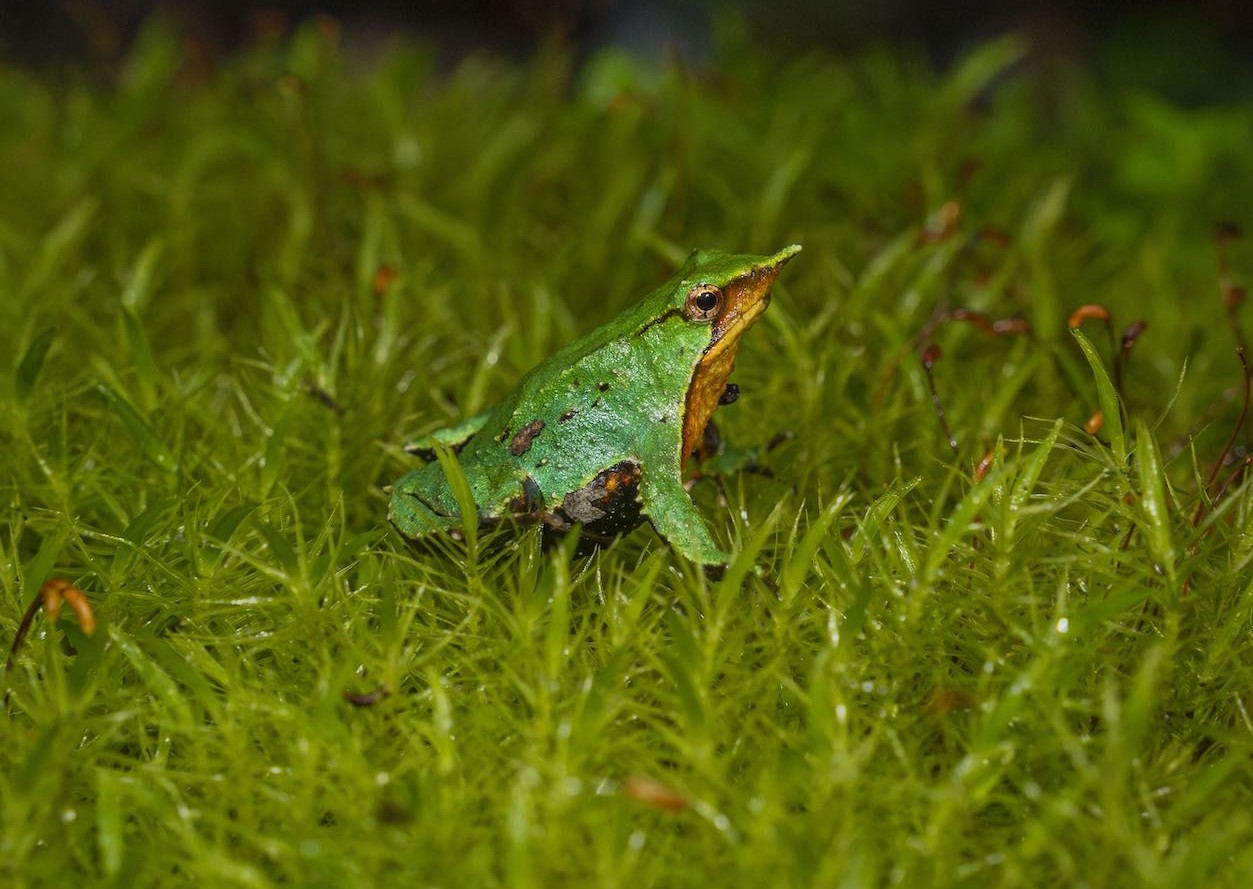
With the aim of strengthening the conservation of native amphibians in Patagonia, Universidad Andrés Bello (UNAB), Fundación Rewilding Chile, and the NGO Ranita de Darwin signed a collaboration agreement that places special emphasis on the protection of Darwin's frog, one of the most threatened and emblematic species in Chile.
The agreement seeks to promote research, monitoring, and conservation initiatives for this unique species, found in south-central Chile and Argentina, which faces multiple threats such as climate change, habitat loss and fragmentation, forest fires, and chytridiomycosis, a fungal disease that affects its skin and compromises its vital functions.
Darwin's frog was first recorded nearly 200 years ago by naturalist Charles Darwin and possesses a unique characteristic in the world. According to Claudio Azat, director of the One Health Institute at UNAB, it is the only known amphibian among more than 9,000 species in which the male plays the role of "gestator."
"Metamorphosis occurs inside the father's vocal sac for at least two months. Subsequently, the male expels the tadpoles, which are already independent and continue their development in the forest, as occurs in the Valdivian rainforest," he stated.
Azat also highlighted the ecological and scientific importance of this species, emphasizing the need to generate evidence that allows adopting the best measures for its conservation.
Collaborative Work for Biodiversity
From Fundación Rewilding Chile, its executive director, Carolina Morgado, explained that the agreement will expand the work the organization has carried out in Pumalín Douglas Tompkins and Corcovado National Parks, where amphibian characterization and ecological monitoring programs are currently being implemented.
"This agreement adds the scientific and academic capabilities of UNAB and the experience of the NGO Ranita de Darwin as a national reference in the study and conservation of amphibians, strengthening our work in the parks of Patagonia," she stated.
For his part, Andrés Valenzuela, president of the NGO Ranita de Darwin and researcher at the Zoological Society of London (ZSL), highlighted the value of the collaborative model that brings together the three institutions.
"We contribute our technical expertise in the design and implementation of long-term amphibian monitoring programs. Together with the capabilities of the other institutions, this agreement will allow us to advance significantly in the conservation of our biodiversity," he asserted.
Research and Monitoring in Patagonia
The agreement includes carrying out research and monitoring campaigns in national parks along the Route of Parks of Patagonia, as well as the exchange of scientific and technical information, training programs, and the use of innovative technological tools for the study of amphibian populations and their habitats.
Likewise, the institutions plan to develop actions aligned with the Binational Conservation Strategy and the RECOGE Plan for Darwin's Frogs, contributing to the protection of one of the most unique and vulnerable species of Chile's natural heritage.
The initiative represents a new step in the coordination between academia, environmental organizations, and civil society to address the challenges threatening Patagonia's biodiversity and ensure the survival of its most emblematic species.






Comments (0)
No comments yet. Be the first to comment!
Leave a comment