

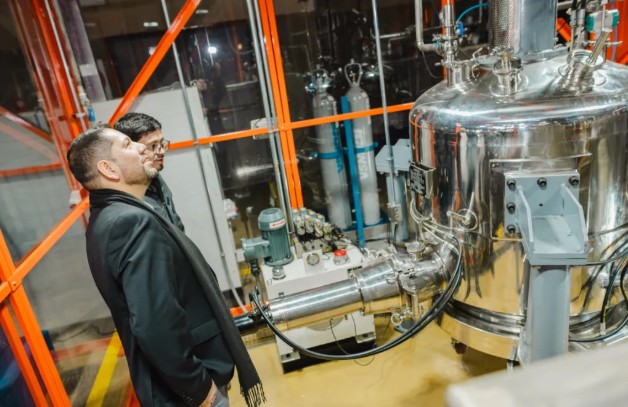
What for decades was considered a source of energy, mainly in pulp mills, is now beginning to emerge as one of the most promising materials for a sustainable economy. CMPC and the Technological Development Unit (UDT) of the University of Concepción inaugurated in Coronel, Biobío Region, Chile's first lignin pilot plant, a milestone that seeks to bridge science and industry and open new opportunities for innovation based on renewable resources.
This natural component, which acts as the "glue" of wood and gives trees their rigidity, represents about 40% of their biomass. Thanks to technological advances, it is now projected as a renewable alternative for manufacturing adhesives, energy storage materials, chemical compounds, modified asphalts, and advanced biomaterials.
The new infrastructure will allow lignin production at a scale larger than laboratory level, generating sufficient volumes for industrial testing, commercial application development, and technological validation alongside potential clients. This is a key stage to reduce the gap between research and production, in a scenario where the bioeconomy is consolidating as one of the main global development trends.
The rector of the University of Concepción, Jacqueline Sepúlveda Carreño, highlighted that "the University of Concepción, with this historic milestone, underscores its public function, not only in training professionals to serve the country, but also in developing new technologies, proprietary technologies, that will enable sustainable development and a knowledge-based economy."
The authority stated that "it is especially significant that an initiative of this magnitude arises from southern Chile. That the Technological Development Unit of the University of Concepción leads this challenge reflects our institution's ability to transform knowledge into concrete solutions for the country's sustainable development, strengthening the link between science, industry, and innovation with global impact."
Likewise, CMPC's R&D and Bioeconomy Manager, Bibiana Rubini, noted that "for CMPC, this pilot plant represents a strategic advance by moving lignin from research toward concrete industrial applications. We believe the best way to move forward is by developing science and innovation in close collaboration with universities, because that is where knowledge, talent, and the ability to transform challenges into solutions converge. Together with the University of Concepción, we are taking a concrete step in valorizing our forest resources and replacing fossil-based inputs, driving a bioeconomy based on innovation, local development, and collaboration."
From forests to the future
Lignin has positioned itself as one of the world's most promising biomaterials to replace petroleum-derived inputs, strongly driven by countries such as the United States, Canada, Sweden, Finland, Germany, and Brazil in industries like construction, energy, and advanced manufacturing.
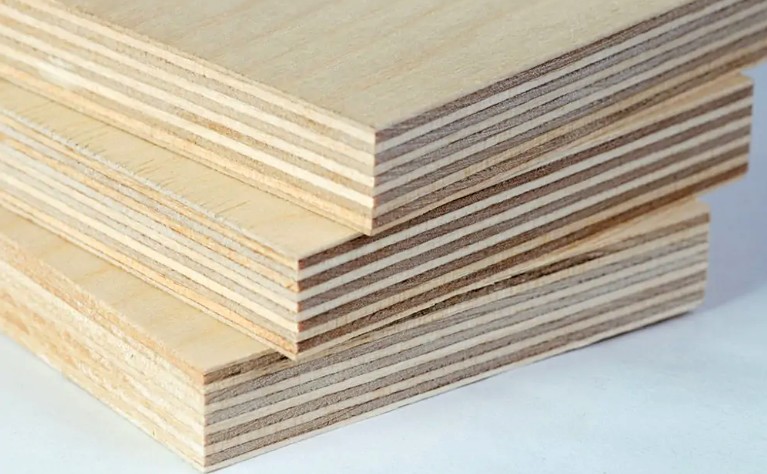
Among the most innovative developments are renewable materials capable of replacing fossil-based components used in tires, contributing to the manufacture of products with a lower environmental footprint. As well as in adhesives and resins for boards and insulation materials found in furniture, interior cladding, and construction solutions.
Furthermore, its use has extended to agriculture to optimize the efficiency of fertilizers and pesticides, and to the plastics industry, where it is incorporated into elastomers and thermoplastics, being added to rubbers, flexible materials, and plastics to progressively reduce petroleum-derived content without compromising material performance.
This type of development based on biological resources promotes sustainable and circular models aligned with the future. In this context, the new pilot plant by CMPC, the University of Concepción, and UDT in Coronel seeks to position Chile in this global trend, transforming forest resources into industrial applications with high commercial potential.
For his part, UDT Project Director Sebastián Riquelme said, "The startup of this pilot plant is the result of a virtuous collaboration between UDT and CMPC. This infrastructure not only strengthens research but also allows progress in valorizing forest by-products and positioning Chile in lignin development."
For Chile, the initiative represents more than new infrastructure: it seeks to lay the foundations for a value chain around lignin, driving the development of local knowledge, new industrial opportunities, and reduced dependence on imported raw materials. Additionally, it strengthens collaboration between academia and industry in a key area for the transition toward a low-carbon economy.
From the academic world, the challenge will be to deepen applied research and demonstrate the technical and economic competitiveness of this biopolymer against fossil alternatives. The plant will allow generating knowledge, validating technologies, and advancing toward eventual large-scale production.
Although lignin production still faces challenges, specialists agree on its high potential as a sustainable material. With this inauguration, Chile takes a concrete step to integrate into an emerging industry, driving innovation and the utilization of its renewable resources.






Comments (0)
No comments yet. Be the first to comment!
Leave a comment