

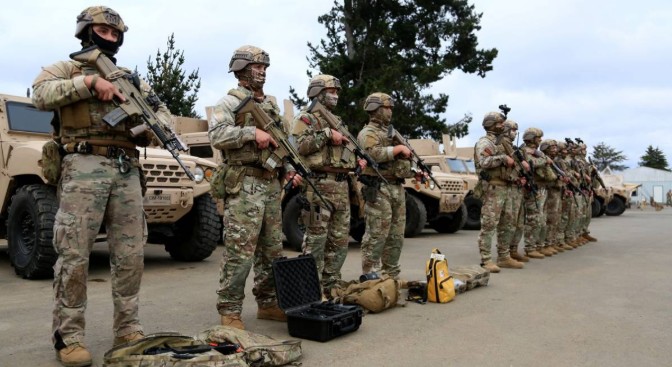
With 39 votes in favor and 2 against, the Senate Chamber supported the Executive's request to extend the constitutional state of emergency for one more month in the La Araucanía region and the provinces of Arauco and Biobío in the Biobío region.
Prior to the vote, Interior Minister Claudio Alvarado presented background information on the effects of the measure since its implementation, noting that from 2021 to date, there has been a 79% decrease in incidents of rural violence.
He added that attacks against transporters were reduced by 89%, but there are still pending challenges regarding arms control, as a 37% increase has been detected, so initiatives are being promoted to allow greater control in border crossing areas. Similarly, he said that agreements are being finalized between the MOP and the military labor force to carry out road maintenance in the area, among other measures.
During the vote on the request, senators Enrique Van Rysselberghe, Sebastián Keitel, Iván Flores, Alejandro Kusanovic, Cristián Vial, Miguel Ángel Becker, Andrés Longton, Gastón Saavedra, Esteban Velásquez, Miguel Ángel Calisto, María José Gatica, and Alfonso De Urresti spoke, along with Defense Minister Fernando Barros.
They noted that, despite a decrease in incidents of rural violence, May was the most violent month of this year, demonstrating that terrorist cells continue to exist and operate in the southern macrozone, which must be taken into account before considering a potential "de-escalation."
Likewise, the joint work being carried out by the police, armed forces, the Public Prosecutor's Office, and other entities was highlighted, aimed at detecting potential sources of violence. In this regard, interagency integration was emphasized, providing peace of mind and certainty to the area's inhabitants.
However, despite the progress, the senators pointed out that the problem has not disappeared, as serious manifestations of organized crime and armed violence persist. They also stated that it is necessary to see how public policies can be developed to improve connectivity and the necessary conditions for the area's inhabitants.
Finally, they expressed that it is necessary to analyze how to proceed, since the constitutional state of emergency is "exceptional" and its extension over time is leading to it becoming permanent, which makes it difficult to take the next step. Hence, the need to establish a strategy that identifies gaps was raised.






Comments (0)
No comments yet. Be the first to comment!
Leave a comment