

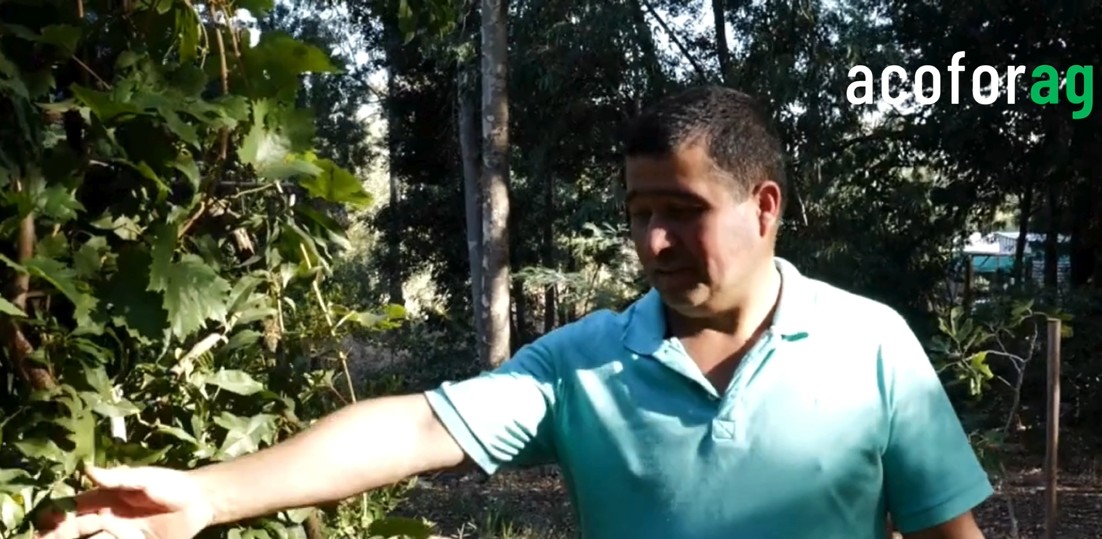
In the landscapes of southern Chile, where native forests still retain much of their ecological richness and where nature sets the rhythm of daily life, there are stories that reflect a deep and respectful relationship with the environment. One of these is that of the Quilodrán-Vidal family, who have found in beekeeping a way of life that combines tradition, work, and environmental conservation.
Patricio Quilodrán, along with his wife Verónica Vidal and his father René Quilodrán, has dedicated years to caring for bees and producing honey in a privileged environment, surrounded by forests that offer a unique diversity of plant species. For them, the beehives represent much more than an economic activity: they are a concrete expression of the close relationship they maintain with nature and the territory they inhabit.
Productive Activities
At Acoforag, we seek to highlight experiences like this one, which show how different productive activities can be developed in harmony with forest ecosystems. Beekeeping is one of them. Thanks to the work of bees, the pollination of numerous plant species is promoted, directly contributing to the conservation of biodiversity and the ecological balance of forests.
The family story began with René Quilodrán, who decades ago discovered in bees an opportunity to work alongside nature rather than intervene in it. With patience and dedication, he learned the secrets of beekeeping and passed that knowledge on to new generations. His experience allowed his children to grow up understanding the value of forest ecosystems and the importance of protecting them.
Patricio remembers that from a young age he accompanied his father in tasks related to the beehives. Those experiences deeply marked his worldview. He learned to observe the behavior of bees, to understand natural cycles, and to recognize the enormous dependence that exists between these insects and the forests that surround them.
Over the years, he decided to continue the family legacy alongside Verónica Vidal, who shares the same passion for working in contact with nature. Currently, both develop beekeeping with a sustainable perspective, striving to maintain a balance between production and environmental care.
The quality of the honey they produce is closely linked to the botanical richness of the forests of southern Chile. The different native species contribute unique characteristics to the final product, turning each harvest into an expression of the territory where it originates. However, for the Quilodrán-Vidal family, the true value of their work is not measured solely by the production obtained, but by the contribution they make to the conservation of the environment.
Ally of Nature
The presence of bees is essential for the reproduction of numerous plant species. Through pollination, these insects promote the natural regeneration of ecosystems and help maintain the biological diversity that characterizes native forests. Therefore, each beehive becomes a small ally of nature, silently contributing to environmental balance.
In a context where sustainability is increasingly relevant, experiences like that of this family demonstrate that it is possible to develop productive activities while respecting natural cycles and strengthening the conservation of forest resources. Beekeeping represents an alternative that generates economic, social, and environmental benefits, integrating harmoniously with the landscape and wildlife.
For Patricio and Verónica, the forest is much more than the place where they work. It is a space that gives them identity, knowledge, and sustenance. Each season brings new challenges and lessons, but also reaffirms the conviction that protecting ecosystems is a shared responsibility.
The story of the Quilodrán-Vidal family is also an example of the value of family traditions linked to the rural world. Knowledge passed down from generation to generation allows for the maintenance of practices that have proven to be compatible with conservation and the responsible use of natural resources. In times when the connection with nature seems increasingly distant for many people, their experience reminds us of the importance of observing, understanding, and respecting the processes that sustain life.
At Acoforag, we value and highlight the contribution of those who work in close relationship with forests, promoting a forest culture based on responsibility and care for the environment. Stories like that of the Quilodrán-Vidal family show that sustainability is not just a concept, but a daily practice built on commitment, knowledge, and respect for nature.
In every beehive they care for, in every honey harvest, and in every day of work under the shade of native trees, this family reaffirms a simple but powerful conviction: forests will continue to be generous as long as people learn to coexist with them and protect them for future generations.





Comments (0)
No comments yet. Be the first to comment!
Leave a comment