

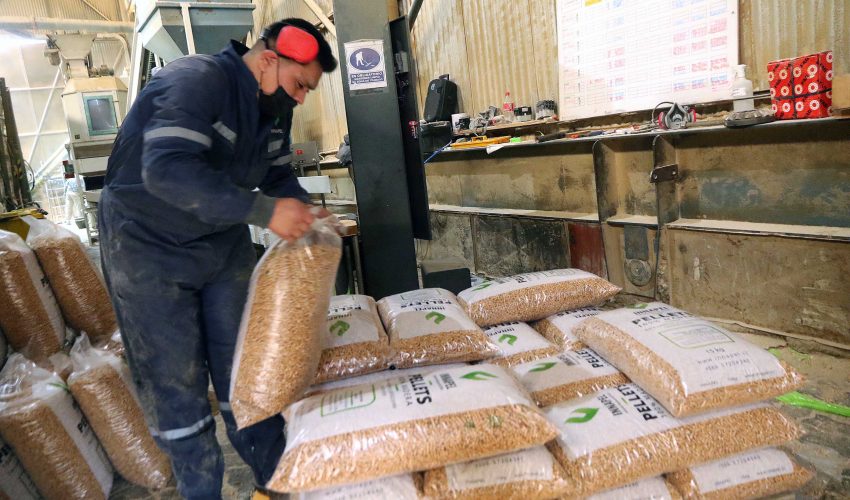
Innapel's decision to enter a voluntary liquidation process generated concern among pellet stove users in the Biobío Region, who fear that the company's exit from the market could affect fuel availability in the middle of the winter season.
The unease is reflected in consumers like María Lazcano, a resident of Chiguayante, who acknowledged that the news sparked uncertainty. "At home, we use pellet throughout the winter and consume about three bags per week. When I heard the news about Innapel, I got quite worried, because one remembers what happened a few years ago when it was hard to find pellet."
"Although the authorities say there shouldn't be supply problems, there is still uncertainty, and it's scary that stock might run out later when temperatures drop even further," she commented.
Carlos Muñoz, a resident of San Pedro de la Paz, shares a similar view. "Our pellet stove is the main source of heating for the home, and in the coldest months we consume nearly one bag daily. Innapel's situation is concerning because it was a well-known company in the area, and one doesn't know what effect its exit from the market might have. I hope what the authorities and the industry have stated comes true," he stated.
Explanation from the Company
The firm reported that the liquidation is due to a complex financial and operational situation that worsened over the last few months. According to details provided, it made various efforts to maintain business continuity, but current conditions in the sector made continuing the business unviable.
Among the causes cited are the decrease in raw materials due to the closure of nearly 200 sawmills over the past year and the loss of forest areas due to fires.
According to the company, these factors caused a reduction of nearly 40% in the supply required for its operations. Added to this was the increase in electricity costs and other inputs.
On this point, the Minister of Agriculture, Jaime Campos, indicated that there could be a specific situation regarding some inputs, although he ruled out a structural problem.
"It's possible, I don't have information on that, it's possible there is a shortage of those inputs. But we are in Concepción, in the forestry capital of Chile where we have the largest number of forest plantations in the country. I believe this is something circumstantial," he stated.
Despite the doubts that arose after the announcement, the Regional Minister of Energy for Biobío, Javier Salamanca, insisted that supply is assured. He explained that the Ministry permanently monitors the production and availability of pellet at the regional and national level, especially in situations like that of Innapel.
The authority indicated that meetings have been held with the producer industry to coordinate actions aimed at safeguarding supply during the winter.
According to his explanation, producers assured that there will be no supply problems and committed to measures to prioritize the domestic market, including a reduction in volumes destined for export.
Salamanca also highlighted that there are currently 48 producing companies between Valparaíso and Magallanes with the capacity to supply the national market.
In this context, he emphasized that Innapel was neither the main nor the only supplier company in Biobío, so its exit should not significantly affect fuel availability.
"Based on the above, we call for calm regarding the pellet stock," stated the Regional Minister, adding that the information available at the Ministry of Energy indicates there is sufficient supply to meet demand under normal conditions during the current winter season.
Source:Diario Concepción




Comments (0)
No comments yet. Be the first to comment!
Leave a comment