

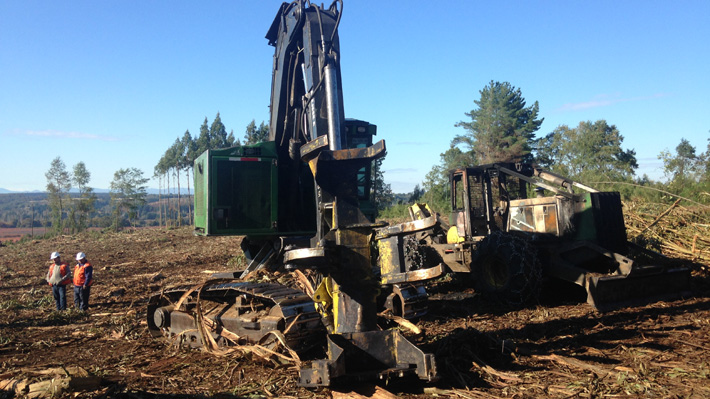
The Association of Forestry Contractors (Acoforag) warned that the sector's activity is going through one of its most complex moments in recent years, marked by rising unemployment, persistent violence in the Southern Macrozone, and an international scenario that continues to weaken exports in the field.
Its manager, René Muñoz, stated that the depth of the "crisis" will depend on the measures adopted by the Government to reinforce security, strengthen institutions, and support the sector.
As he explained to Emol, the deterioration in employment is already beginning to be reflected in the communes whose economy depends on forestry activity. "The magnitude of the problem is the warning from the territories, that is, the mayors. They are seeing their employability indicators fall," he stated.
He added that "the depth of the crisis will be increased or decreased, depending on the measures adopted by the Government in terms of direct support, improvements in institutions, and the presence of the State in the regions."
Criticism of the State's Response
Muñoz also questioned the authorities' response to the attacks that have affected the sector over the last decade. According to Acoforag, forestry contractors have suffered 528 arson attacks in the Southern Macrozone, of which only five have been solved.
"Of the 528 terrorist attacks on forestry contractors in the Southern Macrozone, the figures indicate that only 5 of them have been solved, that is, with a 0.9% effectiveness rate from the State, we cannot talk about positive results," he pointed out.
Along those lines, he assured that "the State has failed the Southern Macrozone" and stated that for almost three decades the necessary conditions have not existed to guarantee the security of investments and work in the area. Likewise, he attributed part of the problem to centralism, indicating that "the centralist nature of the State administration prevents this great problem of violence (...) from having a real solution."
Uncertainty over the International Market
A complex external scenario is added to the internal difficulties. Muñoz indicated that the industry remains exposed to falling international prices and the effects of geopolitical conflicts, factors that, in his opinion, will continue to condition the activity.
Furthermore, he expressed concern about the 12.5% tariff applied by the United States to certain Chilean forestry exports, currently under appeal.
"We believe that if this tariff materializes, the news would be very bad for us, as it will raise the cost of selling products and thus we will be less competitive abroad," he warned, adding that "it will be more difficult to seek other markets, given how depressed the international market is."
Measures Proposed by the Sector
Asked about the actions he considers a priority to reverse the scenario, Muñoz stated that forestry activity requires long-term policies, since production cycles extend between 12 and 22 years.
Among the main demands, he mentioned reinforcing security in the Southern Macrozone. "Security and a State presence in the Southern Macrozone, so that institutions and the rule of law function," he stated.
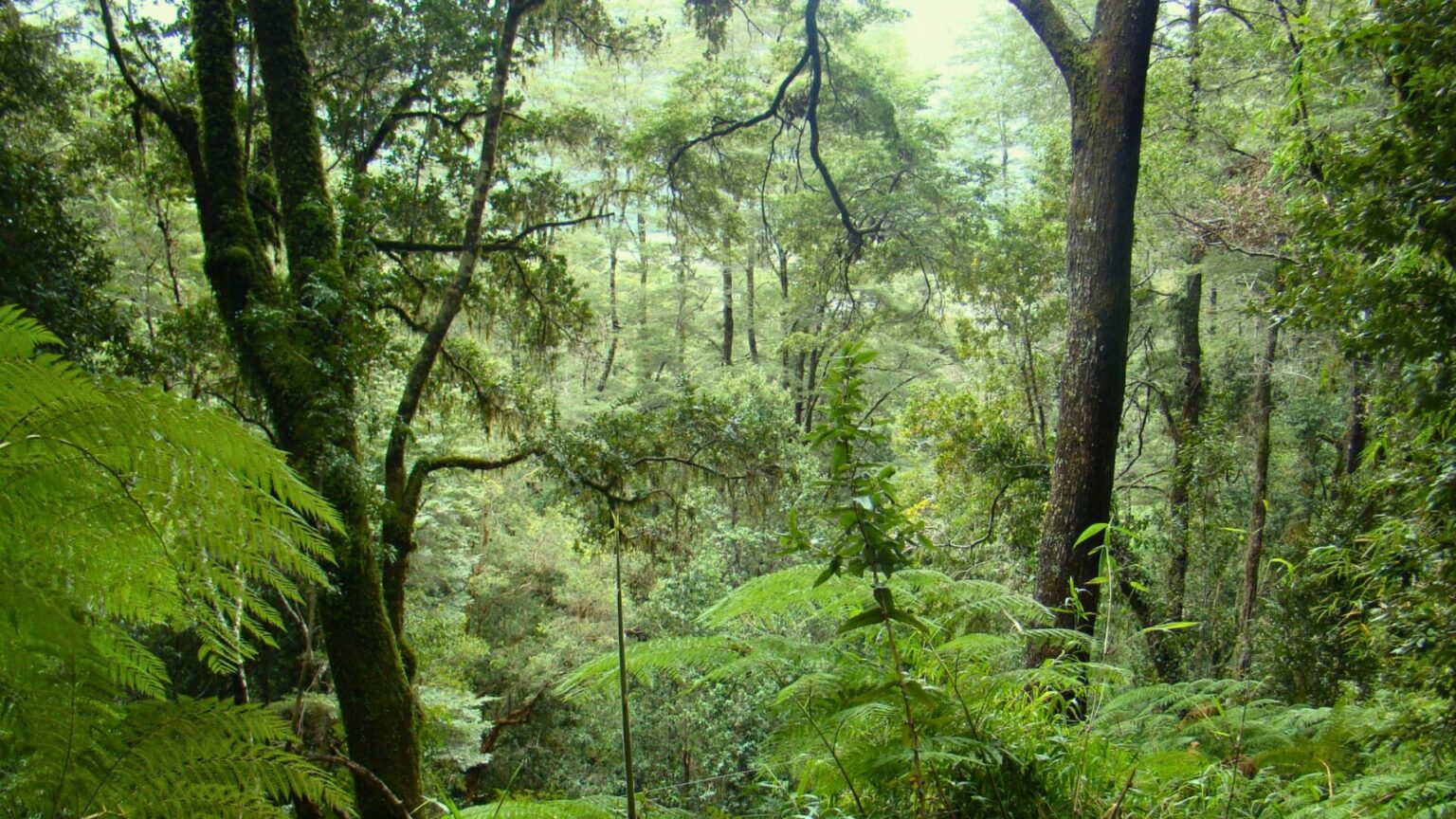
He also proposed creating a new institutional framework to encourage afforestation and reforestation to recover the forestry heritage and generate employment, in addition to promoting a public policy that encourages the use of wood in public infrastructure and promoting sustainable management of native forests.
Source:Emol.com



Comments (0)
No comments yet. Be the first to comment!
Leave a comment