

Just as the "unified command" for the state of exception in Biobío and La Araucanía came into effect on June 20, in the southern macrozone, both jurisdictions will see a change in their regional prosecutors during this second semester.
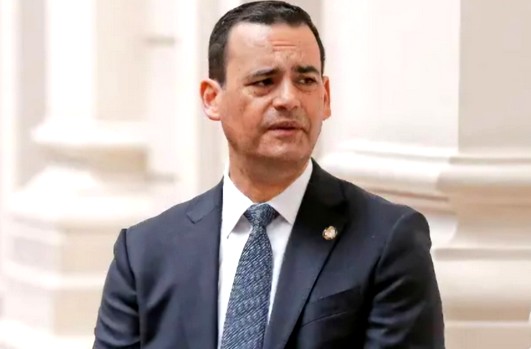
Upon completing her eight-year term, the head of the Public Ministry in Biobío, Marcela Cartagena, will leave her position on August 8 and will be replaced by the current prosecutor of La Araucanía, Roberto Garrido, after winning the competition, which had 12 candidates, among whom the Court of Appeals presented a shortlist to the National Prosecutor, Ángel Valencia.
In the coming weeks, Garrido must resign from the position he assumed in 2021 and whose term extended until 2029. Due to this, once his departure is confirmed, a competition will be opened for the Temuco Court to select three names and present them to Valencia.
Among those mentioned as potential successors to Garrido is the chief prosecutor of Temuco, Alberto Chiffelle.
"El Mercurio" consulted lawyers about the effects these changes in the southern macrozone could have on criminal prosecution, especially in cases related to violent incidents.
"Garrido's appointment in Biobío is a good sign for the region and for the southern macrozone, considering that there are currently highly relevant cases underway in that territory that require leadership with proven experience in the matter," says Pablo Urquízar, coordinator of the Organized Crime and Terrorism Observatory (Ocrit) at U. Andrés Bello.
He warns that "although Garrido leaves the region, a cohesive and experienced team remains that, regardless of who takes over, can perform at the highest level."
Neftalí Carabantes, former undersecretary of Carabineros and director of the Center for Security Studies at U. Central, is not opposed to changes or swaps in the prosecutor's offices. He warns that "the departure of a prosecutor, even a regional one, should not affect the progress of cases in the slightest," and emphasizes that "it is not one person who investigates, but the Public Ministry, applying the principles of continuity and efficiency stipulated in its organic law."
The "musical chairs" factor
Felipe Harboe, former senator and researcher at the Center for Security and Organized Crime Studies (Cescro) at U. San Sebastián, recalls that "at the time, this was a matter of discussion in Congress, because some argued it was like musical chairs. On the contrary, I maintained that the experience of a regional prosecutor finishing their eight-year term should not be discarded by the Public Ministry. I think it's good that regional prosecutors can apply from one zone to another."
However, he adds that "the selection system must be very rigorous, and along with the shortlist presented by the courts and the decision of the national prosecutor, objective background information should be considered." In this regard, he mentions studies that evaluate the performance of prosecutor's offices in different types of crimes.
Source:El Mercurio




Comments (0)
No comments yet. Be the first to comment!
Leave a comment