

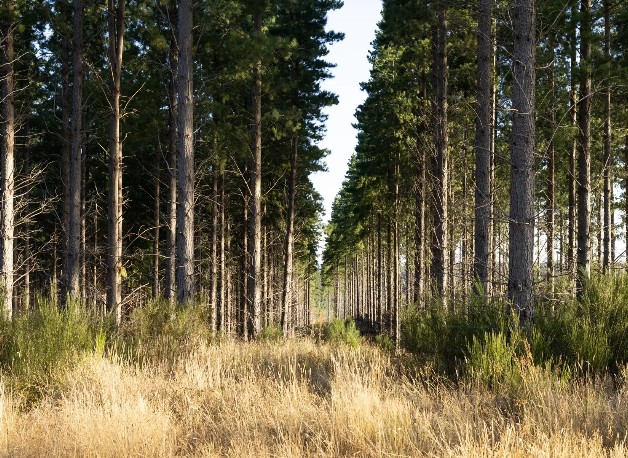
Research in Forest Sciences today faces challenges closely linked to ecosystem degradation, water availability, and the need to generate knowledge that enables progress toward more resilient forest systems. In this field, Dr. Sergio Espinoza Meza, director of the Department of Forest Sciences at the Catholic University of Maule (UCM) and PhD in Agricultural, Forestry and Veterinary Sciences, conducts research related to forest genetics, species adaptation, and ecosystem recovery.
Currently, the UCM academic participates as co-investigator in the CONAF Native Forest Research Fund project titled "Contributions to plant quality for successful reforestation: production of companion species of the sclerophyllous forest for degraded sites," an initiative that will run until 2029 and is led by Mg. Betsabé Abarca Rojas, from the University of Chile.
The project aims to develop and evaluate a model for the propagation, production, and planting of companion species of the sclerophyllous forest, with the purpose of contributing to the reforestation of degraded Mediterranean ecosystems in central Chile.
Presentation of the study on improved Pinus radiata genotypes in a conference room. Regarding the relevance of this research and its specific contribution to the project, Dr. Espinoza stated that "The natural regeneration capacity of sclerophyllous forests has been severely reduced, becoming null in some sectors, which has allowed us to observe rapid deterioration in their cohorts, making it urgently necessary to consider artificial reforestation. However, current forest conditions lead to restrictions in plant growth and survival due to the marked current climatic seasonality, resulting in stress levels that mark the failure of planting efforts," he affirmed.
Therefore, added the UCM researcher, "Reforestation actions must consider improving the quality of plants taken to the field, in order to increase the likelihood of success. This project addresses elements related to defining provenance zones, comparisons of existing plant qualities in the market, evaluation of the adaptability of local provenances, together with the use of appropriate planting techniques, with a view to defining a suitable strategy to promote the recovery of these ecosystems," he stated.
Added to this research is his participation as co-investigator in the FONDEF IDeA I+D 2026 project "RadiataDrought: Early prediction of drought-tolerant clones using AI models based on multi-omic and physiological information," awarded by ANID and committing results by 2028.
The initiative seeks to develop a technological package that integrates artificial intelligence models, ecophysiological techniques, and highly specialized information and images, with the objective of accelerating the selection of Pinus radiata genotypes that feature high tolerance to water deficit.
Facing the challenge that drought represents for forest systems and the contribution that new technologies can make to this field, the researcher explained that "there is broad interest on the part of Chile's major forestry company in having this type of information, as it will allow identifying those individuals (clones in this case) that perform well under water restriction conditions, since this would facilitate the selection and propagation of plants adapted to lands with lower water availability," he explained.
"Climate change in Chile is generating increases in maximum temperatures and reductions in precipitation in the country's main forest areas, especially in Maule and Biobío. Pinus radiata, which currently covers nearly 1.3 million hectares and is the foundation of the Chilean forestry industry, shows high sensitivity to these variations. Modeling indicates that a 10% increase in maximum temperature can reduce its productivity by 12%, and that, under severe water restriction scenarios, between 198,000 and 266,000 hectares could cease to be viable for reforestation," stated Dr. Espinoza.
In this project, alongside UCM, the University of Concepción, Bioforest, and the Forest Genetic Improvement Cooperative also participate, under the direction of Dr. Sofía Valenzuela Aguila, from the University of Concepción.
Research that transcends borders
The work carried out by the UCM academic also recently had a space for international projection. In June 2026, within the framework of his Fondecyt Regular project, Dr. Espinoza participated in the North American Forest Genetics Society 2026 Conference, held at Laval University, in Quebec, Canada.
At this event, he presented, as first author and speaker, the presentation "Highly improved genotypes of Pinus radiata D. Don exhibit lack of variation in carbon isotope discrimination, chlorophyll and water content," research developed with participation from UCM, the University of Chile, and the University of Arkansas.
The conference constituted an opportunity to share the advances developed in the field of forest genetics and to strengthen international scientific collaboration networks. In the researcher's own words, it was "an interesting and enriching experience in one of the most relevant scientific societies on forest genetics worldwide," also allowing the expansion of the international networking of the Faculty and the Department of Forest Sciences.
The various projects and initiatives in which Dr. Espinoza participates converge on challenges relevant to the future of forest ecosystems, from the recovery of degraded areas to the search for tools that allow addressing water deficit conditions.







Comments (0)
No comments yet. Be the first to comment!
Leave a comment