

By Simón Berti, president of the College of Forest Engineers.
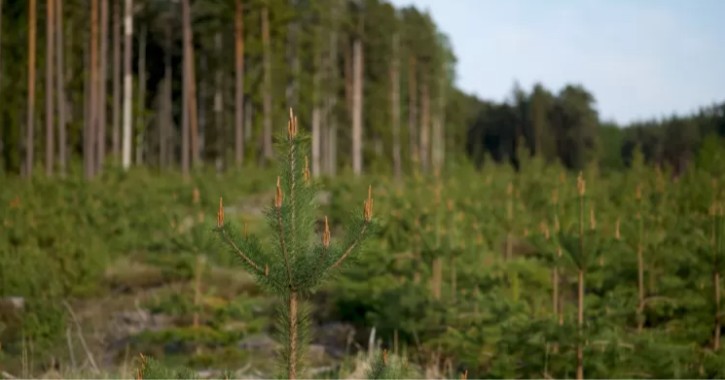
If radiata pine monoculture were as harmful as is often claimed in Chile, the first country to ban it would have been New Zealand. However, exactly the opposite happened. After more than seven decades of experience, that country continues to base a large part of its forestry industry and home construction on Pinus radiata plantations managed under strict environmental standards.
In Chile, the idea has become firmly established that forest plantations of a single species, particularly radiata pine, constitute almost an environmental sin. The concept of 'monoculture' is often presented as if, by itself, it were enough to condemn a productive activity.
However, one only needs to look at what some of the world's most advanced forestry countries are doing to see that reality is quite different.
New Zealand, considered one of the countries with the best environmental management standards in the world, is probably the best example. Since the large-scale afforestation campaigns begun in the 1920s and 1930s, reinforced during the 1960s, it developed an industry based almost entirely on Pinus radiata plantations. Today, around 90% of its planted forests correspond to that single species.
Since the 1950s, that is, for more than 70 years, radiata pine has been used as the structure for the vast majority of New Zealand homes. Currently, around 93% of low-rise homes are built with timber framing, and the vast majority of that timber comes from Pinus radiata plantations.
Australia follows a very similar logic. A large part of its homes uses timber structures from plantations, with radiata pine being the main structural species in the south of the country.
What is striking is that, after more than half a century of practical experience, none of these countries has decided to abandon this productive model. Quite the contrary, they continue to invest in genetic improvement, silviculture, fire prevention, sanitary control, and environmental certification. Furthermore, both countries remain major exporters of forest products, generating billions of dollars annually in exports of timber, panels, pulp, and manufactured products.
A native forest fulfills irreplaceable ecological functions and must be protected. A forest plantation, on the other hand, is a crop intended to produce renewable timber, just as an orchard produces fruit or a vineyard produces grapes.
Unlike the vast majority of agricultural crops, radiata pine plantations in Chile, New Zealand, and Australia are developed without artificial irrigation, using exclusively natural rainfall. At the same time, during their growth they capture significant amounts of atmospheric carbon dioxide, storing it for decades both in the forest and subsequently in wood products.
In the case of Chile, a very significant portion of forest plantations was established on previously degraded or severely eroded soils. In that context, the correct environmental comparison is not with the original native forest, but with the land existing before afforestation. From that perspective, plantations present considerably greater biodiversity than those degraded soils, in addition to reducing erosion to practically zero, favoring water infiltration, recovering organic matter, and restoring multiple ecological functions.
That does not mean that plantations should not be managed responsibly. There must be biological corridors, protection of watercourses, conservation of native vegetation, fire prevention, and good silvicultural practices. All of this is part of modern forestry and is required by international certification systems such as FSC and PEFC.
If radiata pine monoculture were, by definition, an environmentally unacceptable practice, New Zealand and Australia would have abandoned it decades ago. Not only did that not happen, but both countries continue to refine this model.
When a country needs to produce food, no one questions the existence of wheat, corn, rice, vineyard, apple, or cherry monocultures. It is understood that they are crops intended to produce a specific good. Likewise, forest plantations are crops whose purpose is to produce renewable timber. What matters is not that they consist of one or several species, but that they are managed responsibly, protect watercourses, conserve native vegetation where appropriate, and meet high environmental standards, just as occurs in the world's leading forestry countries.
Source:BiobioChile






Comments (0)
No comments yet. Be the first to comment!
Leave a comment