

Forestry exports from Biobío reached US$207.7 million during July 2026, a figure that represented 52% of the region's total exports in the period. However, the result meant a decrease of 10.2% compared to July 2025, according to the Forestry Exports Bulletin No. 21 of the National Institute of Statistics (INE).
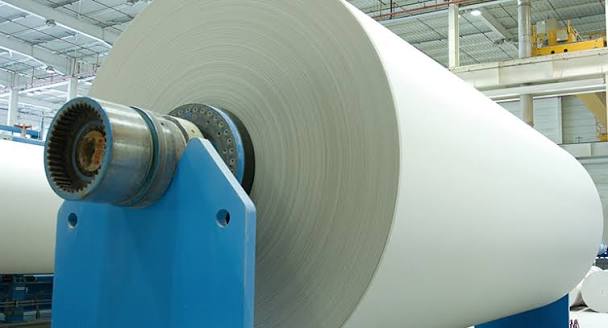
In total, regional exports reached US$399.4 million, of which US$207.7 million corresponded to the forestry sector. The main economic activity linked to the sector was the manufacture of pulp, paper and paperboard, which concentrated 63.5% of forestry exports, with shipments worth US$131.8 million.
The performance of this activity had a significant impact on the decline recorded during the month. Its exports decreased 11.7% year-on-year, equivalent to US$17.5 million less than in July 2025.
Pulp concentrates shipments
By goods, pulp once again widely led Biobío's forestry exports. During July it recorded shipments worth US$126 million, equivalent to 60.7% of the forestry total, although it posted a year-on-year decrease of 12.2%.
Second was sawn wood, with US$20 million, but it experienced a drop of 49.8% compared to the same month of the previous year. It was followed by wood fiberboards, with US$12.3 million; plywood, with US$11.1 million, and wood chips, with US$7.6 million.
Together, these five goods represented US$177 million, equivalent to 85.2% of regional forestry exports.
A positive element within this scenario was precisely the performance of wood chip exports, whose amount increased by US$7.6 million compared to July 2025.
China continues to lead the markets
In terms of destinations, China remained the main market for Biobío's forestry products, with purchases worth US$87.6 million, equivalent to 42.2% of the sector's total exports.
The United States ranked second, with US$36.4 million and a share of 17.5%. Both markets recorded declines compared to July 2025: China reduced its purchases by 10.9%, while the United States did so by 18.8%.
The behavior was different in other Asian markets. Exports to South Korea reached US$15 million, with year-on-year growth of 35.5%. Japan, meanwhile, received forestry products worth US$11.2 million, recording a strong increase of 112.5% compared to the same month of the previous year.
China, the United States, South Korea, Japan and Mexico together concentrated US$158.3 million, equivalent to 76.2% of Biobío's forestry exports during July.
A still contractionary scenario
The July result fits into a trajectory of lower export amounts compared to the previous year. Between January and July 2026, accumulated forestry exports reached US$1,526.7 million, a figure that represents a negative accumulated variation of 11.1%.
The INE bulletin also warns that the figures incorporate statistical revisions carried out within the framework of the Regional Basket Project, aimed at strengthening the territorial consistency of exports.
The data thus confirm the structural weight of forestry activity in Biobío's foreign trade, while at the same time showing a scenario of contraction in several of its main products and markets during July 2026.





Comments (0)
No comments yet. Be the first to comment!
Leave a comment