

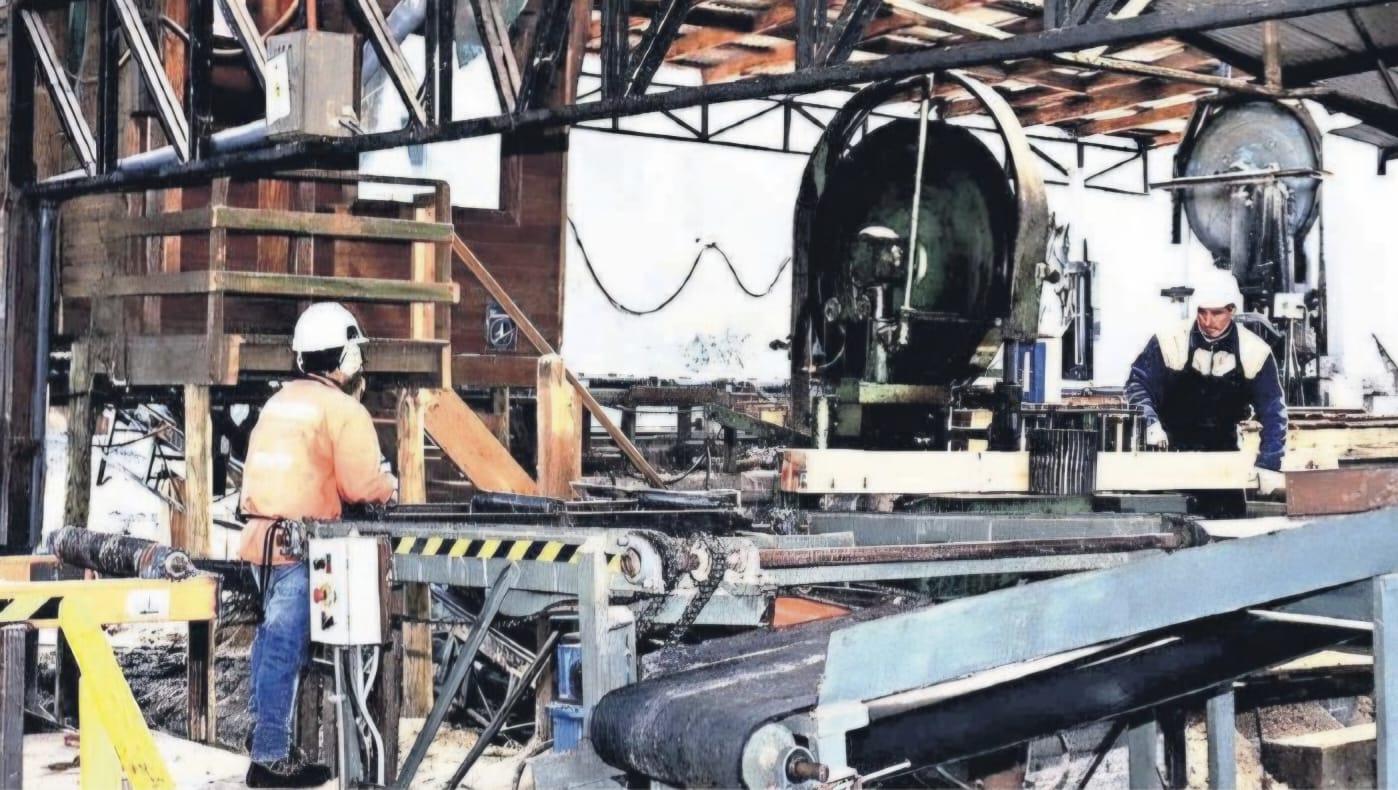
Concern exists among small and medium-sized companies linked to the Biobío forestry sector, after exports in the sector recorded a 10.2% drop in July compared to the same month last year. According to the latest INE bulletin, the region exported 399.4 million dollars during the month, of which 207.7 million of the U.S. currency corresponded to the forestry sector, a scenario that, according to sector representatives, is already having consequences on orders, work shifts and the operation of some production units.
René Muñoz, manager of the Asociación de Contratistas Forestales AG (Acoforag), stated that "we forestry contractors are the first link in the forestry sector's production chain. Therefore, any decrease affects us directly."
"Without a doubt, the international market is very depressed and that makes activity suffer, and the numbers show it. The reduction in July somewhat marks that trend and we believe it will continue, given that globalization means international markets directly influence the behavior of our exports," he added.
"In the Eighth Region, 40% of labor activity is related to the forestry sector and 70% of port movement is also related to this sector. Therefore, any drop or decrease in exports generates an immediate effect on labor," he stated.
"Although the export drop figure is a reflection of the current situation, the underlying problem we face is not due solely to the figure for one particular month. The timber and forestry industry, especially in the Biobío Region, has been accumulating a sustained impact from a widespread economic crisis and a structural contraction of which SMEs are the most vulnerable face," said Victor Sandoval, coordinator of Futuro Madera and regional president of Pymemad.
"Today we observe a very complex scenario: lower demand in the international market, added to the stagnation of national construction and sawmills, translates into a direct drop in sales and orders for the network of SMEs in the area," he said.
"These do not work in isolation; when export activity falls and production decreases, the entire value chain falls: service contracts, input production and, unfortunately, plant operations. This drop in orders and constant uncertainty has forced many production units to reduce their shifts or directly suspend operations," he noted.
"The consequences are concrete and painful for employment and the local economy. The weakest link in this chain are SMEs, which represent almost half of plantation assets, but suffer directly from the effects of lower activity. To illustrate the magnitude of the problem: in the last five years alone, the closure of nearly 200 sawmills has been recorded in the region and the country," he explained.
"This fully impacts the income of supplier companies, whose cash flow and ability to survive are being suffocated. And its immediate social correlate is the loss of quality jobs in rural and industrial communes of Biobío," he said.
CORMA
Alejandro Casagrande, president of Corma, stated that "a decrease in forestry exports is a sign of concern for Biobío. The companies themselves have reported a more demanding international scenario, marked during the first half of the year by lower demand for our export products in some markets, especially China and the United States."
Source:La Estrella de Concepción






Comments (0)
No comments yet. Be the first to comment!
Leave a comment