

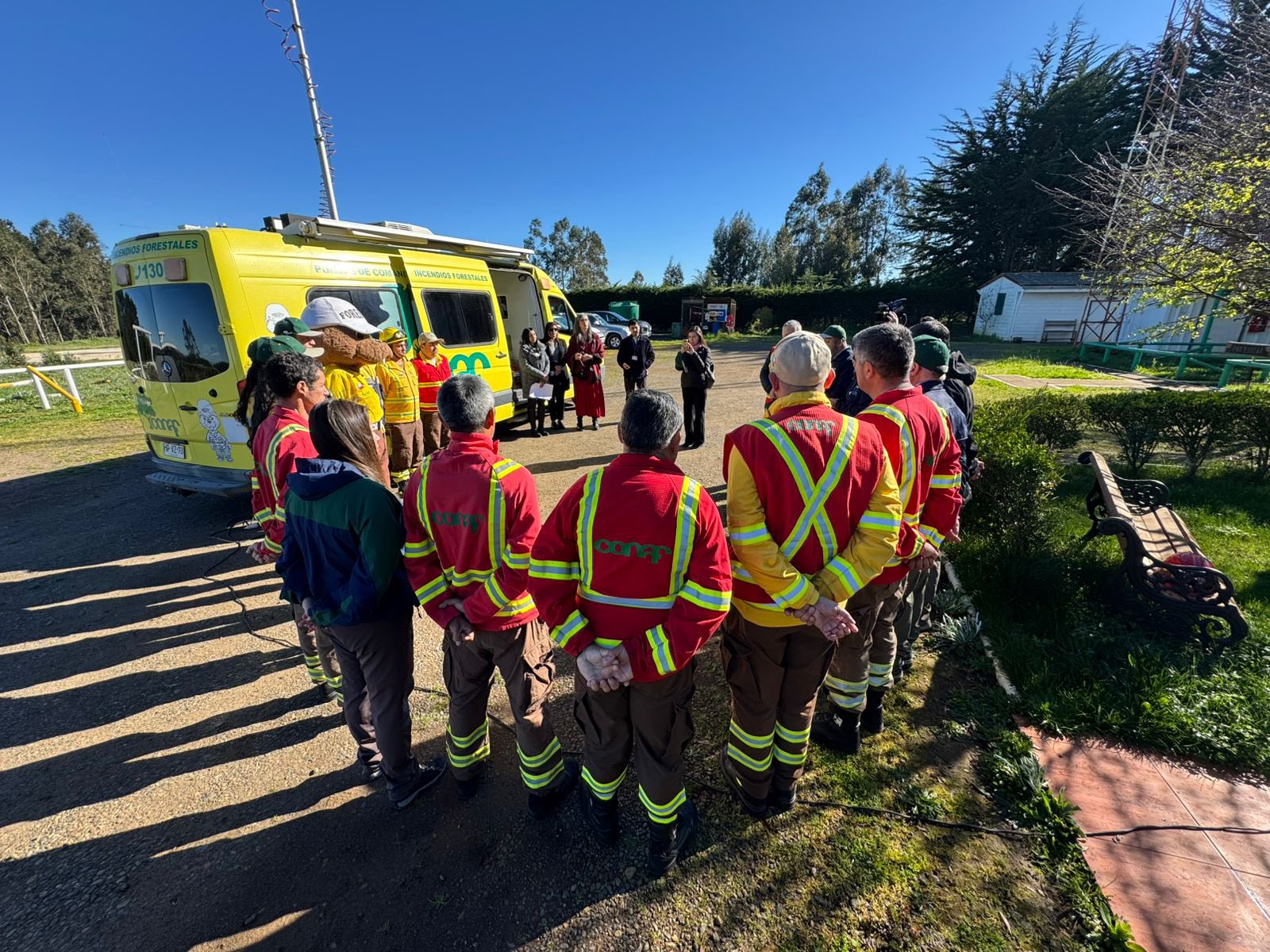
The Biobío Region is preparing in advance to face the upcoming forest fire season, amid a scenario that could combine abundant vegetation with subsequent periods of dryness.
The strategy considers accelerating the deployment of resources, expanding preventive actions, and strengthening coordination among the agencies involved in emergency response.
Conaf's regional director, Álvaro González, explained that preparations began earlier than in previous seasons and that one of the objectives is to have sufficient operational capacity before the greatest risk concentrates.
In the Biobío province, six brigades are expected to be available during this week, while the regional plan aims to reach 42 operational brigades before October ends.
The planning is being carried out together with Senapred, Corma, and Bomberos de Chile, with the purpose of establishing protocols and coordination mechanisms in advance to face potential fires.
Abundant vegetation can increase available fuel
One of the factors keeping authorities on alert is the behavior of vegetation after the rains.
The growth of grasses, weeds, and other plant elements can generate a greater amount of combustible material when dry conditions subsequently set in and temperatures rise.
Faced with this scenario, Conaf will reinforce preventive efforts in areas where homes and other facilities are close to vegetation zones.
One of the lines of work includes the execution of firebreaks and fuel management in coordination with the municipalities.
In addition, during this season efforts will be made to complement the work of the brigades with people hired through employment programs promoted together with communal administrations.
This modality will allow brigade members to carry out certain specialized tasks and, behind them, other workers to continue with clearing and prevention tasks, expanding the area intervened.
Anticipated reinforcement of brigades and infrastructure
According to the regional planning, the brigades will be available approximately 30 days earlier than in previous seasons.
A new fire command center in Concepción will be added to this deployment, which will be set up in the facilities of the so-called Remodelación Catedral, infrastructure that will be transferred to support Conaf's operations.
The aerial component is still being defined, because at the time of planning the national budget for the season was not completely finalized.
González stated that it is not yet possible to determine the final number of aircraft that will be assigned to Biobío, although he assured that the region will have resources to face emergencies.
Alto Biobío concentrates another concern
The geographic conditions of mountain sectors are also part of the forestry authority's concerns.
In communes such as Alto Biobío, access to certain sectors can hinder the movement of brigades and other teams during an emergency.
Conaf maintains coordination with the municipality and contemplates the participation of inhabitants of the commune itself in the brigades, taking advantage of their knowledge of the territory.
Added to this is a structural difficulty: the existence of native forest sectors with few roads and operational access points.
For González, improving this situation requires advancing management and access policies that facilitate prevention and combat efforts, especially in territories where geographic conditions can delay the arrival of teams.
With the calendar moving toward the months of greatest risk, the regional strategy thus aims to gain time, expand prevention, and strengthen coordination, seeking to have human, ground, and infrastructure resources available before the occurrence of forest fires increases.





Comments (0)
No comments yet. Be the first to comment!
Leave a comment