

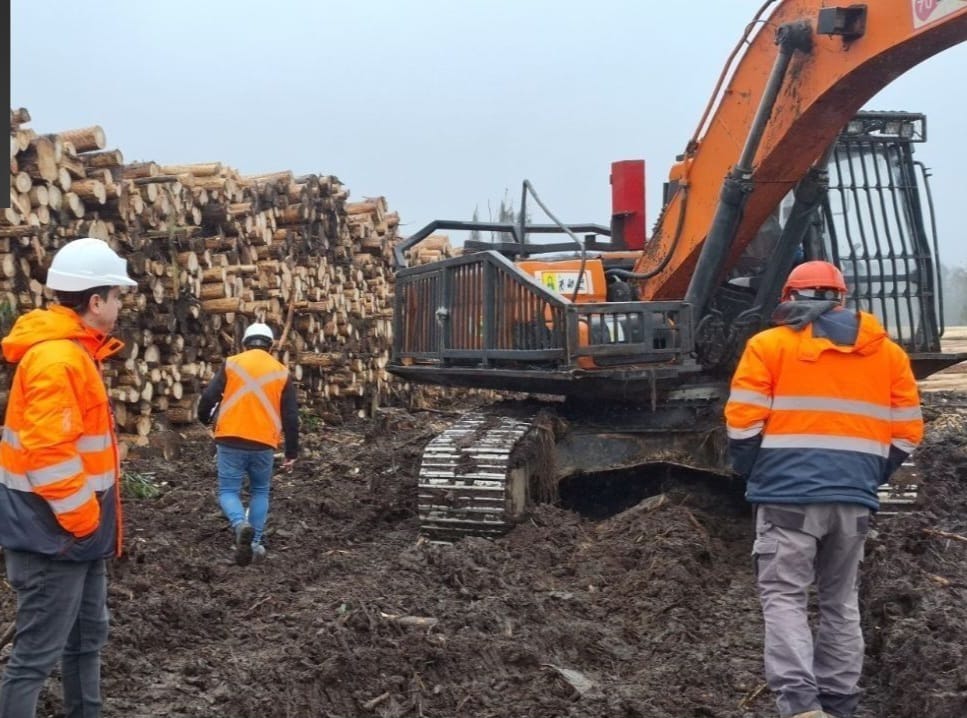
In October 2022, we filed a complaint with the ILO regarding the State's failure to comply with Convention 187, in relation to the unhealthy and unsafe working conditions to which forestry contractors and their workers are exposed in the Macrozona Sur.
After a conciliation supported by the ILO, the government at the time did not adequately address, in our view, the State's responsibility regarding the scenario of insecurity and violence existing in those regions. Subsequently, through Decree No. 2 of the Ministry of Labor and Social Security, dated May 7, 2024, the new National Policy on Safety and Health at Work (PNSST) was published, in force for the period 2024–2028.
In it, commitment No. 8 regarding employing entities and their organizations establishes that: "Employing entities must adopt effective measures to reduce and mitigate the risks associated with external violence affecting workplaces, especially in highly exposed productive activities such as the forestry sector, transportation, and services."
In simple terms, we interpret that the current PNSST transfers to employers in sectors such as forestry, transportation, and services a relevant responsibility regarding risks derived from external violence, including those associated with the actions of armed groups, organized crime, and other criminal acts.
Currently, we are once again in a conciliation table with the Ministry of Labor and the ILO, after a new complaint filed by Acoforag was accepted. This action seeks to review and correct the approach contained in the PNSST, which we consider improper insofar as it may mean transferring to employers responsibilities that correspond to the State.
The State cannot evade its constitutional obligations. More importantly, the responsibility that corresponds to employers in matters of safety and health at work and labor relations, in accordance with Article 184 of the Labor Code, must not be confused with those functions proper to the State in the prevention and prosecution of crime, as well as in safeguarding security against delinquency, external violence, and terrorism.
Employers must adopt all measures that fall within their scope of responsibility to protect their workers. But there are risks whose prevention and control exceed that scope and correspond, by their very nature, to the State.
The safety of those who work in areas exposed to acts of violence cannot depend exclusively on the capacity of each company to confront threats that require police, judicial, and public security action. That is a responsibility that the State must assume effectively and inescapably.







Comments (0)
No comments yet. Be the first to comment!
Leave a comment