

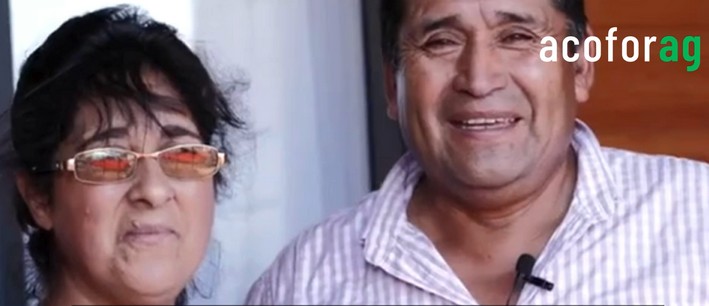
There are stories that don't need great events to be meaningful. Luis Yancamán's is one of them. His life is marked by work, affection, and those small everyday efforts that, over the years, end up building a family and a home.
He was born in Curanilahue, in an environment where music was part of family life. Guitars and accordions accompanied his childhood, but so did the example of his father, a man who at 18 left his homeland to work in the mines of the north.
From him he inherited, among other things, the importance of working and facing difficulties without losing simplicity.
When Luis began his life alongside Alba Luz Fontalba, there weren't great resources either. They started practically from scratch, with a bed and a few cups. The rest came with the years and, above all, with the effort of both of them.
"I would give her the money and she would save it," Luis says when recalling the early years of marriage. He speaks of Alba with evident admiration and gratitude. He describes her as a thrifty, steadfast woman, essential for the family's plans to become a reality.
But in that story there is also a special figure: Polidoro Segundo Fontalba, his father-in-law. Over time, the relationship between them transformed into a much deeper bond than that of father-in-law and son-in-law.
"At first, when I took his daughter, he was more or less... but later I won his affection," Luis recalls with humor.
Together they took part in building a house and shared years of family life. Luis always respected Polidoro's place within the home, recognizing him as "head of the house and head of the family."
Today, that story is also part of the legacy their children receive. For them, the example of their parents is built more with deeds than with speeches: getting up early, working, saving, keeping one's word, and caring for one's own.
Luis works as a machinery operator, a trade he enjoys and that has allowed him to develop a particular relationship with machines.
"You connect with the machine," he acknowledges. But he immediately puts things in perspective: "The most important thing is to get home, tell how the day went, and see your loved ones proud."
In those words, a good part of his story seems to be summed up. Because behind the operator, the worker, and the man who learned to earn a living through effort, is the family man who finds his greatest reward upon returning home.
The story of Luis, Alba, and Polidoro doesn't speak of great fortunes or easy paths. It speaks of something closer: people who started with little, who trusted one another, and who, step by step, built a life.
A story born in Curanilahue, yet profoundly universal: that of those who understand that a home is not built only with bricks, but also with work, respect, trust, affection, and the joy of sharing the journey.


Comments (0)
No comments yet. Be the first to comment!
Leave a comment