
In Chile there are systems to recover glass, cardboard, plastic or metals. However, with wood something different happens, since pallets, packaging and other products that have already fulfilled their function still tend to remain outside an organized recycling chain, even when they can be used again as raw material.
In that scenario, the company ARAUCO implemented at its Panels Plant located in Teno, Maule region, a line with unique characteristics in Latin America, capable of receiving recovered wood and preparing it for incorporation into the manufacture of new boards.
The project represents a concrete application of the circular economy. Wood that could end up in a landfill or simply burned is recovered, shredded, sorted and reincorporated into an industrial process.
“The goal we were seeking was to give a second life to wood already used, favoring the circular economy. Along with this, its incorporation provides efficiency and contributes to the competitiveness of our boards”, explains Jean Claude Lucas, manager of the Teno Panels Plant.
Reincorporating already used wood allows moisture control and greater competitiveness, adds the executive.
From waste to raw material
The recovered wood comes mainly from pallets, packaging and other elements used by ports, logistics centers, agricultural and fruit companies, vineyards, mining operations, construction companies and companies in theretail, among other sectors.
After fulfilling their first function, these materials can be separated from the rest of the waste, shredded and sent to Teno as recycled chips.
“This project is the circular economy in its most concrete sense: we are capturing a material that could end up as waste or be burned, we valorize it and reincorporate it into a productive process. That wood gets a new life again as raw material to manufacture new products, in this case ARAUCO's Vesto melamine boards”, points out Arturo Jorquera, deputy manager of ARAUCO Trading.
Vesto is ARAUCO's melamine board line used mainly in the manufacture of furniture, kitchens, closets and other interior fittings, noted for its wear resistance and its antimicrobial protection technology with copper, having a strong presence in spaces that require higher hygiene standards, such as schools and hospitals.
A chain under construction
For the line to operate and progressively increase the volume of recovered wood, in addition to cutting-edge technology, it is also necessary to build a network capable of separating, collecting and processing this waste.
ARAUCO Trading is responsible for managing that supply. Its work includes identifying generators of used wood, developing suppliers and evaluating business models that make its recovery viable.
“In Chile there is still no developed wood recycling industry, as there is with glass, cardboard or steel. That is why our role begins by generating the culture and incentives necessary so that those who produce this waste can segregate it and dispose of it in a differentiated manner”, explains Jorquera.
The challenge includes ensuring that materials arrive separated from other waste and that, once processed, they meet the technical characteristics necessary to be incorporated into the industrial operation.
Currently, the plant works with different suppliers and carries out analyses of granulometry, density and composition to expand supply sources. Recycled wood today represents around 12% of the material used and its share is projected to gradually increase to 25%.
Technology
Recovered wood may contain nails, stones, plastics, dust and other elements typical of its previous use. Before entering board manufacturing, it must pass through a line specially designed for its cleaning, sorting and dosing.
The system has magnetic separators, size-sorting equipment, cameras and inductive sensors. Among them is the so-called Cyclops, which identifies and removes metals, plastics and other materials that are not wood.
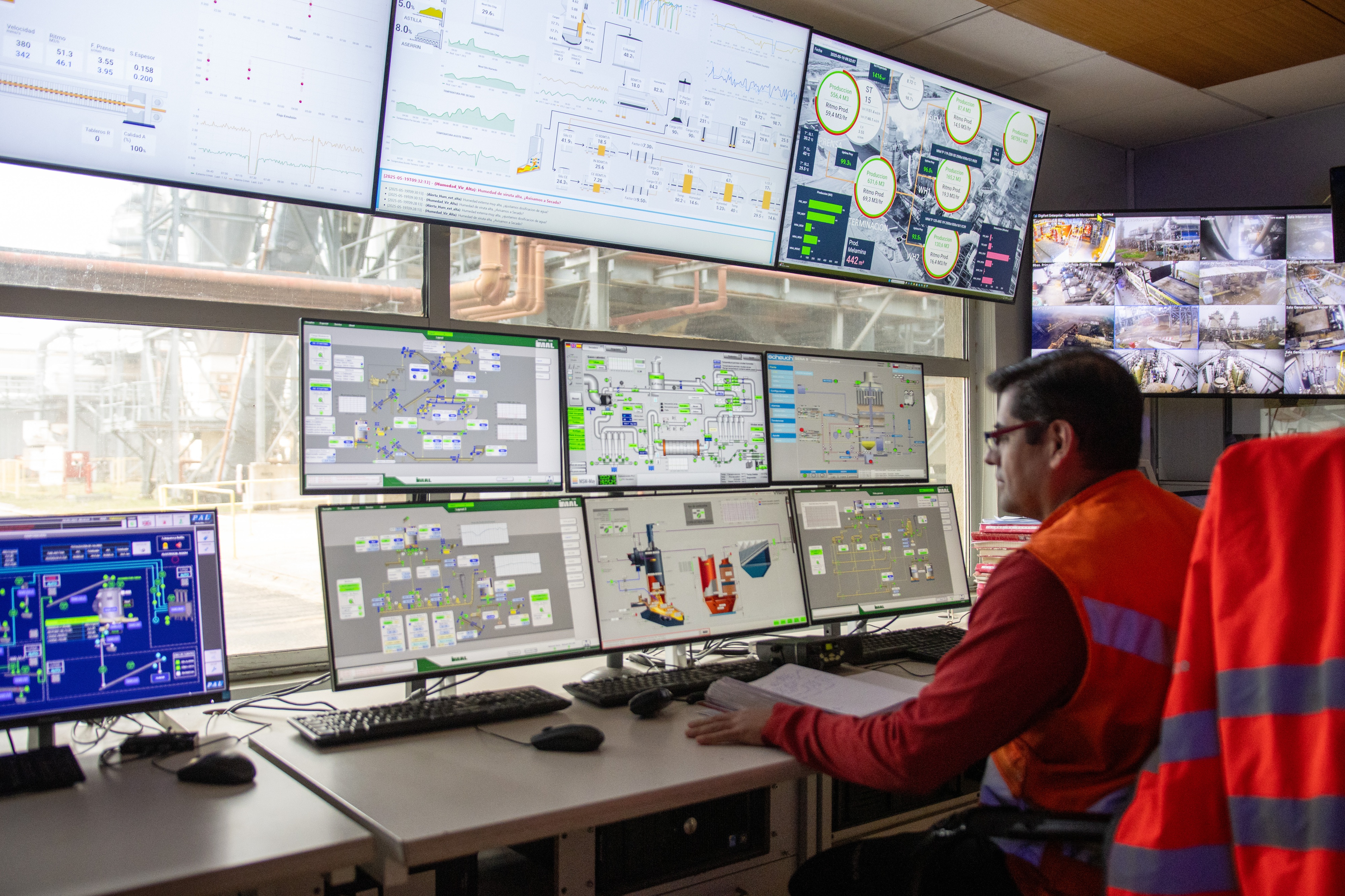
“Once the wood has been cleaned and sorted by granulometry using different equipment and video cameras, it can continue to the production process”, explains Eliezer Céspedes, control room operator at the Teno Plant.
Supply
The start-up of the project included a stage of technology transfer and industrial optimization, aimed at adapting the line to the conditions of the Teno Plant.
“This is a line with unique characteristics in Latin America. At the beginning we had to learn to know it, operate it and adjust it. That barrier has already been overcome and today the main challenge is to expand the range of suppliers and increase the availability of recycled wood”, points out Gonzalo Montecinos, head of Operations of the Boards Area at the Teno Plant.
With the technology already installed and operating, the challenge for ARAUCO now is to scale the model, expanding supply and progressively incorporating more recycled wood into the production process.


Comments (0)
No comments yet. Be the first to comment!
Leave a comment