

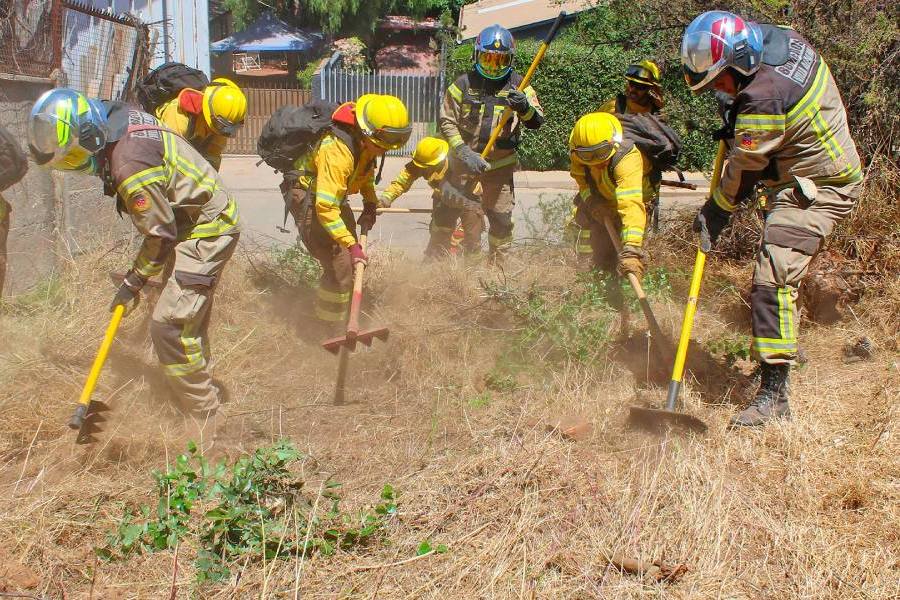
With the season of greatest wildfire risk increasingly closer, Conaf Ñuble launched an extraordinary reinforcement of preventive efforts, which will allow 700 additional workers to be brought on between October and December.
The goal is to intervene early in those areas where the accumulation of dry vegetation can favor the spread of fire, especially in interface zones between urban and rural areas.
The new workers will join the 107 regular slots of the Emergency Employment Program, making it possible to carry out cleanup, clearing of plant material, and construction and maintenance of firebreaks in the 21 communes of the region.
The director of Conaf Ñuble, Domingo González, explained that the reinforcement will make it possible to protect areas near homes, schools, and critical infrastructure, with special attention to areas identified as the most vulnerable.
"We are not waiting for the fire; we are preventively reducing plant fuel to protect the lives and property of our neighbors," he said.
A strategy that extends throughout Chile
The deployment is part of a national plan that includes 4,567 additional workers, in addition to the early incorporation of 96 Conaf brigades.
Added to this is coordinated work with the Ministry of Public Works (MOP), which contemplates intervening in nearly 7,000 kilometers of firebreaks and clearing efforts at the national level.
The presidential delegate of Ñuble, Diego Sepúlveda, emphasized that early preparation is key to reducing risks during the months of greatest danger.
As he explained, nearly 99% of wildfires originate from human action, so prevention and fuel-reduction measures take on special relevance.
From the Seremi of Agriculture, the preventive component of the program was also highlighted, considering the vegetation conditions that could accumulate during the coming months.
The bet is simple: intervene before the fire appears and reduce the conditions that can allow a fire to spread rapidly.





Comments (0)
No comments yet. Be the first to comment!
Leave a comment