

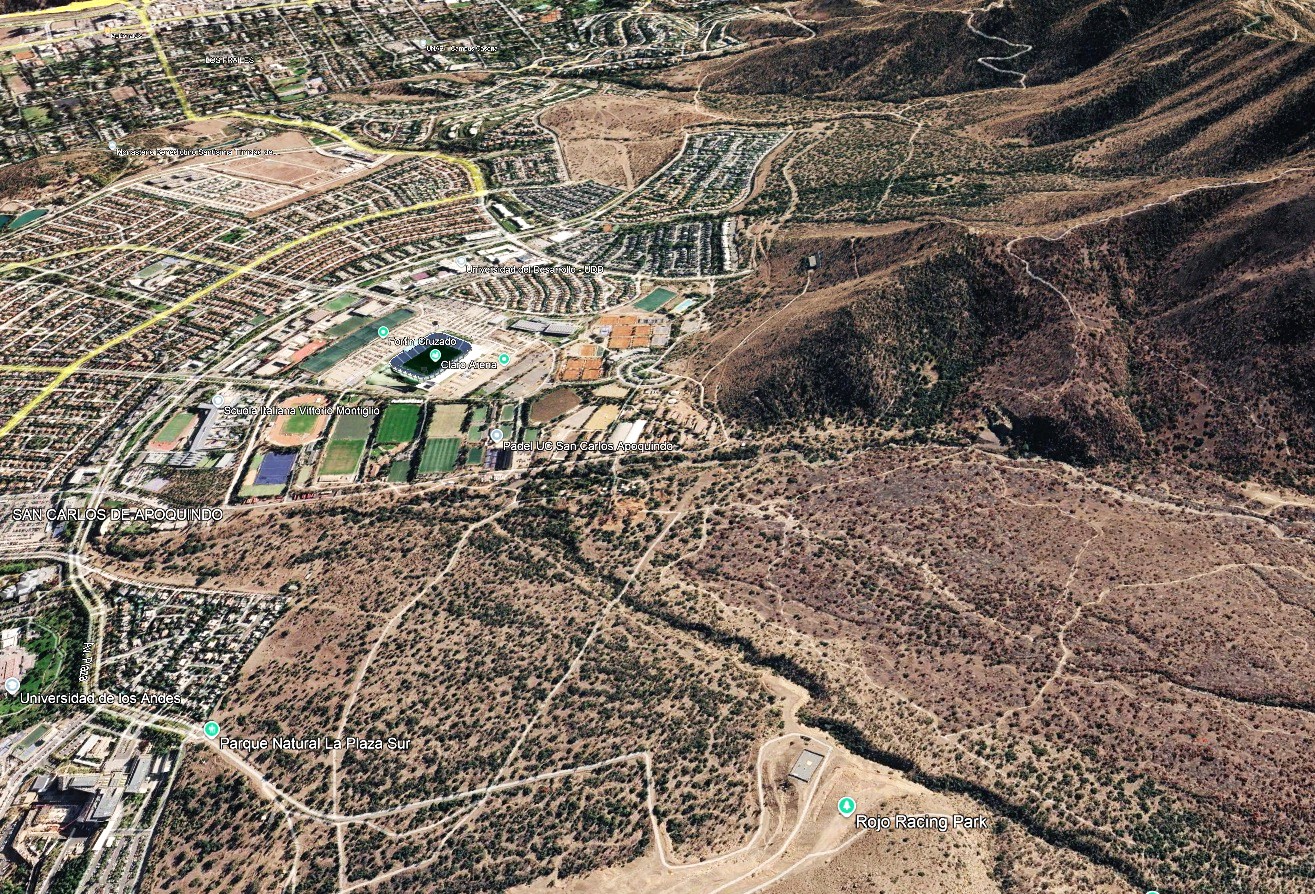
The relationship between forest fires and subsequent mudslides has once again become part of public debate following the event that occurred in the Las Condes mountain range. However, for Eduardo Peña, a forest engineer with a master's degree in Forest Sciences from the University of Montana, United States, and a doctoral degree in Forestry Engineering from the University of Córdoba, Spain, attributing a determining role to the burned area in the magnitude of this mudslide does not fit the specific characteristics of the case.
The academic from the Faculty of Forest Sciences at the University of Concepción argues that, although the fire may have contributed to some extent to surface runoff, its influence would have been marginal compared with other factors that explain the magnitude of the phenomenon.
"In this specific case, the answer is no. The burned area may explain a small part of the mudslide, but, within the magnitude of the event, its effect is marginal," Peña states.
Vegetation cover and the effect of the fire
According to the specialist, one of the reasons to relativize the fire's incidence is the scarce cover of grasses and shrubs in the affected sector. This vegetation would have a limited capacity to intercept rainwater, estimated by the academic at between 5% and 7%, with a maximum that would not exceed 10%.
To put that difference into perspective, Peña compares these conditions with those of a dense forest or a pine plantation, whose vegetation cover can intercept between 30% and 35% of precipitated water.
Added to this is the fact that the approximately 800 hectares affected by the fire represent only part of the basin that contributed to the event. For this reason, the specialist estimates that the influence of the burned area on the total volume of water that ran off would have been less than 7%.
From that perspective, Peña argues that, even if the fire had not occurred, the terrain conditions and the characteristics of the precipitation would have equally allowed for significant runoff. Therefore, the absence of fire would not necessarily have meant a substantial reduction in the magnitude of the mudslide.
The academic also warns that, if the sector is used for temporary grazing, the water retention capacity of the vegetation could be even lower, due to the consumption of biomass by livestock. In addition, trampling by animals can compact the soil and favor surface runoff.
Rainfall intensity and water input at higher elevations
For Peña, the most relevant factors of the episode are related to meteorological conditions and the amount of water that reached the basin in a very short period.
One of the elements he highlights is that the snow line was higher than usual, reaching approximately 2,800 meters. This would have allowed a greater proportion of the precipitation to arrive as water in sectors where, in other episodes, part of it remained temporarily stored as snow.
However, the specialist identifies rainfall intensity as an especially important factor. According to the background he presents, 10 millimeters of rain were recorded in half an hour, a volume equivalent to about 100 tons of water per hectare.
When water reaches the ground in such high quantities and in a short period, the soil's infiltration capacity may prove insufficient. Consequently, a significant part of the water runs off over the surface and concentrates in ravines and channels.
When mixed with soil and sediments, the flow acquires greater density and carrying capacity, which allows it to transport large stones and other heavy elements. Under those conditions, Peña explains, even a vehicle can be dragged by the current, due to the forces acting on it and its buoyancy.
Redesigning water drainage and protecting the soil
Faced with this type of episode, the academic warns that the solutions are not simple, since much of the water drainage systems were designed to respond to rainfall conditions different from current ones.
"All water drainage systems were designed years ago, when rainfall events were of lower intensity but prolonged over time," he notes.
For this reason, he considers it necessary to review and redesign this infrastructure so that it can respond better to intense rainfall concentrated in short periods.
Among the measures he proposes is increasing vegetation cover, both for its capacity to intercept part of the rainfall and for its contribution to soil protection. He also proposes incorporating organic waste on the surface, with the purpose of improving its protection, reducing the direct impact of raindrops, and decreasing the disaggregation of soil particles, a process that facilitates runoff.
Another alternative is the construction of sedimentation ponds capable of retaining sediments and reducing part of the load carried by mudslide flows. As a reference, Peña mentions the works implemented years ago in the Macul ravine, where this type of infrastructure was used to address the risks associated with flooding and material transport.
The specialist's analysis emphasizes the need to address these phenomena from a comprehensive perspective, one that considers the characteristics of each basin, rainfall intensity, vegetation cover, soil protection, and the capacity of drainage and containment works.
Rather than attributing the magnitude of the mudslide exclusively to the fire, Peña argues that understanding the relative weight of each factor is fundamental for guiding prevention measures and reducing risks in the face of future episodes of intense rainfall.



Comments (0)
No comments yet. Be the first to comment!
Leave a comment