

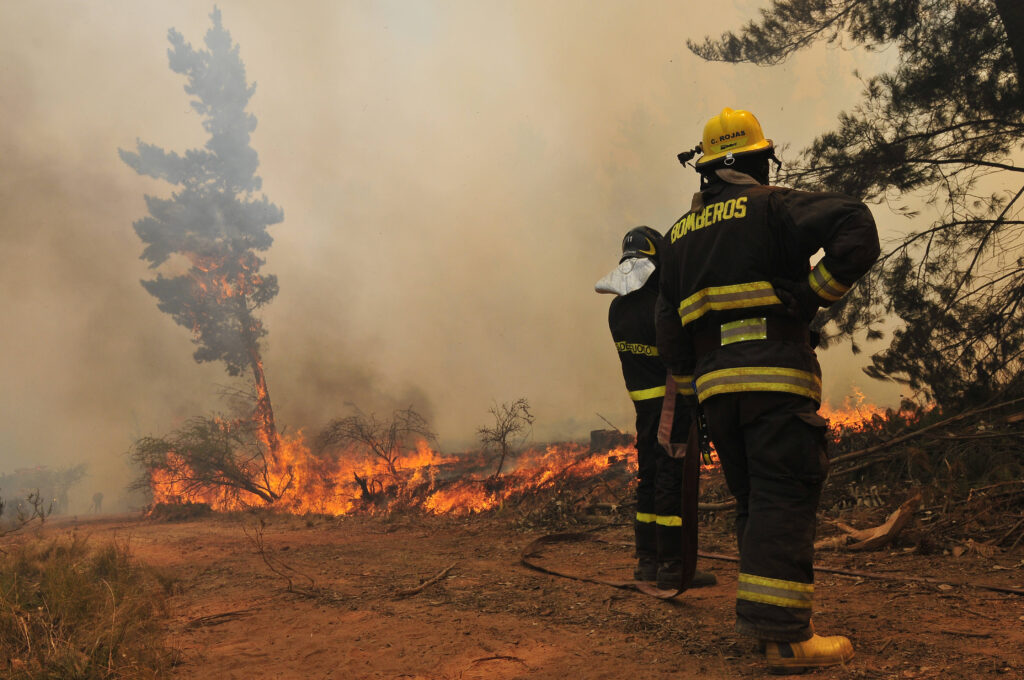
The 2026-2027 forest fire season begins with more favorable figures than last year's in O'Higgins, although the outlook could change over the coming months. The rains that extended into spring have helped keep vegetation green and delay the appearance of larger fires. However, with the arrival of high temperatures, that same material could dry out and facilitate the spread of fire.
According to records from the National Forestry Corporation (Conaf), as of November 9 the region has accumulated 19 forest fires and 22.09 hectares affected, compared with 44 fires and 76.22 hectares on the same date last season. This represents an approximate decrease of 57% in the number of fires and 71% in the area affected.
"I believe the difference lies mainly in the late rains; that has to some extent postponed the strong start of the season. Let's remember that we are in the month of November, and last year already in August, even around the national holidays, we had had large-scale fires," explained Conaf director Carla Castro.
However, the conditions that so far have favored a lower occurrence of fires could change over the coming months. It was precisely about that scenario that the O'Higgins regional minister of Agriculture, Carlos Valdés, warned after learning of the projections from the Meteorological Directorate (DMC).
"We had a meeting with the DMC last week. They told us that the rains would probably continue, which means that this vegetative material that today looks green throughout the region will dry out with high temperatures. At that point it is very likely that there will be fires," said the regional minister.
The authority identified Paredones, Litueche, Navidad and Pumanque among the communes that require special attention due to their history of forest fires, mainly in mountain sectors and in the interior and coastal drylands.
Faced with this scenario, on November 5 the 2026-2027 Forest Fire Protection Plan was presented at the Pichilemu aerodrome, which contemplates 25 brigade bases, 6 combat aircraft, 11 observation towers, 10 water tanker trucks and 3 command posts.
The figures show some differences compared with the previous season, when 7 aircraft, 17 observation towers and 11 water tanker trucks were announced. However, Conaf director Carla Castro explained that these variations respond, in part, to the way resources are counted. "Last year's seventh was also the observation plane, and that ultimately is not a combat aircraft," she specified.
In this way, the six aircraft destined for firefighting are maintained, while the difference in water tanker trucks responds to changes in the transport system, which now allows brigadistas and water to be transported in the same vehicle.
Regarding personnel, the institution detailed that 19 of the 22 daytime bases were already active, while the remaining three are scheduled to join on November 16, completing a projected staffing of 438 brigadistas. To these are added three nighttime bases.
The combat strategy will be oriented toward the so-called single strike, which seeks to quickly attack the hotspots through the deployment of ground teams and, when possible, aerial support, preventing the flames from reaching larger proportions.
But prevention will also be decisive. Keeping the surroundings of homes clear, cutting grasslands, pruning branches near roofs and taking extreme precautions when using machinery that produces sparks or handling grills are some of the recommended measures. "However, if we do not have the will and a responsible attitude on the part of the public, all the resources we have at the local and national level could at some point be insufficient," Castro warned.
Added to these measures is coordination with the region's 33 municipalities and the Ministry of Public Works to intervene in higher-risk sectors and remove vegetation from the fiscal strips along roads.
For now, O'Higgins is registering a less intense start to the season than the previous one, but the most critical months are still ahead. Rising temperatures and the preparation of emergency teams will be decisive factors in facing a summer whose behavior remains uncertain.
Source:El Tipógrafo




Comments (0)
No comments yet. Be the first to comment!
Leave a comment