

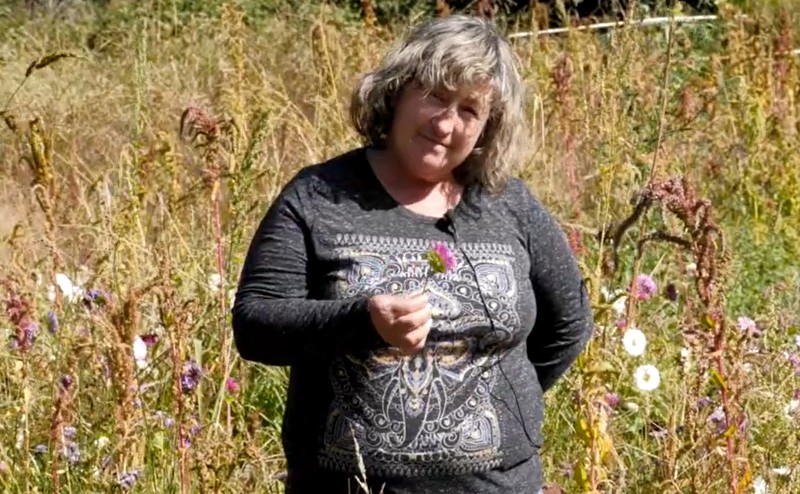
In the midst of an environment where the countryside and the forest are part of everyday life, Nancy Cabezas has found in agriculture a way to get ahead, contribute to her community and build a future alongside her family. Her story reflects the effort of so many rural women who, with dedication and perseverance, keep peasant traditions alive and contribute to the development of their territories.
Her day begins early, among vegetable gardens and crops that require constant attention. Tomatoes, lettuces, scallions and various vegetables are part of a production that is born from direct work with the land. Each harvest is the result of hours of dedication, experience and knowledge that have been passed down from generation to generation.
Over the years, Nancy has managed to consolidate a close relationship with her customers, who value the freshness of her products and the work behind each food item. More than an economic activity, her enterprise represents an opportunity to generate family income and bring peasant production closer to those seeking fresh, quality food.
Her experience also makes it possible to recognize the important role that family farming plays in rural communities. These activities not only contribute to food supply, but also strengthen local economies, preserve traditional knowledge and maintain a direct relationship with the cycles of nature.
In this setting, the forest is also part of her story. For the families who inhabit forest territories, it represents much more than a landscape: it is part of the environment where they carry out their activities, build their homes and plan their lives. The relationship between the forest, water, soils and agricultural production shows the importance of maintaining a balance that allows the development of different activities in the rural world.
Acoforag highlights that behind forest territories there are people, families and enterprises that contribute daily to their dynamism. Stories like Nancy's make this human dimension visible and recognize that the development of the sector is also linked to the opportunities that communities find to work, undertake and grow in their own places of origin.
Nancy Cabezas's trajectory is an example of how commitment to the land can become a source of opportunities and well-being. Her daily work not only makes it possible to grow food, but also to preserve a tradition, strengthen ties with her community and pass on to new generations the value of peasant effort.
Through the dissemination of these experiences, Acoforag seeks to recognize those who give life to rural territories and highlight the contribution of women like Nancy, who through their quiet work demonstrate that the countryside and the forest are also spaces of entrepreneurship, identity and development for Chile.




Comments (0)
No comments yet. Be the first to comment!
Leave a comment