

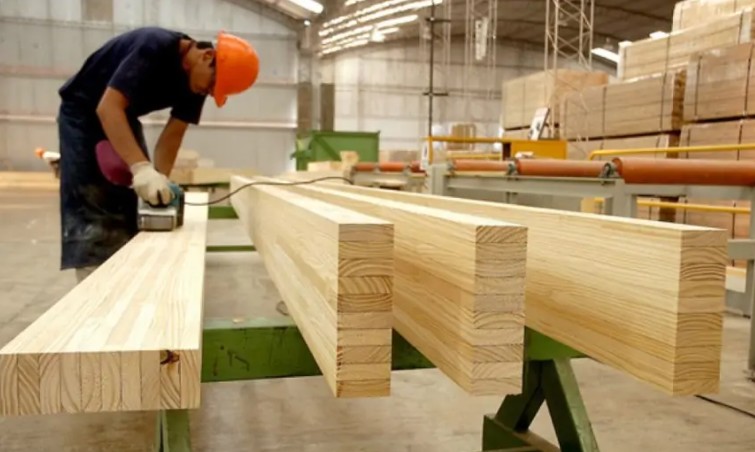
The supply of wood from forest plantations in Chile will face a reduction during the next three-year period, according to new projections from the Forest Institute (INFOR), published in its 2026 Forestry Yearbook. The organization estimates that availability will go from 43.1 million solid cubic meters without bark (m³ ssc) per year, recorded in the 2024-2026 period, to 39.4 million between 2027 and 2029.
Although the scenario anticipates a lower supply in the short term, the outlook shows a subsequent recovery. For the 2030-2032 period, 42.3 million cubic meters per year are projected, while from 2033 availability would remain relatively stable, around 43.4 million until 2053.
These estimates acquire special relevance considering that the forestry industry consumed 42.74 million m³ ssc of roundwood during 2025, 1.2% more than the previous year. Radiata pine represented 61.9% of that volume, followed by eucalyptus, with 37.4%. The remaining exotic species and native species had shares of 0.4% and 0.2%, respectively.
Factors conditioning supply
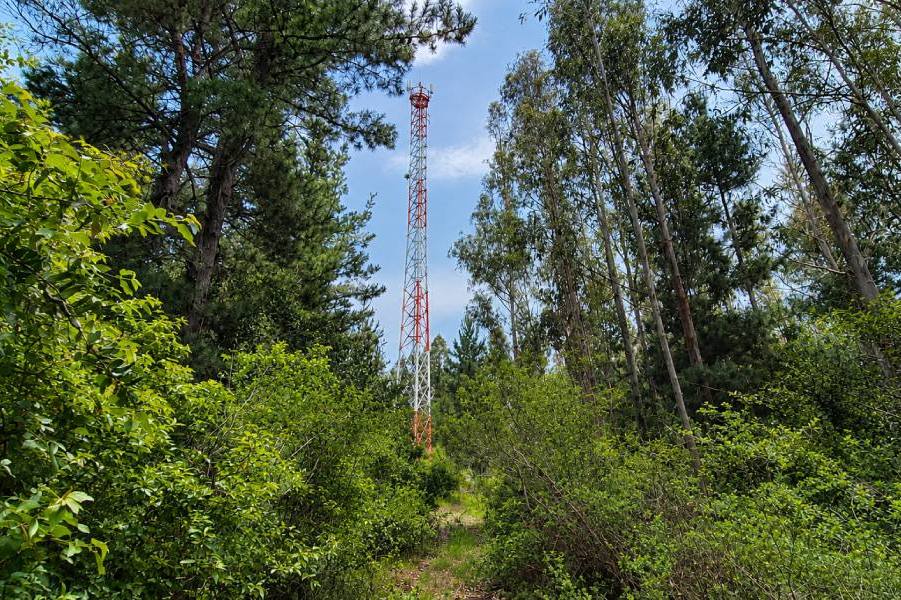
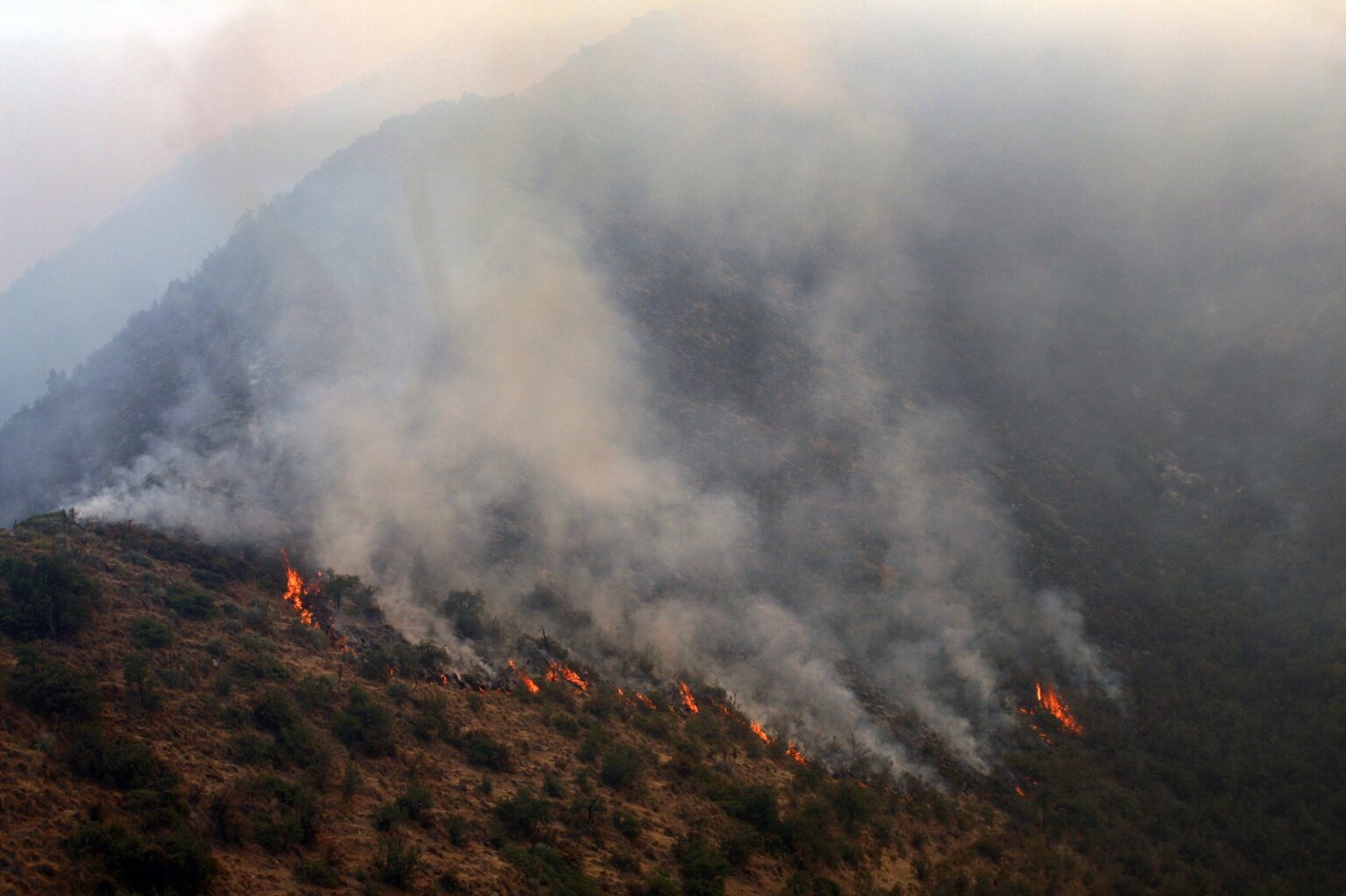
INFOR identifies various elements that are modifying the country's wood supply capacity. Among them are large forest fires, the scarce incorporation of new planted areas, species changes, the conversion of plantations to native forest, and greater competition for land use.
Added to these factors are the effects of climate change, which have influenced lower growth rates of some species in certain areas. The organization also warns about the difficulties in recovering the areas affected by the 2017 and 2023 fires.
In the case of land belonging to small and medium-sized owners, part of the recovery has occurred through natural regeneration. However, when this presents excessive density, it can limit tree development and affect both the quality and the potential commercial use of the wood.
Despite this scenario, the new simulation presents an improvement of 5.1% compared with the previous study, equivalent to an average of 2.1 million additional cubic meters per year in the projected availability for the four species considered.
Behavior of the main species
Radiata pine will continue to be the main component of the forestry supply, although its availability would experience a contraction in the short term. From about 26 million cubic meters per year in 2024-2026, it would drop to 23.5 million in the following three-year period. Subsequently, it would increase until reaching approximately 25.2 million from 2033.
For Eucalyptus globulus, the outlook is different: availability would go from 5.3 million cubic meters per year to 6.2 million from the 2030-2032 period.
Meanwhile, Eucalyptus nitens would register a decrease from 11.8 million cubic meters per year to 9.1 million between 2027 and 2029. It would then recover part of that volume, reaching 10.6 million from 2030-2032, a level that would be maintained until 2053. Its supply is concentrated mainly between Ñuble and Los Lagos.
The study also incorporates Eucalyptus gloni, a hybrid of Eucalyptus globulus and Eucalyptus nitens, for which 1.3 million cubic meters per year are estimated from 2030-2032. However, INFOR notes that these figures require more information on operational yields for validation.
Lower availability of sawable quality wood
One of the relevant aspects of the analysis corresponds to changes in the composition of radiata pine supply according to its industrial destination. The projections show a significant reduction in the availability of pruned logs, which would decrease from 3.55 million cubic meters per year in 2024-2026 to 1.51 million between 2027 and 2041.
Although a gradual recovery is expected afterward, reaching about 2.02 million from 2045, volumes would not return to the levels recorded at the beginning of the analyzed period.
A similar trend is observed in sawlogs. Their availability would drop from 17.32 million cubic meters per year to 15.10 million, to begin a partial recovery in the following periods and reach 16.30 million from 2048.
In contrast, wood destined for pulp would present an increase. Its availability would rise from 5.11 million cubic meters per year in 2024-2026 to 8.63 million between 2033 and 2041, before decreasing in subsequent three-year periods.
According to the organization, this evolution is related to changes in the age structure of plantations, especially after the large fires of 2017 and 2023, which reduced the proportion of mature forests.
The south-central area concentrates the forest resource
The territorial distribution confirms the strategic role of the south-central regions in wood supply. Maule, Ñuble, Biobío, and La Araucanía concentrate approximately 90% of the projected availability of radiata pine for the 2024-2026 period.
In the case of Eucalyptus globulus, Biobío and La Araucanía account for most of the supply, while Eucalyptus nitens presents a broader distribution, with presence also in Los Ríos and Los Lagos.
The report also identifies differences in the participation of owners. Companies concentrate the largest projected availability of radiata pine and Eucalyptus nitens. In contrast, for Eucalyptus globulus, the contribution of medium and small owners progressively increases, coming to exceed the participation of companies in some periods of the studied horizon.
Projections for forestry planning
The scenario called "Base 2026" contemplates plantations of radiata pine, Eucalyptus globulus, Eucalyptus nitens, and Eucalyptus gloni, located between the Valparaíso and Los Lagos regions.
To prepare the estimates, INFOR used a mathematical programming model that considers harvest restrictions, forest ages, management schemes, and conditions aimed at maintaining a sustainable physical supply over time. It also incorporates effects of climate change on yields and improvements expected through genetic improvement.
The organization specifies that the volumes correspond to potential availability of standing wood under the model's assumptions, so they do not necessarily represent the production or effective consumption that the industry will have.
The results pose challenges for planning the supply of raw materials, plantation management, and the development of the forestry industry. In this context, INFOR highlights the importance of maintaining permanent monitoring of resource availability, considering the productive, environmental, and territorial changes that condition the future of the sector.




Comments (0)
No comments yet. Be the first to comment!
Leave a comment