

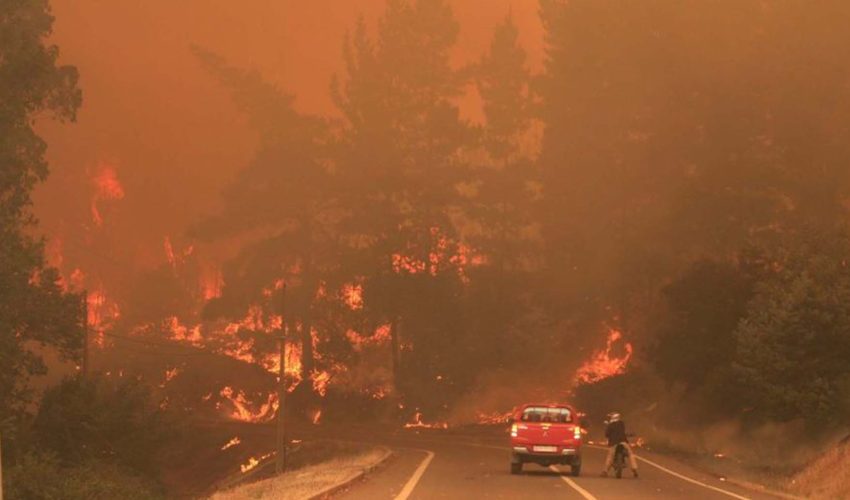
The increase in resources allocated to fighting forest fires and the strengthening of prevention are part of the new Forest Fire Protection Plan 2026-2027 presented by the Government.
The strategy considers a budget of $166.6 billion, at the national level, and contemplates prevention, early detection, firefighting and institutional coordination measures.
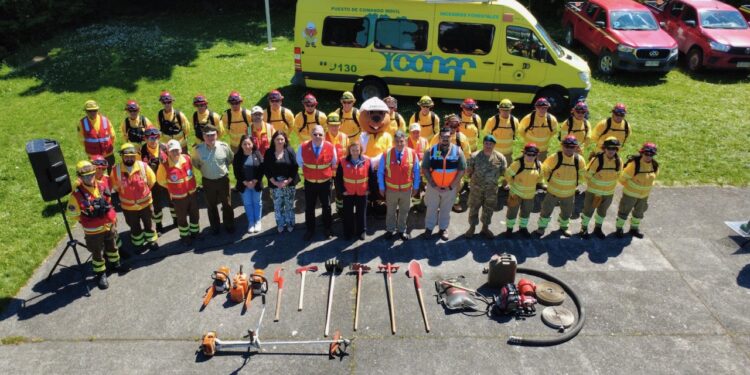
"This represents a public deployment that includes 319 CONAF brigades, made up of 3,778 brigade members, in addition to 77 aircraft, including tanker planes, helicopters of different capacities and a Large Air Tanker (LAT) plane. To this are added 396 detection resources, which include 340 tele-surveillance cameras, 40 towers, 15 observation posts and a mixed system in coordination with private parties," the Executive announced on institutional platforms.
"Despite not having all the resources that developed nations have, the professionalism, courage and sacrifice of our police officers and our volunteers have prevented this from ending in even greater tragedies. But prevention and coordination are tasks that we must start now," said President José Antonio Kast.
Local scenario
However, for the Biobío Region, one of the main challenges continues to be in the wildland-urban interface areas, where the proximity between homes and forested land increases the exposure of communities to the spread of fire.
Nevertheless, specialists from the University of Concepción warned that the availability of resources must be complemented with territorial planning that identifies the most vulnerable sectors and with actions that allow addressing the causes of the fires.
The forestry engineer from the Department of Forest and Environmental Management of the Faculty of Forest Sciences of the UdeC, Francisco Aruta, stated that interface areas represent one of the main concerns for the region, due to the expansion of homes toward sectors near plantations and forests.
"Interface areas are very complex. Houses are moving into the forest and they start building without any preventive measure," he explained.
The academic noted that risk conditions vary between localities, so protection measures must respond to the characteristics of each territory.
In that sense, he mentioned sectors such as Cabrero, Concepción and Lirquén, where the conditions of the interface and the exposure of homes present differences.
In his view, although clearing and vegetation management actions around cities and localities are necessary, their effectiveness also needs to be evaluated and it must be determined whether they are reaching all the sectors that need protection.
On the other hand, the fire ecologist and associate academic of the Department of Forestry of the UdeC, Eduardo Peña, explained that the characteristics of the regional landscape favor the availability of plant fuel. This is because a large part of the soils has forestry aptitude and presents conditions that allow vegetation growth.
The specialist warned that both plantations and native forest can be affected by fires, so prevention cannot depend solely on the type of vegetation cover.
To this is added the continuity of fuel, especially in sectors where there is no adequate vegetation management or where firebreaks have not been established.
For Peña, one of the priorities should be to identify with greater precision the vulnerable points of each locality and establish from which sectors the fire could advance. In this way, interventions could be concentrated in the places where there is greater exposure.
"What we are missing to define, and with high precision, is which are the most susceptible sides of each area. Every time there is a fire, where is it going to arrive from? And what risk does it have," he posed.
The academic also highlighted the importance of incorporating prevention criteria in the planning of new housing complexes.
As an alternative, he proposed that villas built in interface areas have parks or streets at their boundaries with forested land, so that these spaces can function as separation areas and facilitate the entry of emergency teams.
Intentionality as a challenge
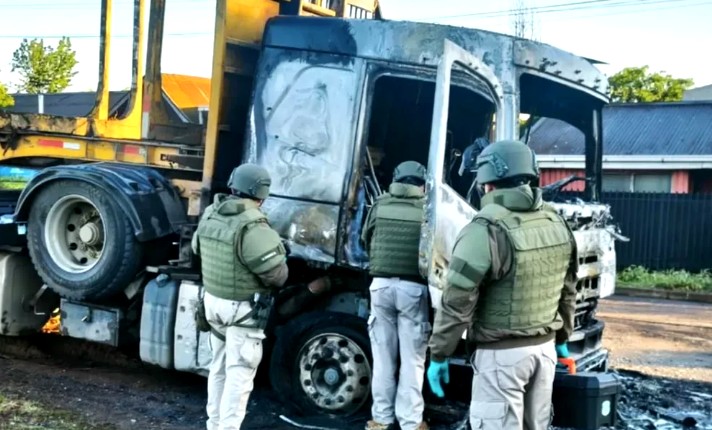
Beyond the conditions of the territory, Aruta emphasized intentionality as one of the factors that must be addressed to reduce the occurrence of forest fires in the country.
The forestry engineer noted that Chile maintains figures of between 5,000 and 6,000 forest fires per season, a scenario that, in his view, requires complementing preventive measures with a systematic investigation of the causes of each fire.
"Chile has to bet on or try to unmask intentionality. We have many intentional fires," he stated.
Along these lines, he questioned the capacity to investigate and prosecute these crimes, proposing that all forest fires must be reported and investigated by the corresponding institutions.
Another aspect that academics consider necessary to strengthen is the preparation of people who live in sectors exposed to forest fires.
Peña proposed that prevention requires developing a culture of risk that allows communities to recognize the vulnerability conditions of their homes and adopt measures before an emergency.
Among the recommendations, he mentioned keeping at least 10 meters around homes clear and reducing tree density in the following 20 meters, in addition to cleaning roofs and gutters to avoid the accumulation of combustible material.
The academic added that the economic and social conditions of families must also be considered in preventive strategies, especially when there are older adults who do not have the physical capacities to carry out clearing and vegetation management tasks.
In that context, he proposed strengthening community training and providing tools so that each resident can recognize the vulnerable points of their property, in addition to identifying evacuation routes.
Regarding regional response capacity, Aruta valued the advances in coordination between public and private institutions through incident command systems, which allow organizing the work of the different teams that respond to an emergency.
As he explained, this model has allowed progress toward a joint response, where forestry companies, public agencies, brigades and Firefighters can collaborate in the face of fires, even when these threaten sectors that do not correspond directly to their areas of operation.
Source:Diario Concepción



Comments (0)
No comments yet. Be the first to comment!
Leave a comment