

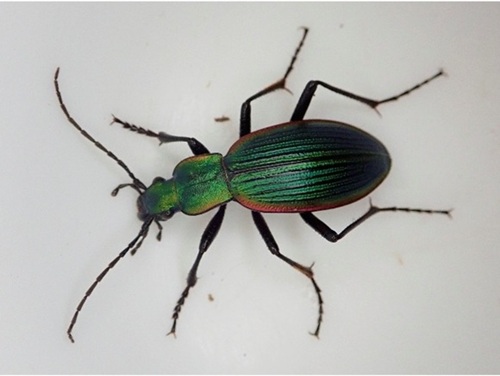
A small spider, three scorpions, a pseudoscorpion, five beetles, two micro-wasps and a cave cricket are part of the 13 new species for science discovered in the La Araucanía Region. The finding corresponds to the results of the biodiversity monitoring carried out by the Forest Institute (INFOR) as part of the National Forest Inventory, within the framework of the Integrated Forest Ecosystem Monitoring System (SIMEF), a program led by the Ministry of Agriculture.
During the campaign carried out in the region, 23,296 terrestrial arthropods —invertebrates with jointed legs, such as insects, spiders, centipedes and mites— were collected at 20 sampling sites. The analysis allowed the recording of 918 taxa, including identified species and morphospecies, that is, organisms that can be distinguished by their physical characteristics but do not yet have a scientific name. Of this total, 13 correspond to new species for science.
"The discovery of these 13 new species in La Araucanía, mainly arachnids and insects, reaffirms the value of biodiversity monitoring as a unique tool to have reliable and consistent information over time about our forest ecosystems," highlighted the researcher and manager of the INFOR Los Ríos Office, Dr. Gerardo Vergara.
The researcher added that "knowing which species inhabit our forests and how they change over time is the basis for projecting long-term conservation and sustainable management strategies."
A record of the biodiversity that inhabits the forests
Of the 13 species discovered, five correspond to arachnids: a spider, three scorpions and a pseudoscorpion, a small relative of scorpions characterized by not having a tail or stinger. The remaining eight are insects: five beetles —among them a weevil and three soldier beetles—, two micro-wasps and a cave cricket. The taxonomic identification of each species is available in the report published at simef.minagri.gob.cl.
The field work was carried out in the Malalcahuello National Reserve and the Tolhuaca and Conguillío national parks, and was led by the Ecological Entomology Laboratory of the University of La Serena (LEULS). To obtain a representative record of the fauna, the team combined different collection techniques, including pitfall traps for arthropods that move along the ground, entomological nets for flying insects, nocturnal collections with ultraviolet light for scorpions, white light traps and manual search in specific habitats.
"Each sampling method shows us a different part of the fauna: pitfall traps record the arthropods that move along the ground, nets capture insects in flight and ultraviolet light facilitates the nocturnal search for scorpions. By combining them, we now know which species inhabit each environment," explained Jaime Pizarro-Araya, head of LEULS.
The researcher also highlighted the usefulness of these results for the management of protected areas: "We hope that this information will be incorporated into the management plans of protected areas and will help define which habitats require greater attention and where to maintain monitoring."
Permanent monitoring of forest ecosystems
INFOR began in 2017 the biodiversity monitoring of the National Forest Inventory, whose coverage has been progressively expanded from Antofagasta to Magallanes. The work considers the recording of mammals, birds, reptiles and arthropods associated with native vegetation ecosystems, generating information on species diversity and its changes over time.
The Integrated Forest Ecosystem Monitoring System (SIMEF) is a permanent program of the State of Chile, executed by INFOR with the collaboration of the National Forest Corporation (CONAF) and the Natural Resources Information Center (CIREN). Its purpose is to strengthen the monitoring and evaluation of native forest ecosystems, providing scientific and technical information to support biodiversity conservation and the sustainable management of these ecosystems.
The results of the monitoring and the details of the species recorded in La Araucanía can be consulted on the Integrated Forest Ecosystem Monitoring System (SIMEF) platform.






Comments (0)
No comments yet. Be the first to comment!
Leave a comment