

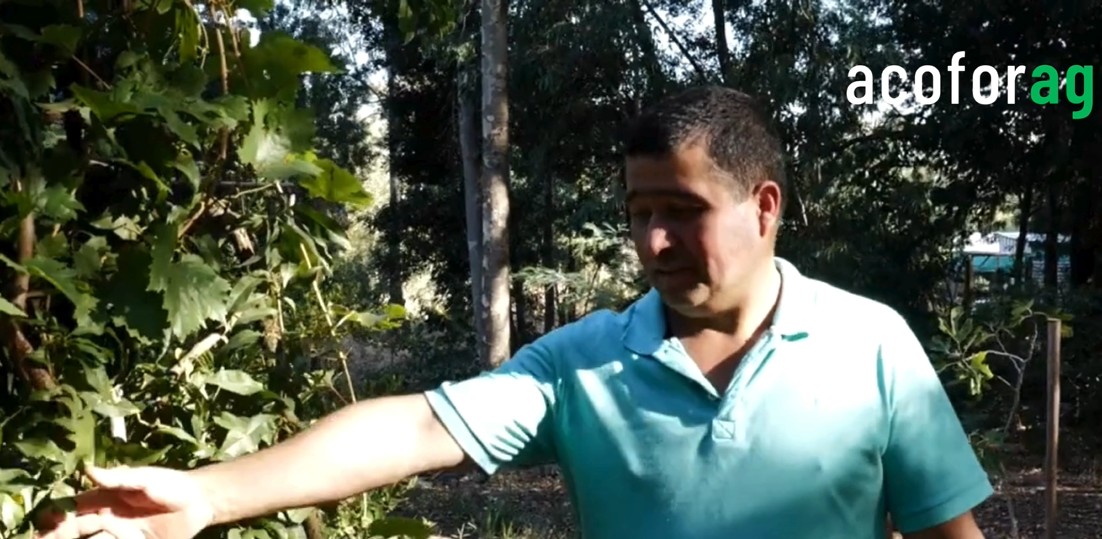
In the forests of southern Chile, where rain, deep green, and biodiversity set the rhythm of life, a family has built their history in close relationship with nature. This is the Quilodrán-Vidal family, beekeepers who have made the forest not only their workplace but also their primary teacher.
The origin of this tradition dates back to René Quilodrán, who years ago began to approach the world of beekeeping guided by curiosity and respect for the environment. Over time, he learned to observe the cycles of the forest, recognize the flowering of native species, and understand the behavior of bees, whose silent work sustains a large part of plant life.
This knowledge did not remain solely in his personal experience. His son, Patricio Quilodrán, grew up surrounded by beehives, learning from a young age that working with bees requires patience, care, and a deep connection to the land. That family teaching transformed over the years into a life project.
Today, Patricio continues this tradition alongside his wife, Verónica Vidal. Both carry out their beekeeping work with an approach that combines production and respect for the ecosystem. For them, each beehive represents much more than a source of honey: it is a living community that contributes to forest pollination and the natural balance of the environment.
Their work is based on understanding that bees play a fundamental role in the health of ecosystems. Thanks to their activity, many plants are able to reproduce, maintaining the diversity that characterizes the forests of southern Chile.
Acoforag highlights this type of initiative that originates from the territory itself and demonstrates that it is possible to develop productive activities in harmony with nature. The experience of the Quilodrán-Vidal family reflects a form of responsible management, where forest culture and environmental care are integrated into a single vision.
Between honey harvests, flowering seasons, and workdays in the heart of the forest, this family reaffirms a simple but powerful idea: when humans learn to work with nature and not against it, the land can continue to provide its benefits for present and future generations.



Comments (0)
No comments yet. Be the first to comment!
Leave a comment