

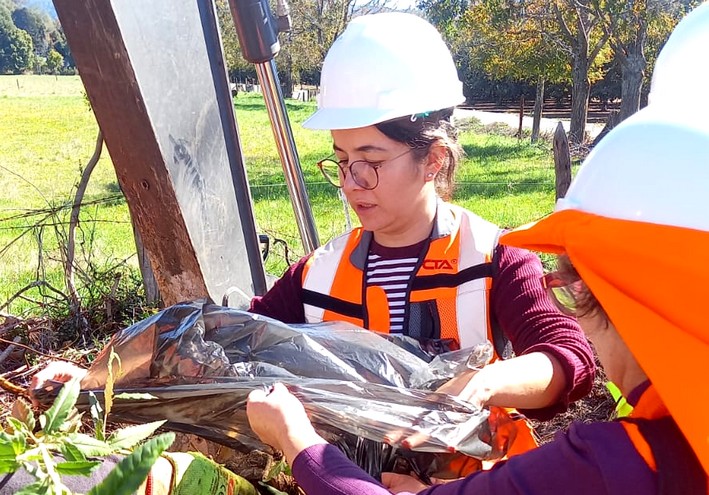
An unprecedented alliance between the Universidad de La Frontera, the National Forest Corporation (Conaf), the State Railway Company (EFE), and the Municipality of Gorbea has launched a rescue and conservation plan for the "Huella de Gorbea" (Corynabutilon salicifolium), an endemic species classified as critically endangered, whose habitat is located along a railway strip in the La Araucanía Region.
The discovery of this population, alerted by local residents, raised alarms due to its high ecological value and the drastic decline the species has suffered from the loss and fragmentation of its natural environment. Experts highlight that this group of specimens represents a key genetic reserve for its survival.
The plan includes measures both at the original site and outside it. On the ground, a protection zone will be established to safeguard its ecosystem, while simultaneously, specimens will be relocated to safe spaces. This is complemented by seed collection, propagation through cuttings, and scientific monitoring to evaluate its development under controlled conditions.
From the academic side, the initiative is seen as a commitment to regional biodiversity. The director of Natural Resources Engineering at Ufro, Alejandra Fuentes, emphasized that protecting this species not only involves preventing its extinction but also safeguarding a unique biological heritage.
Along the same lines, Conaf stressed the urgency of coordinated action given the species' delicate state, while EFE adopted concrete measures to facilitate the process. These include suspending maintenance work in the intervened area, as well as providing logistical and operational support under strict railway safety conditions.
The state-owned company also incorporated the conservation of the species into the planning of its works on the Temuco–Gorbea section, reinforcing its environmental commitment through a technical committee alongside Conaf and Ufro.
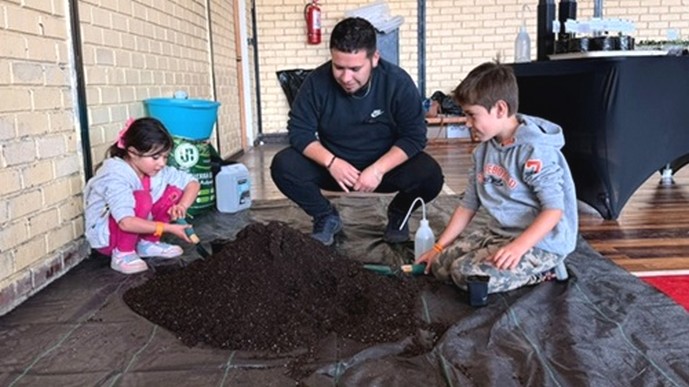
At the local level, the municipality highlighted its coordinating role, facilitating collaboration among institutions and promoting environmental education. In this context, the Escuela 5 de Gorbea will be integrated into the process as a training space, where students can participate in observation and learning activities related to conservation.
As part of the actions, the Ufro Maquehue Experimental Field will be one of the sites designated for ex situ conservation, enabling progress in scientific studies on propagation, seed viability, and the ecological behavior of the species.
The initiative already has a first diagnostic phase, which included vegetation characterization and initial seed collection, establishing a foundation for subsequent stages.
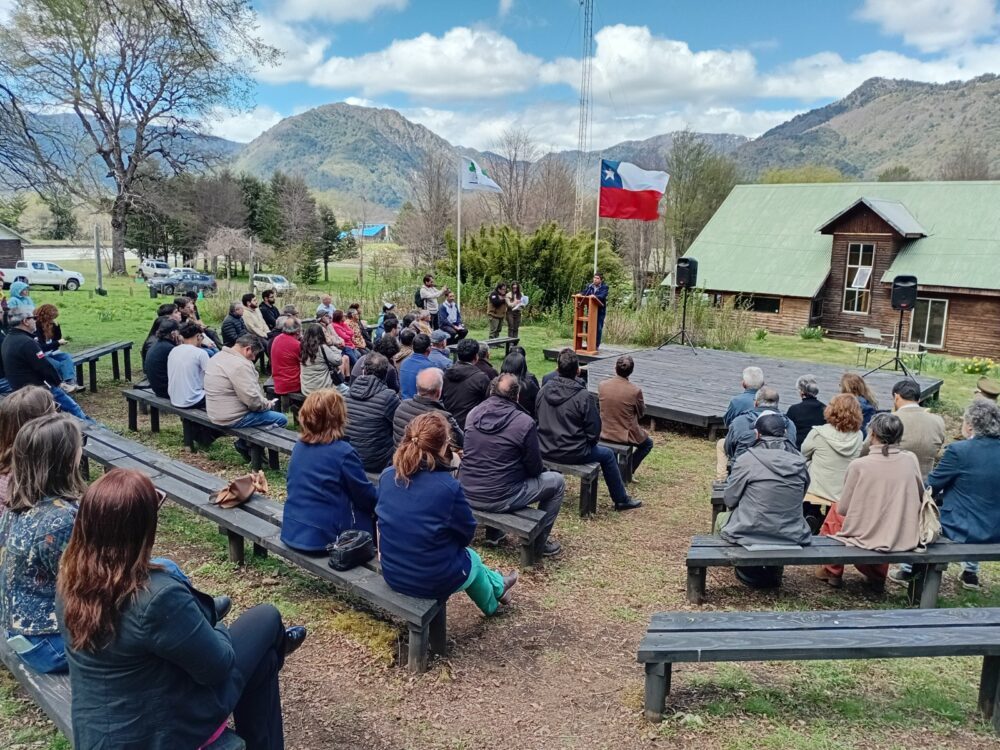
Beyond protecting the "Huella de Gorbea", this effort sets a precedent for collaboration among public institutions, academia, and state-owned companies, demonstrating that the conservation of at-risk species requires urgent, coordinated, and sustained actions over time.




Comments (0)
No comments yet. Be the first to comment!
Leave a comment