

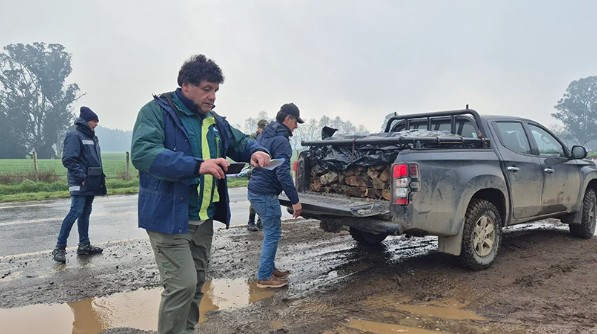
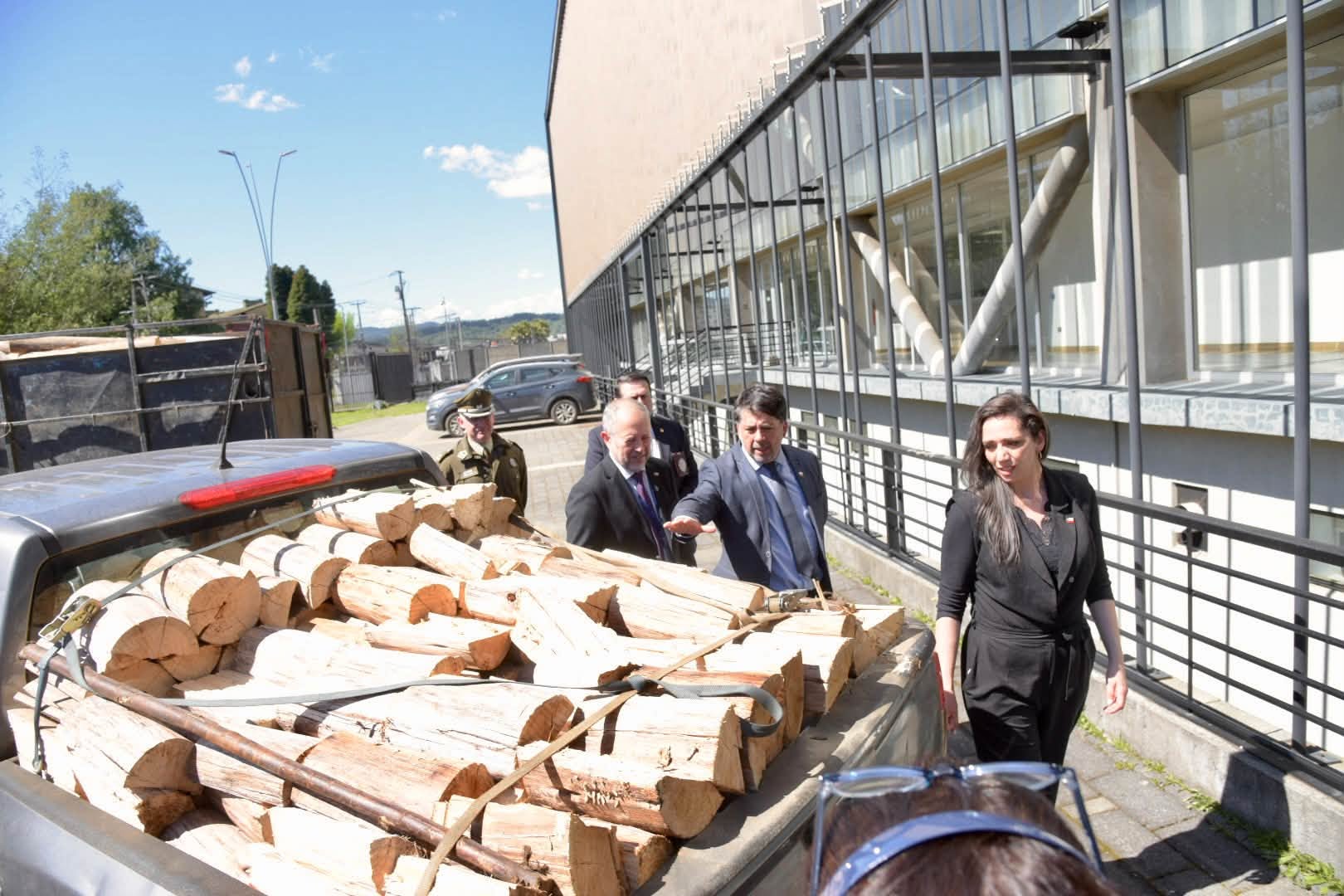
Firewood trade was once again under scrutiny in Osorno. Between June and August, six joint operations were carried out to verify that wood sold in the commune had a legal origin and complied with the requirements established by current regulations.
One of the main results of these actions was the detection of native firewood without the corresponding documentation, a situation identified during controls carried out by agencies with jurisdiction in forestry matters.
The inspections were carried out under Article 32 of the Osorno Atmospheric Decontamination Plan (PDAO) and were coordinated by the Los Lagos Regional Ministerial Secretariat for the Environment, with the participation of Conaf, the regional ministerial secretariats for Energy and the Environment, the Internal Revenue Service (SII), the Superintendence of the Environment (SMA), Carabineros, and the Osorno Municipality.
The focus was especially on learning where the firewood reaching the market comes from and whether those who sell it can demonstrate its traceability and legal origin.
To this end, teams carried out roadside checks and inspections of sales establishments and collection centers. Among the points inspected were routes U-400, U-22, and 5, as well as sectors such as Las Quemas, Camino a Real, and Ruta al Mar.
During the procedures, records such as management plans, free transit guides, tax documentation, and business start-up documents were requested, depending on the powers of each agency.
The review was not limited to the origin of the wood. Inspectors also verified that establishments had dry firewood, with a moisture content below 25%, and that they displayed the official conversion table for the units used in its sale.
The Los Lagos Regional Ministerial Secretary for the Environment, Lorena Leichtle, highlighted the coordination among the various services and stated that controlling firewood trade is essential both from an environmental perspective and to ensure that consumers access a fuel that meets the required conditions.
"Joint work among the various services is essential to make progress in complying with the Osorno Atmospheric Decontamination Plan," said the authority.
In this context, inspecting the legal origin of native firewood takes on special relevance. The documentation makes it possible to establish its provenance and verify that its extraction and sale comply with forestry regulations.
The six operations thus made it possible to address the problem from different fronts: from the legality of the wood's origin and its traceability, to tax obligations, sales conditions, and fuel quality.
The experience also provided new tools to strengthen future inspections and improve coordination among the agencies responsible for controlling a market that has a direct impact on both forest resources and air quality in Osorno.




Comments (0)
No comments yet. Be the first to comment!
Leave a comment