

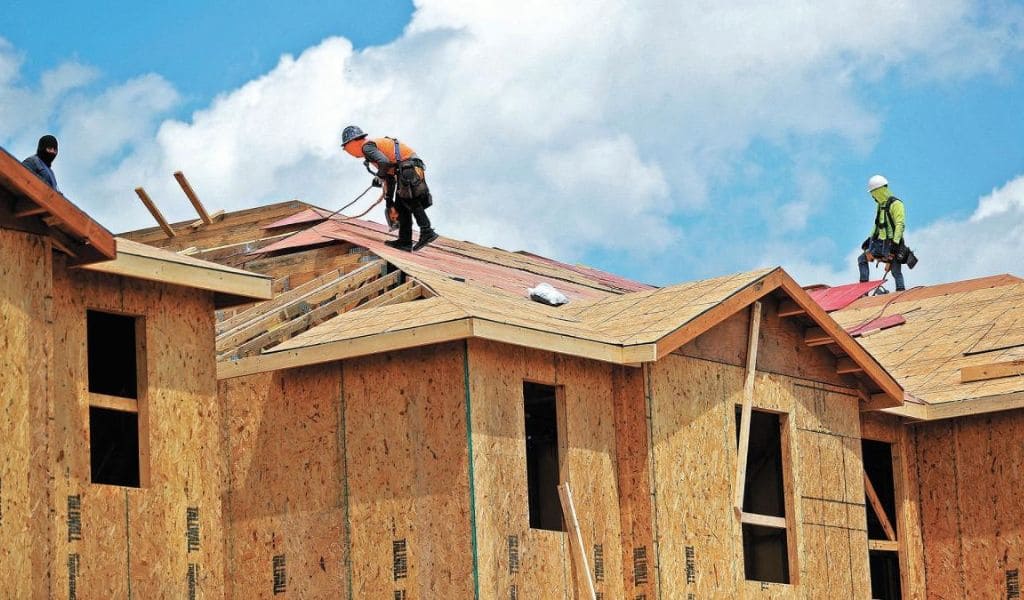
Lightweight construction has established itself as a global trend with the potential to transform the building industry towards more adaptable and sustainable models. An analysis published by the World Economic Forum has identified this construction system as a key tool for reducing the sector's carbon footprint and improving resource use efficiency.
This approach is based on lightweight load-bearing structures, industrialized systems, and off-site processes, which allows for a reduction in the use of emission-intensive materials, such as concrete and steel, and accelerates project timelines. Furthermore, it enables more flexible and demountable buildings, capable of adapting to changing urban needs.
For the wood industry, lightweight construction represents a growth opportunity with added value. The World Economic Forum analysis highlights the reduction of emissions associated with buildings, the optimization of natural resource use, and the decrease in on-site waste thanks to industrialized processes. It also emphasizes the possibility of offering faster and more efficient housing solutions through the standardization of components and the reorganization of stages off the construction site.
Certified structural wood is positioned as a strategic input due to its lower carbon footprint and its capacity to store carbon during the building's lifespan. In Argentina, the combination of availability of renewable raw materials, industrial capacity, and technical expertise in dry construction systems places the country in a favorable position to adopt this model.
Construction with wood and lightweight systems can become an engine for national productive development, with positive impacts on employment, technological innovation, and the competitiveness of the forestry-industrial chain. Furthermore, Argentina has potential for forest expansion and an industrial framework capable of scaling modern construction solutions.
The opportunity for the wood industry is associated with three vectors: the strategic use of certified structural wood to drive added value and connection with international markets; greater execution speed, with reduced logistical costs and construction times; and positioning within the circular economy agenda, aligned with global standards for sustainable construction.
For large-scale adoption, training of the value chain in lightweight construction techniques, stable regulatory frameworks and public incentives, and access to material life cycle data to support decisions based on real environmental impact are required. The widespread adoption of the model will depend on the combination of technical capabilities, stable rules, and verifiable information on environmental impact.







Comments (0)
No comments yet. Be the first to comment!
Leave a comment