

Over a decade of joint work between the Universidad de La Frontera and the National Forestry Corporation is yielding concrete results in the recovery of araucaria forests affected by wildfires in the China Muerta National Reserve.
The partnership, which exceeds 10 years of collaboration, has enabled the development of various scientific research projects—such as FONDECYT, PAI, FOVI, and Desafíos—led by researcher Dr. Andrés Fuentes Ramírez from the Ecosystems and Forests Laboratory, part of the Faculty of Agricultural and Environmental Sciences at UFRO.
"This joint work allows us to make concrete progress in the recovery of areas that were severely affected by fires. The reintroduction of araucarias not only contributes to forest restoration but also strengthens the conservation of an emblematic species for the region," highlighted Favian Luna Sandoval, administrator of the China Muerta National Reserve.
One of the main focuses of this work has been the study of the survival and reproduction of the araucaria (Araucaria araucana) after wildfires, a key line of research to understand and support the recovery of these unique ecosystems.
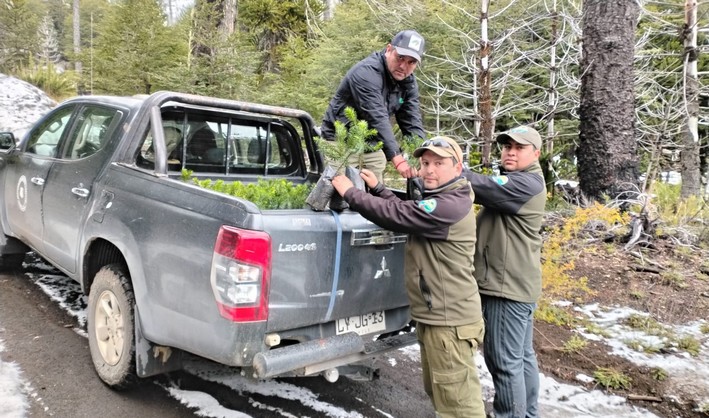
As part of this research, systematic seed collection has been carried out from fire-affected areas within the reserve, which are subsequently cultivated in university greenhouses. Thanks to this process, over 800 plants have been produced, primarily intended for ecological restoration work.
During the last season, over 500 specimens were reintroduced into the field, especially in areas adjacent to the Las Lengas trail, one of the zones most impacted by previous fires. Plantings are conducted at the beginning of winter, in groups of 5 to 10 individuals, with the direct participation of park rangers and the reserve's management team.
These actions aim to recover severely damaged areas, promoting the regeneration of native forest and contributing to the conservation of an emblematic species of high ecological and cultural value in southern Chile.
The involved institutions emphasized that this line of work is projected to continue over time, consolidating a strategic alliance that integrates scientific knowledge, territorial management, and collaborative work, with the goal of advancing the post-fire restoration of one of the world's most representative and relevant ecosystems.



Comments (0)
No comments yet. Be the first to comment!
Leave a comment