

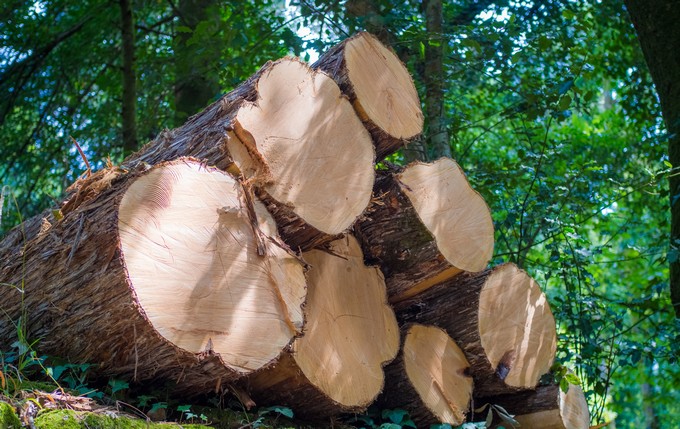
A team of Chinese researchers has developed an innovative wood-based material capable of capturing solar energy, storing it as heat, and converting it into electricity even after the light disappears. The advancement aims to address one of the main challenges of renewable energy: its intermittency.
The researchers chose balsa wood due to its internal structure composed of aligned microchannels, ranging from 20 to 50 micrometers, which act as a natural network for heat transport and material incorporation. To optimize its performance, they removed the lignin, increasing its porosity to over 93% and significantly improving its light absorption capacity.
Subsequently, they incorporated semiconductor materials and protective compounds that enable the capture of sunlight and maintain the system's stability over time. Additionally, they integrated substances capable of storing heat and releasing it gradually. This residual heat is converted into electricity via a thermoelectric generator, allowing energy production even without direct radiation.
In laboratory tests, the material demonstrated high levels of efficiency, stability across multiple usage cycles, and additional properties such as fire resistance and protection against microorganisms.
The development stands out for its potential for large-scale application, as it avoids complex industrial processes and could be integrated into infrastructure or distributed energy systems, positioning itself as a promising alternative for advancing toward more sustainable solutions.





Comments (0)
No comments yet. Be the first to comment!
Leave a comment