

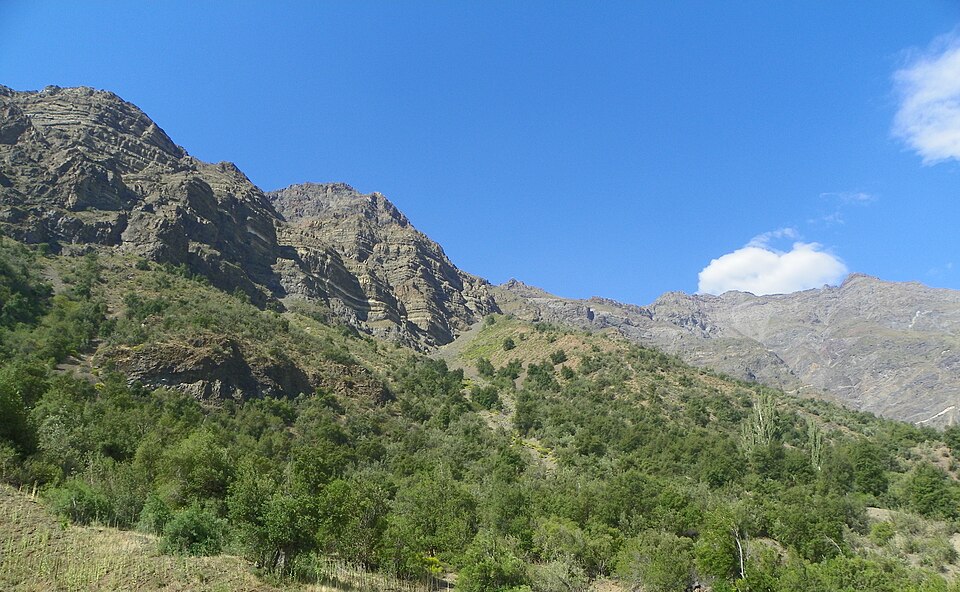
A new research study developed at the Faculty of Forest Sciences and Nature Conservation of the University of Chile describes how three emblematic species of the sclerophyllous forest of central Chile have developed differentiated anatomical strategies to cope with the water stress of the Mediterranean climate. The study, titled "Functional traits in the vascular tissue of three species of the Mediterranean forest of Chile," was conducted by Iván Espinoza as a thesis to qualify for the title of Forest Engineer, under the academic guidance of Dr. Paulette Naulin Gysling, and with the review of the evaluation board composed of research director Juan Ovalle and academics Paola Poch and Eduardo Martínez.
The microscope revealed major differences
The work focused on the analysis of secondary xylem —the woody tissue responsible for water transport— of three species distributed in the central zone of the country: peumo (Cryptocarya alba), litre (Lithraea caustica), and quillay (Quillaja saponaria). The samples were collected at the Arboretum Antumapu of the University of Chile itself, a condition that allowed isolating environmental variables and making comparisons between species.
Under microscopic observation, Espinoza measured and described traits such as vessel diameter, density, cell wall thickness, and potential hydraulic conductivity. The results reveal a division of strategies: peumo prioritizes water transport efficiency, with larger diameter vessels and the highest hydraulic conductivity of the three species; quillay, on the other hand, bets on hydraulic safety, with the smallest vessels and the highest density per square millimeter, making it more resistant to cavitation —the phenomenon that blocks water flow when bubbles form in the vessels— during periods of severe drought. Litre occupies an intermediate position, with moderately sized vessels but the lowest vascular density, complementing its strategy with physiological adjustments under water deficit conditions.
Evolutionary convergence
One of the most striking findings of the study is that the three species share key qualitative traits —simple perforation plates and alternate intervascular pitting— despite belonging to phylogenetically distant families: Lauraceae, Anacardiaceae, and Quillajaceae, respectively. This coincidence, also observed in Mediterranean species from other parts of the world, constitutes a case of evolutionary convergence: lineages that do not share a recent common ancestor arrived at similar anatomical solutions as an adaptive response to the same constraints of the Mediterranean climate.
A scientific gap that is beginning to be filled
The study also included a systematization of the available scientific literature on functional traits in Mediterranean ecosystems worldwide. The review showed a marked contrast between regions: while in the Mediterranean Basin studies focus on water physiology, and in the Fynbos of South Africa taxonomic description predominates, Chile practically has no research of this type. This absence makes Espinoza's work a pioneering contribution to the study of the functional anatomy of the Chilean sclerophyllous forest.
The research also warns that the high anatomical variability observed within the same species —even among branches of the same tree— is a critical factor that future studies must consider when designing their sampling protocols, incorporating hierarchical approaches that allow separating real differences between species from natural biological noise.
Central Chile is one of the five Mediterranean regions on the planet and faces a sustained trend towards more arid conditions, accelerated by climate change. Understanding how native species of the sclerophyllous forest are anatomically equipped to resist summer water deficit is essential to project their future resilience and guide conservation and forest management strategies.




Comments (0)
No comments yet. Be the first to comment!
Leave a comment