

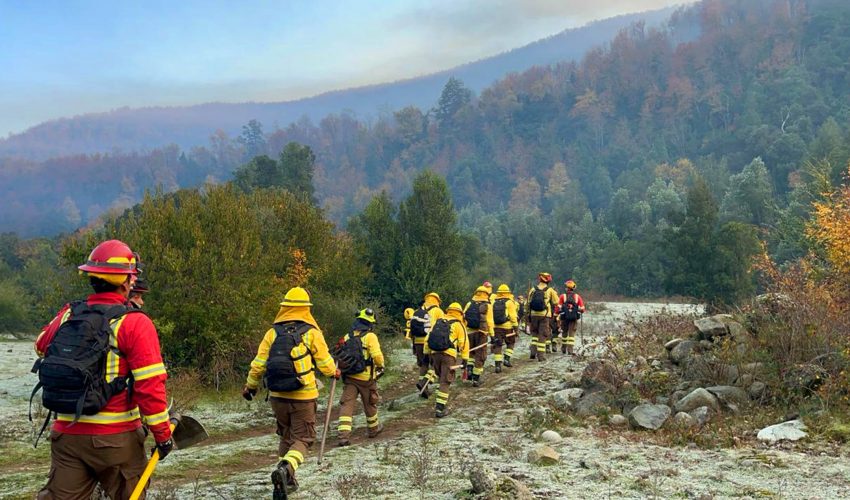
More than 970 hectares of native forest were affected during the last week by wildfires recorded in the communes of Antuco, Santa Bárbara and Mulchén, in the Biobío Region.
Although the rapid response of brigades, firefighters, municipalities and forestry companies allowed the emergencies to be contained without consequences for populated centers, authorities reiterated the call to step up prevention measures in a scenario marked by drought and the presence of puelche winds.
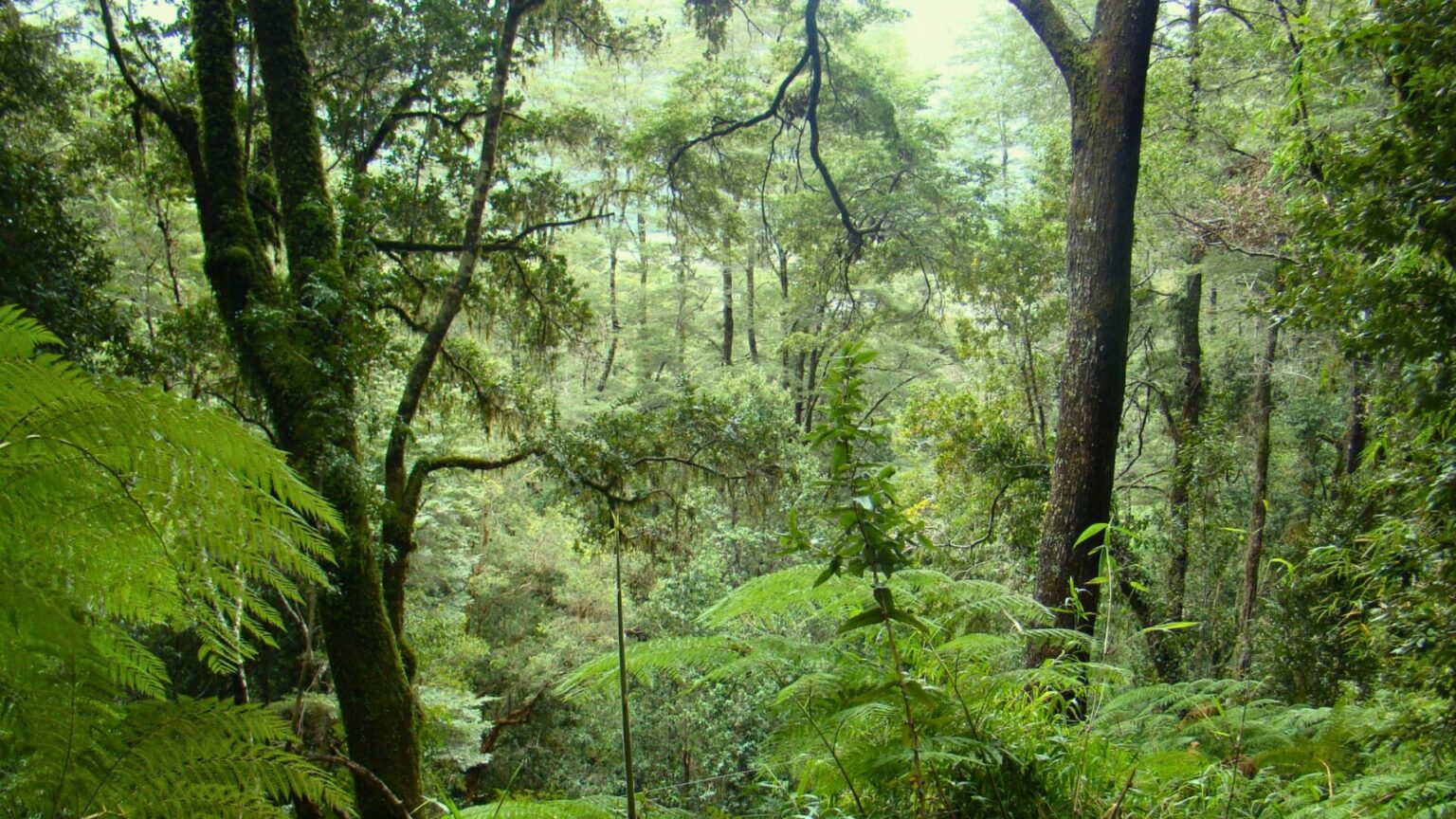
Robles, coihues and raulíes were some of the species affected by the fires, which mainly occurred in hard-to-reach areas of the regional foothills.
According to the latest reports from the National Forestry Corporation (Conaf), the Rucue fire in Antuco affected 564 hectares; the Alpes-Quillaileo fire in Santa Bárbara exceeded 314 hectares; while the Caledonia fire in Mulchén recorded more than 100 hectares consumed.
Currently, the fires in Antuco and Santa Bárbara are contained, while the one in Mulchén has been declared under control.
Affected native forest and its recovery prospects
In an interview with Medios UdeC, the regional director of Conaf Biobío, Álvaro González, explained that, despite the magnitude of the affected areas, the damage to the native forest could be less than initially estimated.
Regarding what happened in Antuco, González detailed that “that fire mainly affected forests of the Roble, Raulí, Coihue type. But I can point out that it was not a crown fire, but rather a understory fire and of the leaf litter and decomposing material on the soil surface.”
The authority added that most of the trees should survive because the fire did not reach the crowns.
“We estimate broadly, because we don’t yet have a report after a technical visit, but in general the trees should have survived. Obviously some trees must have been affected, but the vast majority should have survived,” he stated.
Therefore, he explained that the ecological impact could be less than that observed in high-intensity fires recorded in other areas of the region.
Weather conditions and the human factor
González attributed part of the risk scenario to the meteorological conditions recorded in recent months. “They have been quite dry and we have had several episodes of puelche wind,” he stated.
Although there is still no investigation to determine the exact origin of the fires, the regional director was emphatic in pointing out that behind this type of emergency there is generally human intervention.
“We did not have natural situations that could have generated the fires, because there was nothing like thunderstorms with lightning or anything similar,” he explained.
The authority indicated that the affected areas correspond to very hard-to-reach areas, where people often enter during this season to collect changles and other wild mushrooms. However, he specified that establishing responsibilities is complex due to the lack of records or surveillance systems capable of identifying people in these mountain areas.
Deployment to protect homes
One of the main focuses of concern during the emergency was concentrated in Antuco, where there was a risk of spread towards inhabited areas.
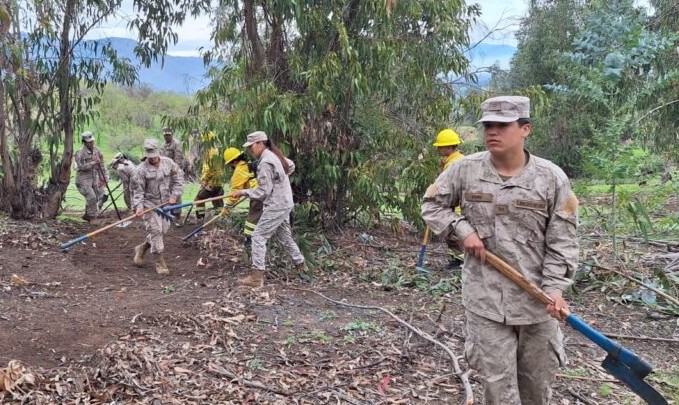
To face the emergency, Conaf brigades from different regions participated, along with teams from CMPC, Forestal Arauco, firefighters and municipal personnel.
“All the authorities, the mayor of Antuco and personnel from that illustrious municipality collaborated. A great joint effort was made so that there were no tragedies to lament,” he highlighted.
Preventive evacuations were even carried out in some sectors, which were later lifted once the emergency stabilized.
In Santa Bárbara, he explained, the operational strategy was different because there was less risk to nearby homes, while in Mulchén he especially highlighted the support of Conaf and CMPC brigades to achieve total control of the fire.
Regarding post-fire actions, González indicated that it is still premature to define possible ecological restoration processes.
“We still have to be careful that there is no resurgence of the fire, which will be completely extinguished once it rains, because we really need it to rain,” he stated.
The regional director also expressed concern about the climate projections for the coming months.
“It is worrying because puelche wind could come again and careless people wandering around,” he warned.
Fire Law still pending
While authorities face a new season marked by off-season events, the so-called Wildfire Law remains pending in Congress.
The initiative was referred to a Joint Committee after discrepancies arose between the Chamber of Deputies and the Senate regarding aspects such as compensation for owners affected by preventive measures, mechanisms for claiming illegality and modifications to territorial planning instruments in risk areas.
Let us remember that the project seeks to strengthen the prevention and mitigation of wildfires by classifying territories according to risk levels, creating buffer zones and increasing prevention obligations for public and private entities.
Conaf's call
Finally, González praised the work of brigades, firefighters, municipalities, forestry companies and local communities that collaborated during the emergencies, and reiterated a call for citizen responsibility.
“We need citizens to be careful with fire, because fire causes so much damage. With a simple match, hundreds of hectares can be burned as we have seen in a couple of days,” he stated.
And he concluded with a warning: “The only way to preserve these ecosystems is to be more careful, because with a match or a cigarette butt we can destroy in a moment what nature took 300 or 500 years to build.”
The concern expressed by Conaf regarding the persistent drought could find relief in the coming days. This follows the Chilean Meteorological Directorate (DMC) issuing a warning for normal to moderate wind associated with the passage of a frontal system that will affect part of the central-southern zone of the country.
The warning, issued at 11:57 a.m. on Tuesday, May 26, considers winds between the morning of Wednesday, May 27 and the morning of Thursday, May 28 in different areas of the O’Higgins, Maule, Ñuble and Biobío regions.
In the case of Biobío, the phenomenon will cover the coastal, foothill and mountain sectors, where gusts are expected that could reach up to 50 kilometers per hour.
However, along with the wind, precipitation is also projected. According to Meteored forecasts, between Tuesday, May 27 and Wednesday, May 28, a frontal system would enter, bringing rain across much of the regional territory.
Source:Diario Concepción



Comments (0)
No comments yet. Be the first to comment!
Leave a comment