

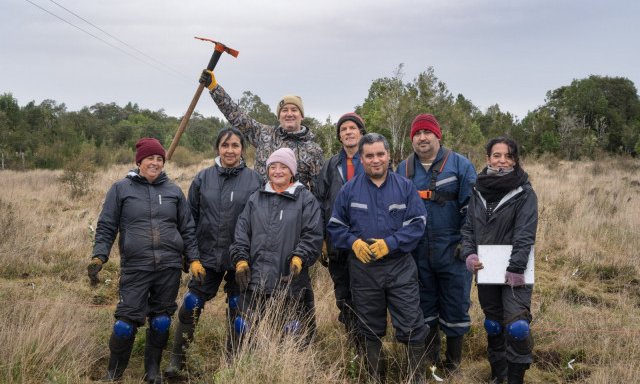
Puerto Varas will be the setting for one of the largest participatory ecological restoration initiatives in southern Chile. On June 26 and 27, the 2026 Festival Pala en Mano will take place, an event that seeks to mobilize the community around the recovery of natural spaces, environmental education, and climate action through activities open to the public.
The initiative is driven by UÑU Lab and has the support of the Municipality of Puerto Varas, the Environmental Directorate (DIMAO), territorial organizations, and various collaborating companies. After several editions held in Ancud, the festival arrives in Puerto Varas for the first time, expanding its reach and consolidating a collaborative work network for the conservation of native forest.
One of the main objectives of this edition will be the restoration of urban and peri-urban areas that have suffered processes of environmental degradation. To this end, the planting of 2,500 native trees in different sectors of the commune is planned, along with volunteer activities, training, and citizen awareness-raising.
According to Javier García, founder of the Festival Pala en Mano, ecological restoration in urban environments presents different challenges than rural projects. "Cities concentrate highly intervened and fragmented ecosystems. Restoring them means recovering biodiversity, improving ecosystem services, and strengthening environmental resilience in spaces that are part of people's daily lives," he stated.
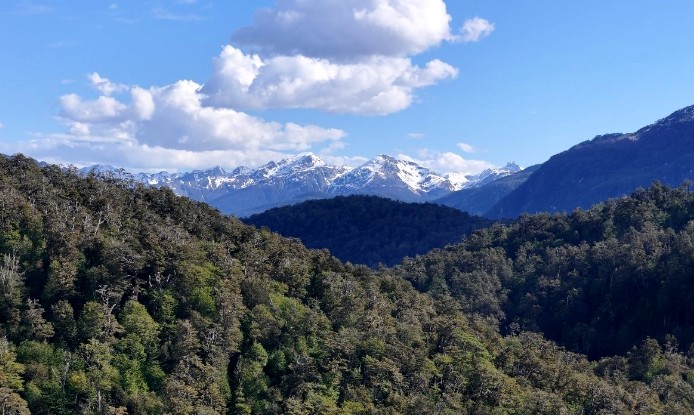
The loss and degradation of native forest directly impacts essential functions for environmental balance, such as carbon capture, regulation of water resources, soil protection, and conservation of native species. Faced with this scenario, Puerto Varas seeks to advance the recovery of areas with ecological and social value.
Mayor Tomás Gárate highlighted the importance of hosting an initiative of this nature. "Puerto Varas has a strong commitment to caring for its natural environment. This festival represents an opportunity to unite neighbors, organizations, institutions, and companies around a common purpose: protecting our ecosystems and generating concrete actions against climate change," he indicated.
Two days focused on education and territorial action
The program will begin on June 26 with a day dedicated to environmental education. During the day, talks, discussions, and audiovisual exhibitions on ecological restoration, biodiversity, territorial regeneration, and climate challenges will take place.
The activities will be held at the Molino Machmar Art Center (CAMM) and will be free of charge with prior registration.
The second day, scheduled for June 27, will focus on fieldwork. Neighbors, students, families, organizations, and company representatives will participate in ecological restoration tasks and planting of native species at Cerro Philippi Park.
Additionally, from June 17 to 25, preliminary volunteer days will be held to advance the preparation work of the intervention sites.
Recovery of three emblematic spaces
The restoration actions will focus on three strategic sectors of Puerto Varas: Cerro Philippi, Quebrada Honda, and the Bosque Mirador Reserve Park.
In these places, species typical of the temperate rainforest of southern Chile will be planted, including coigües, ulmos, arrayanes, lumas, canelos, notros, tiacas, and fuinques.
One of the most relevant projects will be developed at the Bosque Mirador Reserve Park, where there is a remnant of mature native forest that borders degraded lands covered by invasive species. The intervention includes the removal of exotic vegetation, soil recovery, and the planting of pioneer species to gradually expand the existing forest.
In Quebrada Honda, meanwhile, a restoration process started years ago and left unfinished will be resumed. There, the aim will be to enrich native vegetation along a watercourse through new plantings and control of exotic species.
Similar work will be carried out at Cerro Philippi, one of the most emblematic natural spaces in the commune, where the goal is to strengthen native plant cover, reduce erosion processes, and increase the park's biological diversity.
From the Environmental Directorate of Puerto Varas, they highlighted that the festival seeks to actively involve citizens in the conservation of the commune's network of urban parks, promoting a culture of care and appreciation of natural heritage.
The 2026 edition aims to leave a tangible legacy through the recovery of degraded spaces, the planting of 2,500 native trees, the participation of hundreds of volunteers, and the generation of indicators to measure the impact of restoration and climate change adaptation actions.
The initiative will also have the support of private companies that have decided to join the challenge of contributing to the recovery of local ecosystems and strengthening environmental awareness in the community.

Comments (0)
No comments yet. Be the first to comment!
Leave a comment