

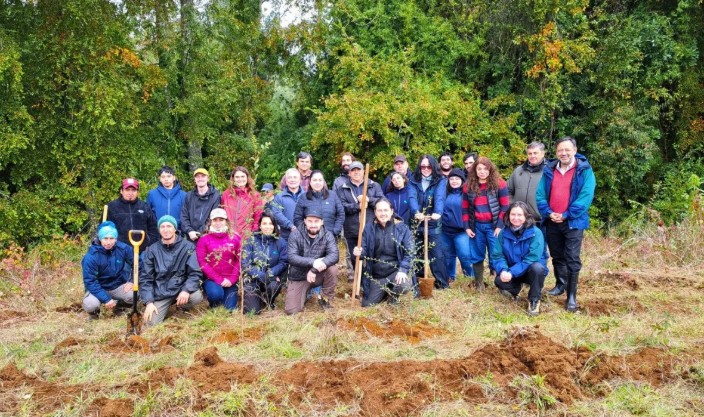
With the aim of promoting ecological restoration and generating new opportunities for rural landowners, the Nothofagus Program held its first training session in San José de la Mariquina, Los Ríos Region, marking a new step in an initiative that seeks to recover degraded landscapes through the planting of native species.
The program is driven by the Association of Forest Engineers for Native Forest (AIFBN) in partnership with the Canadian organization Taking Root, an entity that since 2010 has developed reforestation projects with native species in Central America, financed through the sale of carbon credits under high environmental and social standards.
The initiative includes the planting of species from the Nothofagus genus, including roble, raulí, and coihue, accompanied by free technical advice for participating landowners. In addition to establishing new forest areas, the program provides support in plantation management and in connecting with markets related to restoration and sustainable production.
Among the projected benefits for those who join the program are the future production of firewood and sawn timber, obtaining non-timber forest products such as mushrooms and fruits, protection of water sources, and participation in a growing economy linked to ecological restoration, while always maintaining land ownership in the hands of its owners.
Training to Face the Challenges of Climate Change
The training session brought together around 30 collaborators, who received instruction in planting techniques, establishment, and forest management. The activity was led by forest engineer Nelson Baeza, a recognized specialist in restoration and management of native species, who shared tools to improve the success of plantations in increasingly complex scenarios.
The project is being developed in a context marked by the effects of climate change, including extreme temperatures, drought events, new pests, and other factors that hinder tree survival during their early growth stages.
Faced with this scenario, researcher from the Forest Institute (INFOR) and AIFBN member René Reyes highlighted the importance of promoting long-term initiatives that allow recovering degraded surfaces and strengthening forest ecosystems in southern Chile.
According to his explanation, the program began in 2025 with the planting of 20 hectares and is currently developing an additional 150 hectares. The goal for the coming years is to progressively increase the intervened area to reach 500 hectares annually and achieve approximately 7,500 hectares restored within a period of five to six years.
Alliance with Conaf Strengthens Restoration
As part of this strategy, in 2025 the AIFBN signed a collaboration agreement with the National Forestry Corporation (Conaf) of Los Ríos, aimed at strengthening sustainable management, recovery, and restoration of native forest in the region.
The regional head of Native Forest at Conaf and coordinator of the Siembra por Chile program, Pamela Moreno, noted that this alliance seeks to articulate efforts between institutions to enhance the conservation and sustainable development of forest ecosystems.
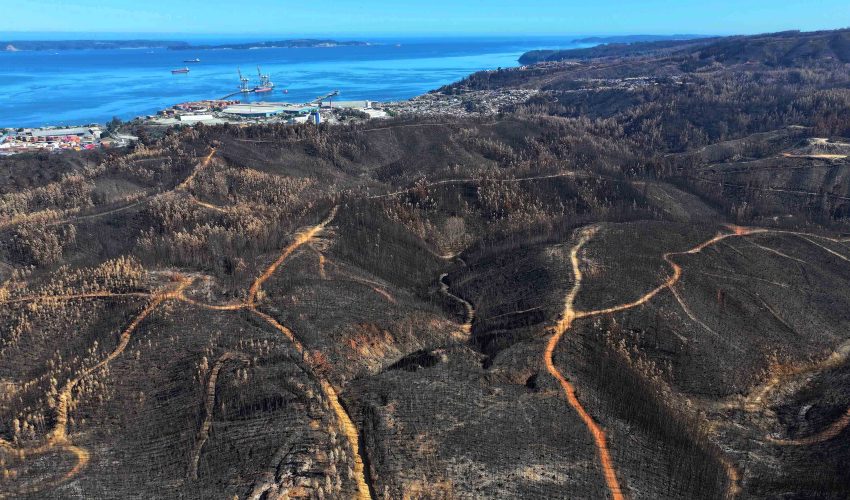
During the training, restoration alternatives for lands with more complex conditions were also analyzed, including areas affected by forest fires and sectors with accumulation of biomass residues. One of these properties belongs to Carmen Muñoz, a landowner in the area and recognized defender of native forests, who valued the opportunity to join the program and contribute to creating new forests for future generations.
How to Participate
The Nothofagus Program is aimed at landowners with properties located between the province of Arauco, in the Biobío Region, and the Isla Grande de Chiloé, in the Los Lagos Region.
Among the requirements to apply are proving land ownership through a current title deed and having at least one continuous hectare available for planting. Likewise, the proposed surface must not correspond to native forest nor have been covered by forest or forest plantations during the last ten years.
With this initiative, its promoters seek to combine environmental restoration, carbon capture, and sustainable rural development, contributing to the recovery of forest ecosystems in southern Chile and generating environmental, social, and economic benefits for local communities.




Comments (0)
No comments yet. Be the first to comment!
Leave a comment