

For an economic sector to develop sustainably, at least two fundamental conditions are required: clear public policies, backed by solid institutions, and legal certainty that allows for investment and long-term planning.
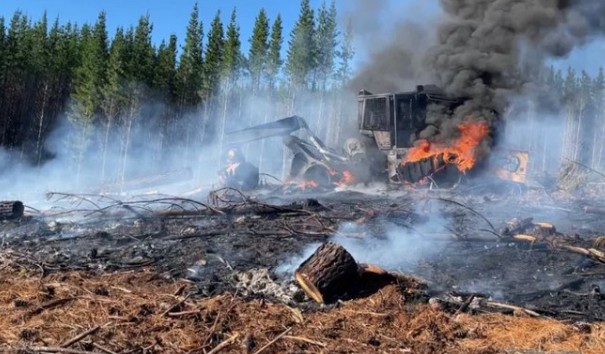
Today, the State of Chile is not fully guaranteeing either of these conditions. For over 15 years, the forestry sector has faced a persistent deterioration marked by acts of violence, destruction of machinery and work equipment, forest burning, and territorial insecurity.
For decades, planting a forest was considered a long-term investment, an alternative to supplement retirement or finance children's education. However, that perception has changed. For many families, forestry activity has ceased to represent a safe and reliable option.
Regions with a recognized forestry tradition have begun to lose part of their productive identity due to the closure of industries, sawmills of various sizes, contractor companies, workshops, machine shops, and various businesses linked to the sector. This productive contraction is progressively weakening the economic and social fabric of large forested areas of the country.
Added to this reality is an institutional response that advances more slowly than the magnitude of the problem demands. While forestry activity continues to decline, the slowness in implementing effective measures makes it difficult to reverse a trend that deepens the sector's deterioration and increases uncertainty for those who depend on this activity.
As an exporter of forest products, Chile also faces the effects of a complex international scenario. The slowdown in markets has put downward pressure on export prices, while operational costs continue to rise. This combination reduces profit margins, discourages investment, and further strains the economic viability of the forestry business.
Thus, the sector simultaneously faces two major challenges: an external crisis, associated with the international economic context, and an internal crisis, linked to persistent problems of public security, intentional forest fires, and timber theft. The convergence of these factors continues to erode forestry activity and compromise its future sustainability.
In summary, the sector is going through a deep crisis, characterized by a lower supply of services, low rates, growing labor informality, early termination of contracts, and a highly uncertain outlook. This situation directly affects workers, forestry contractors, and client companies, putting at risk the continuity of a strategic activity for the economic and social development of various regions of the country.
The challenge is urgent. Restoring the conditions for the forestry sector to grow again requires timely decisions, greater security, regulatory stability, and a long-term vision that allows regaining the trust of those who invest, work, and live from the forest.
The editorial in theAcoforag Magazine




Comments (0)
No comments yet. Be the first to comment!
Leave a comment