

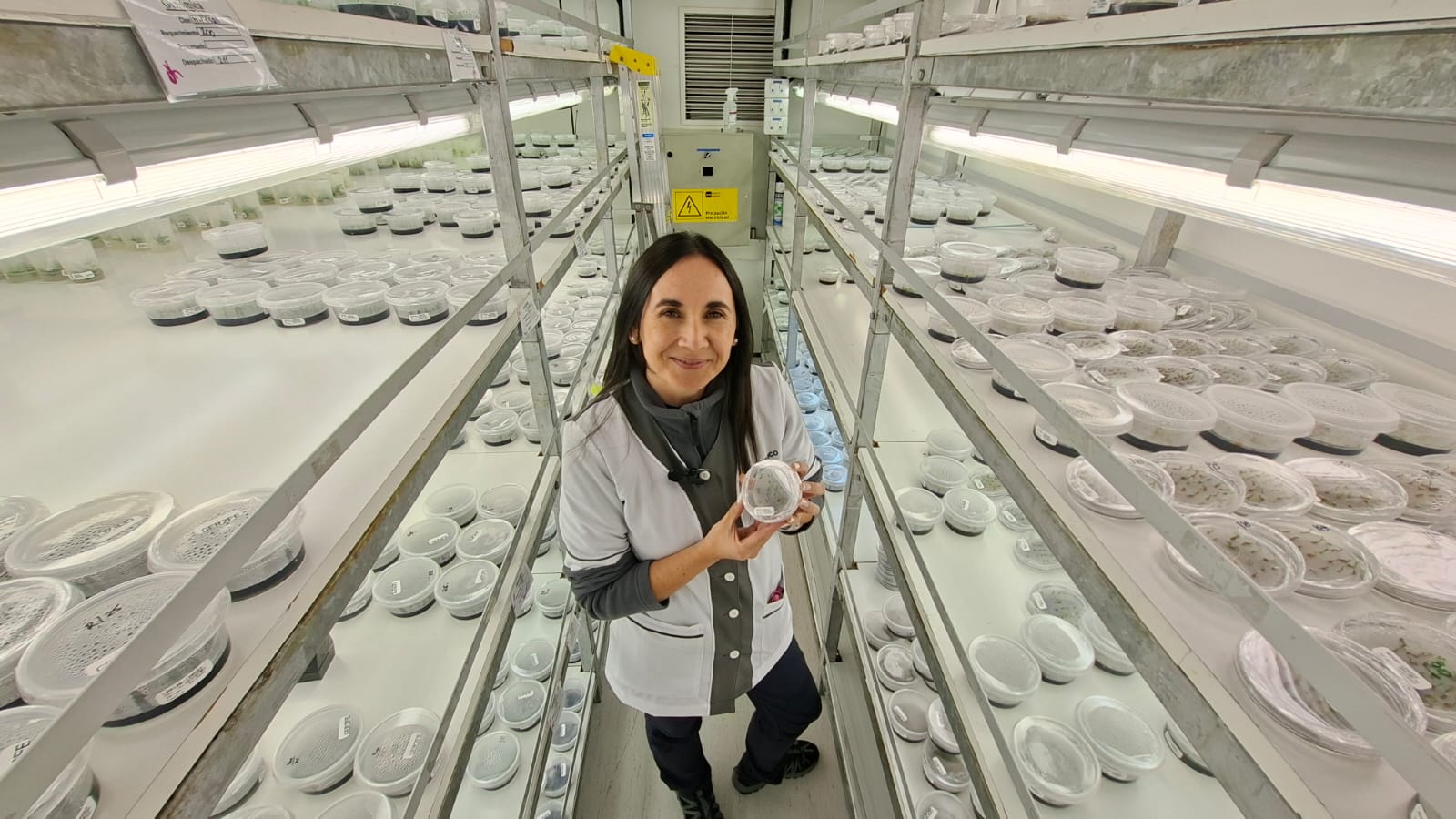
Since childhood, Yenny Lineros felt an affinity for biological sciences and nature. Born in Puerto Varas and raised in Puerto Montt, she originally dreamed of becoming a veterinarian.
However, an unexpected visit to the Faculty of Forest Sciences at the Universidad Austral de Chile completely changed the course of her professional life. "We went to check out Veterinary Medicine, but there was so much demand that they offered us a tour of Forestry. That's where I discovered a career that mixed biology, genetics, and working with nature," she recalls.
With her family's support, she enrolled in forest engineering in Valdivia and quickly found interest in areas related to genetics and plant physiology. During her university years, she received a scholarship from the German Academic Exchange Service, an experience that led her to study for a year in Germany and broaden her perspective on scientific research and technological development.
After finishing her studies, she completed her professional internship at Arauco company and in 2006 joined Bioforest, the company's forestry research and development center. Although she came from a background more oriented towards fieldwork, the laboratory opened up a new professional world linked to plant biotechnology.
Scientific Vocation
"When I arrived here, I practically knew nothing about the lab, but I learned from scratch and fell in love with somatic embryogenesis," she comments. Over time, she went from being the area manager to leading the Somatic Embryogenesis and R&D department, one of the company's most strategic units.
Her professional growth was accompanied by solid academic training. In 2016, she completed a master's degree in Forest Sciences at the University of Concepción with support from Arauco company, delving into cryopreservation and optimization of in vitro cultures. Subsequently, she completed a doctorate focused on the aging of pine embryogenic tissue and how certain variables affect the development of in vitro culture.
For Yenny, one of the main motivations for working in applied research is that the results have a direct impact on forestry operations. "Often, university research remains only in scientific publications. Here, instead, we can quickly apply solutions and improve real processes," she states.
Future Forests
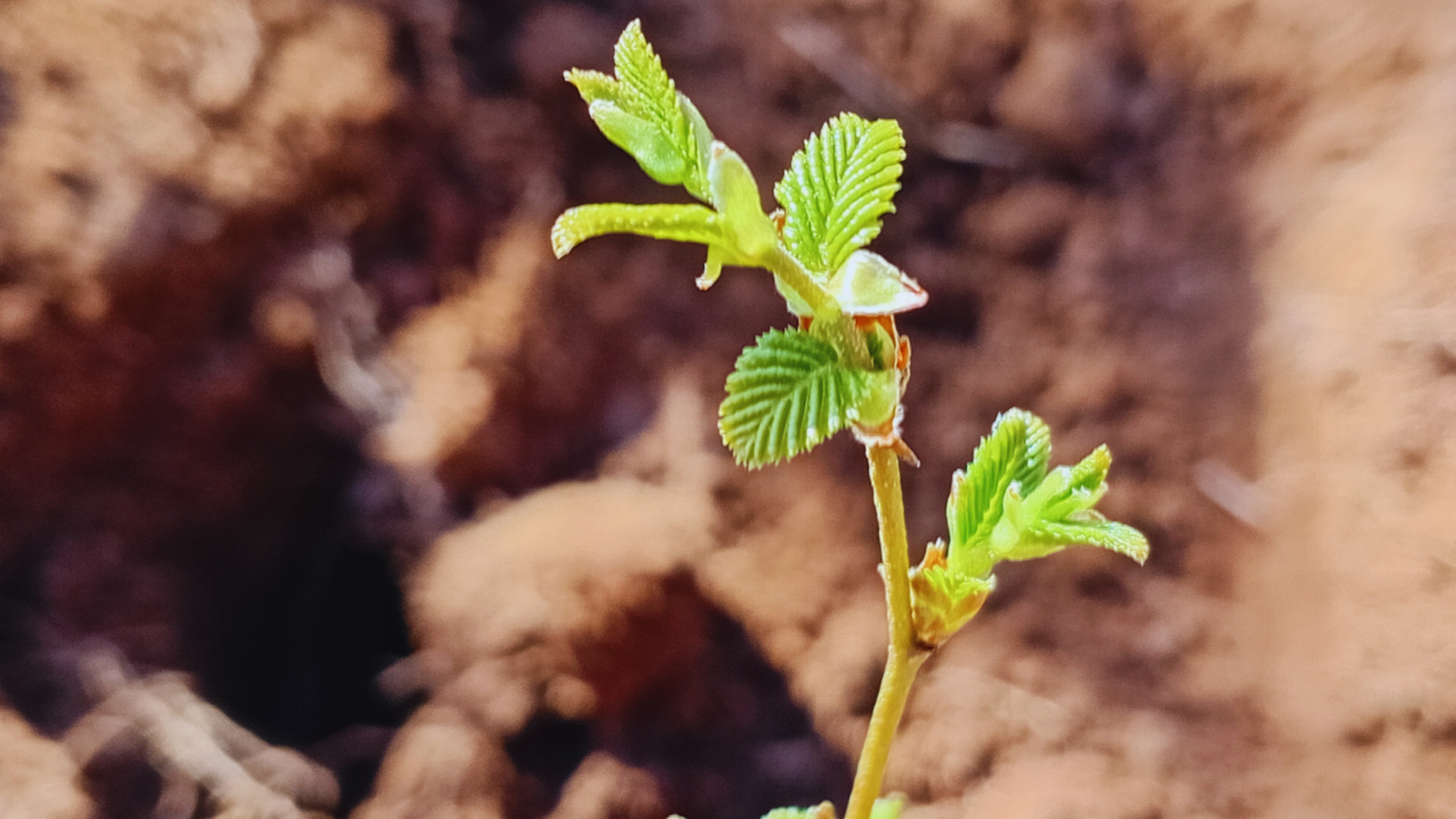
Currently, Yenny leads a team specialized in clonal production of pines through somatic embryogenesis, a biotechnological technique that allows generating thousands of identical plants from a single seed. The process begins with controlled crosses between trees selected for their genetic and productive characteristics.
From immature embryos obtained from those seeds, the laboratory induces cell multiplication until generating embryogenic tissues capable of producing multiple somatic embryos. The embryogenic tissue is cryopreserved in liquid nitrogen to maintain its juvenile state and ensure its future availability.
"We always say that we are the maternity ward of Arauco company, since all pines are born in the Biotechnology laboratory," explains the researcher. The laboratory not only develops new clones but also uses genomic selection tools to identify which ones have the greatest productive potential before being sent to the field.
Thanks to DNA analysis and predictive models, the selection process has been considerably accelerated. If evaluating a clone used to take more than a decade, today it is possible to significantly reduce times through advanced genetic analysis.
The Biotechnology laboratory also works on other strategic lines, such as molecular certification of pine and eucalyptus clones from Chile, Argentina, and Brazil, in addition to micropropagation of eucalyptus and support for projects in the forestry research area of the company's R&D center.
Female Leadership
In parallel to her scientific work, Yenny has also become a female reference within the forestry sector, historically dominated by men. Although she recognizes that there is still a significant gender gap in operational and field areas, she highlights the progress driven by inclusion and equity programs.
"There is still a long way to go, but progress has been made. Today there are more spaces for women to enter scientific and technological areas within the forestry world," she states.
The professional also values collaborative work between companies and universities, convinced that innovation requires a multidisciplinary perspective. Currently, they maintain links with various academic institutions to promote applied research and technology transfer.
Acoforag highlighted the work developed by Yenny Lineros and her team, underscoring their contribution to strengthening Chilean forest biotechnology, the connection between science and production, and the ability to transform knowledge into concrete solutions for a more efficient, sustainable industry prepared for future challenges.
Report in theAcoforag Magazine


Comments (0)
No comments yet. Be the first to comment!
Leave a comment