

Chile annually exports around 800,000 cubic meters of plywood panels to markets in North America, Europe, and Latin America. These products are manufactured by bonding different wood veneers and are widely used in construction due to their strength and structural performance.
In this process, adhesives play a fundamental role, as they provide the panel with the strength and durability needed to meet demanding international standards. Traditionally, their production uses phenol of fossil origin, but Oxiquim, after ten years of research, more than 37,000 hours of work, and an investment exceeding US$3 million, managed to replace about 20% of this raw material with kraft lignin, a natural wood component obtained from the pulp production process.
This solution reduces the use of fossil raw materials without compromising the technical performance of the adhesive or requiring significant changes in manufacturers' equipment or processes. In this way, it helps reduce the environmental footprint of panels and strengthen the competitiveness of an export chain especially relevant to the Biobío Region. To date, more than 40,000 tons of adhesive have been produced using NEOMIX technology. According to a Life Cycle Analysis conducted under ISO 14040 and 14044 standards, the solution reduces the carbon footprint by 30.7% compared to conventional adhesive, going from 1,142 to 791.1 kilograms of carbon dioxide equivalent per ton.
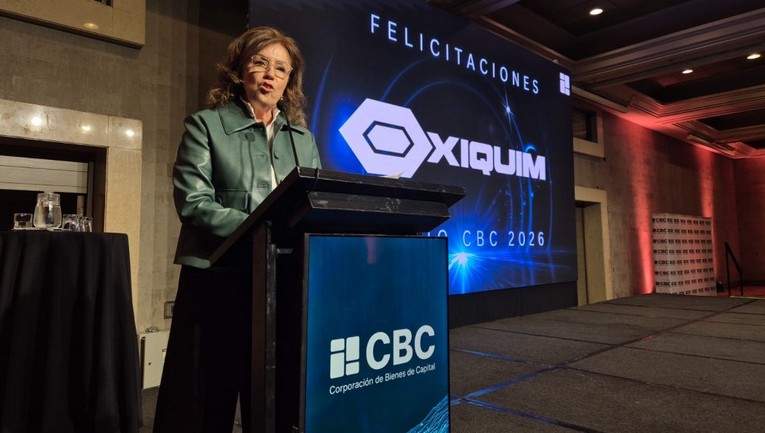
"For Oxiquim, innovation is a fundamental asset for the company's development and a concrete way to respond to our clients' challenges. NEOMIX demonstrates that from the Biobío Region and the other territories where we operate, we can develop our own technology, scale it to an industrial level, and help our clients compete in increasingly demanding international markets," said Cecilia Pardo, general manager of Oxiquim.
Oxiquim received the CBC Award for the second time, a distinction promoted by an organization with more than 60 years of history, now celebrating its third edition. In 2024, the company was recognized for the emission recovery and abatement system implemented at its Quintero Maritime Terminal. This new recognition reaffirms its commitment to developing its own technology and to high-impact innovation that originates from the regions.
The president of the CBC, Enrique Loehnert, highlighted that the awardees "are companies that have demonstrated that operational excellence, technological innovation, and collaboration constitute real corporate advantage. Each awarded project reflects hundreds of professionals, thousands of hours of work, and a culture of excellence, and helps position Chilean companies both domestically and internationally."
The recognition awarded by the Capital Goods Corporation highlights an innovation born from the region's industrial and scientific capabilities, aimed at adding value to one of its main productive sectors.







Comments (0)
No comments yet. Be the first to comment!
Leave a comment