

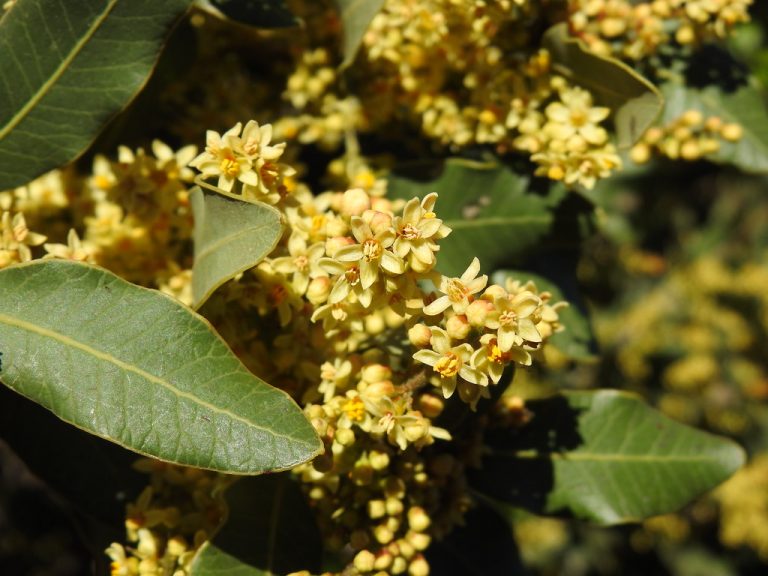
A study conducted by researchers from the Faculty of Forest Sciences and Nature Conservation at the University of Chile identified the different strategies used by three native sclerophyllous forest species to survive periods of water scarcity that affect the central zone of the country each year.
The research focused on the analysis of secondary xylem, the tissue responsible for water transport within trees, in specimens of peumo (Cryptocarya alba), litre (Lithraea caustica), and quillay (Quillaja saponaria) from the Arboretum Antumapu of the University of Chile.
Through microscopic observations, researcher Iván Espinoza evaluated anatomical characteristics related to water conduction, including the size and density of conducting vessels, cell wall thickness, and their potential transport capacity.
The results showed that each species has developed distinct mechanisms to cope with the drought conditions typical of the Chilean Mediterranean climate.
Peumo stands out for prioritizing water transport efficiency. Its conducting vessels have a larger diameter, allowing it to mobilize greater volumes of water within the plant. In contrast, quillay adopts a more conservative strategy, based on smaller and more numerous vessels that reduce the risk of failures in the conduction system during prolonged periods of water stress.
Litre, for its part, showed intermediate characteristics, combining anatomical and physiological attributes that give it flexibility to adapt to scenarios of lower water availability.
Common adaptations facing the same challenge
Despite belonging to different botanical families, the three species share anatomical traits in their vascular system. Among these, simple perforation plates and alternate intervascular pitting stand out, characteristics also observed in species from other Mediterranean regions of the world.
According to the researchers, this similarity corresponds to a process known as evolutionary convergence, through which distantly related organisms develop similar solutions to respond to equivalent environmental conditions.
The authors argue that these adaptations reflect the influence of the Mediterranean climate, marked by rainy winters and extended drought periods during the summer.
The study also highlights the scarcity of research on functional traits of Chilean Mediterranean species, especially compared to other regions of the planet where this type of analysis has been widely developed.
The researchers emphasize that understanding how native species respond to water scarcity is fundamental in a context of climate change and increasing aridification. The central zone of Chile, recognized as one of the five Mediterranean climate regions in the world, currently faces strong pressure on its ecosystems due to decreasing rainfall.
In this scenario, the findings provide new background information to assess the adaptive capacity of sclerophyllous forests and generate conservation and management strategies aimed at strengthening the resilience of these species in the face of future climatic conditions.






Comments (0)
No comments yet. Be the first to comment!
Leave a comment