

The Ñuble Region received a technical mission this week from the +Bosques Project, an initiative executed within the framework of the National Strategy on Climate Change and Vegetational Resources (ENCCRV), implemented by the National Forestry Corporation (CONAF) and the Food and Agriculture Organization of the United Nations (FAO) in Chile.
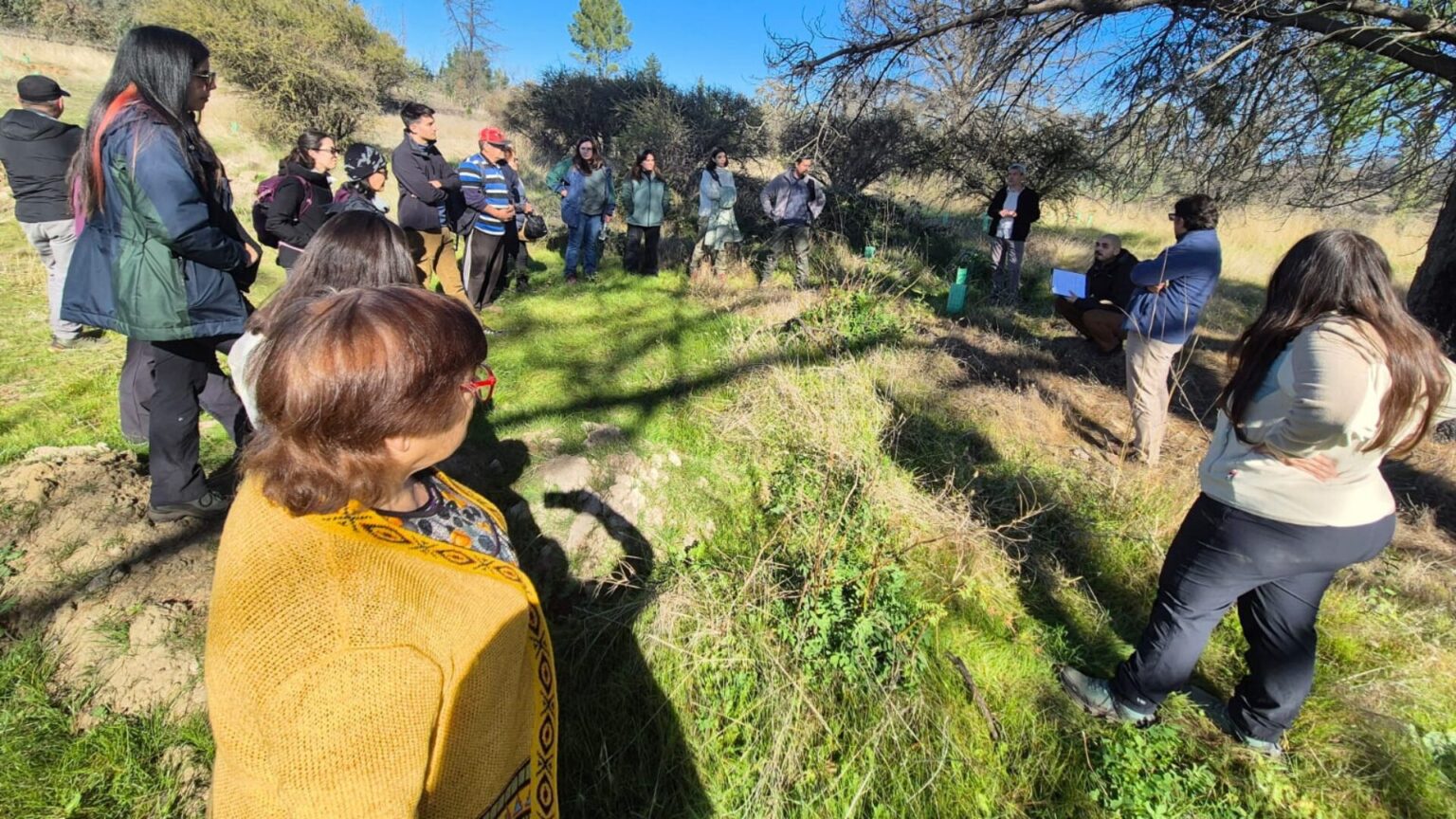
The activity aimed to assess the progress status of the +Bosques Project in the region on the ground, including technical visits to initiatives related to ecological restoration and climate action that have been carried out over the last three years in the communes of Ninhue, Cobquecura, and Quillón.
The delegation was led by the Lead Technical Officer of FAO Rome, Lucio Santos Acuña; the Climate Finance Specialist of FAO Rome and focal point for the Green Climate Fund, Simone Quagquarelli; and the FAO Representative in Chile, Maya Takagi.
During the inaugural session, the delegation learned about the progress status of the +Bosques project in the region, which is at 88% completion, corresponding to a total of 1,508 hectares across 187 awarded properties out of a target of 1,709 hectares planned for the Region until 2027, with an investment of 2,327 million pesos, featuring solutions aimed at creating new forests through afforestation with native species, sustainable management of native forest, ecosystem restoration, and wildfire prevention.
The field deployment included visits to four projects involving exotic vegetation management, native species planting, construction of soil conservation works, and restoration of forests affected by wildfires.
Jessica Melgarejo Soto, head of the Department of Forests and Climate Change of CONAF Ñuble, stated that "these experiences are part of the projects we are executing in the region, which are focused on afforestation with native species on bare soils, thereby increasing vegetation cover and biodiversity; and on the other hand, we have experiences in the gradual conversion of radiata pine and eucalyptus globulus plantations to native species, through the incorporation of characteristic species of the native forests of the Ñuble region."
One of the experiences visited is the project at the Quilico property, in the Peñablanca sector of the Quillón commune, which has been under implementation since last year. Its owner, Carlos Ruíz, stated that "this project allows us to redirect the management of the exotic forest, reverting it to native forest, by planting under the canopy and building check dams to contain gullies on a hill that was heavily eroded after the 2023 fire. It has been a collective effort that has allowed us to advance with the help of consultants, professionals, and the operational teams carrying out these tasks."
Positive Evaluation from FAO
The FAO Representative in Chile, Maya Takagi, highlighted the experiences they were able to see during this tour of Ñuble, "especially due to the methodologies applied for forest restoration after fires, erosion, and intensive land use, so it is very satisfying to verify the demonstrated commitment of the technical teams and the owners of these properties, considering that these are also territories with quite intensive use of natural resources."
For his part, Lucio Santos, Lead Technical Officer of FAO Rome, highlighted two fundamental aspects of the work carried out in the region. "Firstly, the progressive transformation for the recovery of native vegetation has been a very important bet in the search for an integrated approach to wildfire protection management; and likewise, it is worth highlighting the social function of the +Bosques program, which is reflected in these visits, where the owners recognize the impact that native forest recovery has on building social fabric."
Finally, the director of CONAF Ñuble, Domingo González Zúñiga, thanked the deployment of the technical mission, stating that "it represented an opportunity to showcase on the ground the impact of the +Bosques project in the region and highlight the contribution of nature-based solutions in the face of climate change, contributing to ecosystem recovery, biodiversity conservation, and the strengthening of rural territories."


Comments (0)
No comments yet. Be the first to comment!
Leave a comment