

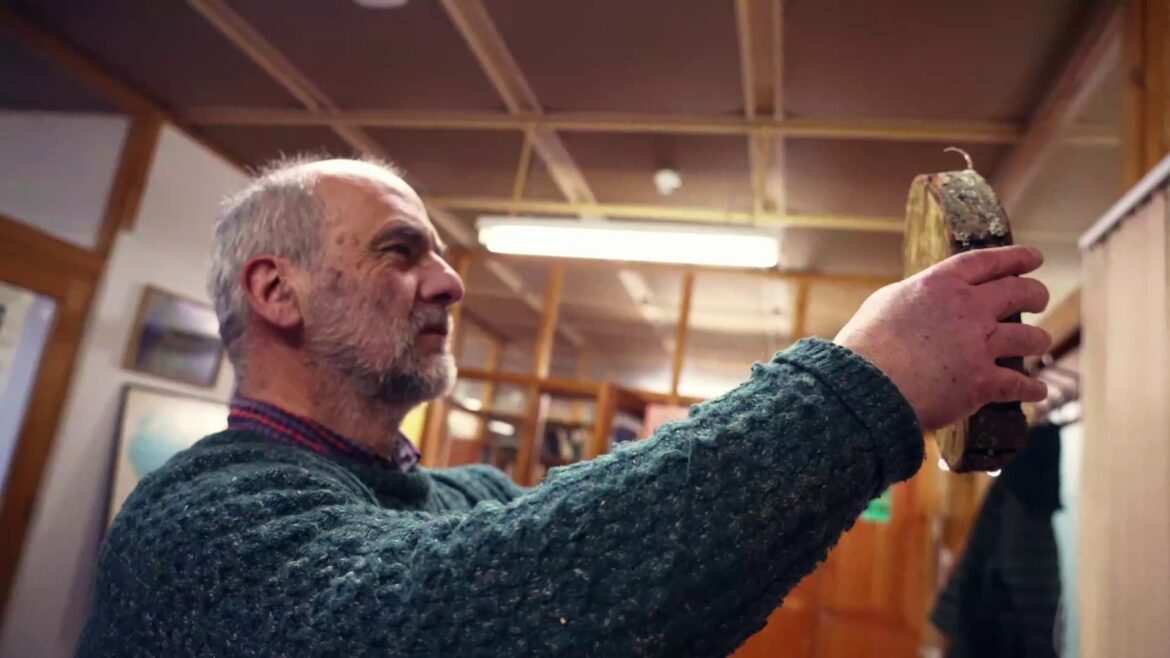
Native forests and plantations with native species have been the focus of Dr. Pablo Donoso H.'s research for 30 years. Convinced of the urgency to promote productive, resilient forests that provide multiple ecosystem services, the academic from the Faculty of Forest Sciences and Natural Resources at UACh is launching in 2026 the IDeA I+D 2026 project titled "Climate-Smart Forestry: Mixed Forest Plantations to Increase Timber Production, Diversity, and Carbon Retention and Capture."
The project focuses on mixed plantations, i.e., those composed of more than one species. In this case, it primarily involves native species such as roble (Nothofagus obliqua), raulí (Nothofagus alpina), and coihue (Nothofagus dombeyi), although some plantations also include other native species as well as the exotic species known in Chile as Oregon pine (Pseudotsuga menziesii).
"With colleague Celso Navarro from the Catholic University of Temuco, we have been taking various steps to promote plantations with native species that are increasingly complex in structure and composition. The latest is this project addressing climate-smart forestry, a concept that involves producing quality timber for long-term uses in forests with high adaptive capacity and high levels of carbon sequestration," explained the UACh academic.
According to him, the idea is that in mixed plantations, a proper combination can allow for better growth of at least some species compared to monospecific plantations, as well as overall growth through the use of different niches by the species in a space where they complement each other. The key to this approach lies in combining species with different autoecologies, i.e., they have distinct growth characteristics and shade tolerance.
"In that mixture, some species, by providing a certain amount of shade to others, allow them to grow more. On the other hand, since they occupy different niches in the forest, both aboveground and in the soil, these species complement or can complement each other," stated the researcher from the Faculty of Forest Sciences and Natural Resources at UACh, who noted that the ultimate goal is to achieve more productive forests.
At the end of the study, Dr. Donoso added, "we want to identify which species and under what conditions, with what types of mixtures and forest densities, the best growth of species and forests is achieved."
"Climate-Smart Forestry: Mixed Forest Plantations to Increase Timber Production, Diversity, and Carbon Retention and Capture" is one of four projects recently awarded to the Universidad Austral de Chile in the IDeA I+D 2026 Competition by the National Agency for Research and Development (ANID). This is a highly competitive competition, as 871 initiatives were submitted nationwide and 102 were awarded.






Comments (0)
No comments yet. Be the first to comment!
Leave a comment