

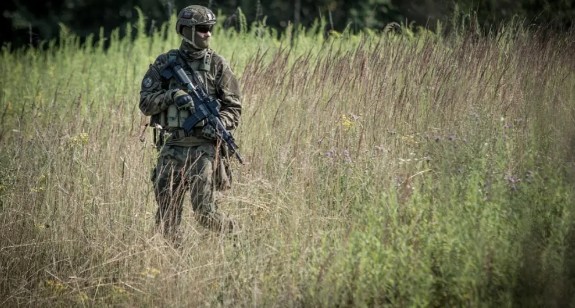
The decrease in rural violence incidents recorded during the first half of 2026 has reignited the debate over the future of the constitutional state of emergency in effect in the Macrozona Sur.
Although Congress approved a new 30-day extension for the La Araucanía region and the provinces of Arauco and Biobío, it was the figures presented by the Executive and the evaluation of Biobío trade associations that shaped the discussion.
During the proceedings in the Chamber of Deputies, the Minister Secretary-General of the Presidency, José García Ruminot, reported that between January 1 and June 28 of this year, rural violence events decreased by 15% compared to the same period in 2025.
Compared to 2021, before the implementation of the state of emergency, the reduction reaches 82%.
The data also show a 16% decrease in arson attacks, 72% in burned properties, 71% in roadblocks, and 18% in usurpations.
However, the Government warned that incidents involving firearms increased by 16% compared to last year, a situation that was one of the arguments for maintaining the extraordinary measure.
In this context, the Chamber approved the extension with 104 votes in favor, 14 against, and 12 abstentions, a decision later ratified by the Senate with 34 votes in favor, two against, and one abstention, extending the state of emergency for another 30 days.
"CRIMES HAVE DECREASED"
The manager of the Association of Forestry Contractors A.G. (Acoforag), René Muñoz, acknowledged that the figures show an objective reduction in violence, although he called for interpreting them considering the reality that still exists in part of the province of Arauco.
"Objectively, there is a decrease in violence in the areas declared under a state of emergency. But that decrease is also marked because in some sectors of the province, work simply does not take place, and therefore, attacks do not occur either," he stated.
The trade representative argued that the state of emergency has been useful in containing violence, but warned that it cannot become a permanent policy.
"The state of emergency is, by definition, an exceptional measure and cannot become normal. We must move towards another stage," he noted.
In that regard, he raised the need to strengthen the legal framework regulating the actions of the Armed Forces, particularly through the Rules for the Use of Force (RUF), so that they can assume a more active role in complex sectors and help recover territories where violent groups still persist.
From Biobío, one of the trade associations that has closely followed the evolution of the conflict is the National Federation of Forest Transport Unions (Fenasitransfor). Its president, Heriberto López, stated that the results are noticeable for those who work daily on the routes of the macrozona sur.
"We have no doubt that since the current state of emergency was implemented, rural violence crimes against cargo vehicles, especially in the forestry area, have decreased," he assured.
The leader recalled that the implementation of this measure was a historical demand from the sector, even driven by transport worker mobilizations to highlight the situation faced by forestry drivers.
However, he argued that the reduction in attacks should not be interpreted as the definitive end of the conflict.
"What we want to conclude is whether this decrease is due to the constant presence of military and police forces or to the work being done by the justice system. The important thing is that violence continues to decrease and that agreements exist," he indicated.
López added that the conflict has historical roots and, for that very reason, requires solutions that transcend government terms.
"What we hope is that agreements are sought, that there is dialogue and understanding. That will help much more to end this violence and will allow those of us who work in the area to do so safely," he emphasized.
DEBATE IN CONGRESS
During the parliamentary discussion, legislators from different sectors agreed to support the continuation of the state of emergency as long as armed groups continue to operate in the macrozona sur.
At the same time, they called on the Executive to develop a long-term strategy to move towards a gradual normalization of the area without relying on monthly renewals.
Source:La Tribuna




Comments (0)
No comments yet. Be the first to comment!
Leave a comment