

The United States announced the application of new tariffs on 60 of its main trading partners, including Chile, as part of a policy aimed at strengthening restrictions on imports associated with forced labor. For the country, the surcharge will be 12.5% and will affect certain products not falling within exempt categories.
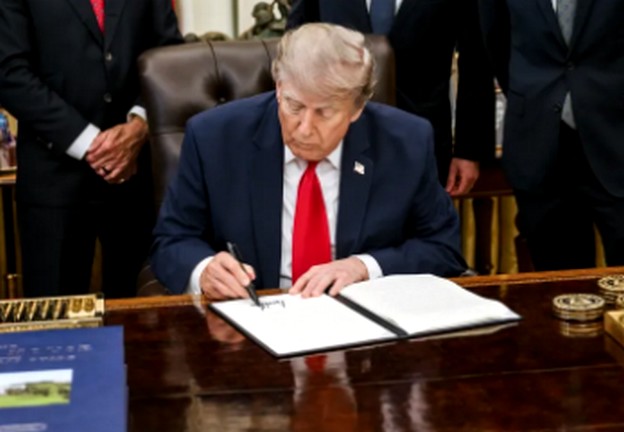
The measure was confirmed by the Office of the United States Trade Representative (USTR) and is part of a new phase of trade policy driven by the administration of President Donald Trump, which seeks to require its trading partners to meet standards equivalent to those established by U.S. legislation on forced labor.
The United States Trade Representative, Jamieson Greer, stated that the North American country has maintained a ban on importing products made with forced labor for nearly a century and now seeks for other economies to adopt similar mechanisms.
Chile Questions the Decision
From the Undersecretariat of International Economic Relations (Subrei), it was stated that the application of the measure does not align with the technical, legal, and political background presented by Chile during the review process conducted by U.S. authorities.
The Undersecretary of International Economic Relations, Paula Estévez, affirmed that Chile has a solid labor institutional framework and a robust regulatory system to prevent and eradicate forced labor, supported by the international conventions signed by the country.
The authority further specified that the U.S. resolution does not claim that Chile exports goods produced through forced labor nor identifies specific Chilean products associated with this practice. According to her explanation, the decision responds to differences in the evaluation carried out by the United States regarding the regulatory mechanisms considered effective to prevent such imports.
Despite this, the Government emphasized that the measure is cross-cutting in nature and affects a total of 60 economies, so it does not constitute an action specifically targeting Chile.
How the Tariffs Will Be Applied
The new scheme includes tariffs of 10% and 12.5%, depending on the policies implemented by each country regarding the prohibition of forced labor in supply chains.
The 10% tariff will be applied to countries that already have specific prohibitions, have made commitments through reciprocal trade agreements, or maintain partial regimes to restrict imports of products made under these conditions. Among them are Argentina, Canada, Mexico, India, the United Kingdom, and Bangladesh, among others.
Meanwhile, Chile is part of the group of economies that will be subject to a 12.5% surcharge, along with other countries that, according to the U.S. evaluation, do not fully meet the criteria established by the USTR.
The 60 affected economies represent 99.4% of total U.S. imports, reflecting the broad scope of the measure.
Some Products Will Be Exempt
The U.S. trade authority reported that certain goods will be excluded from the new tariff. Among them are raw materials whose tariff application could cause domestic supply issues in the United States, products capable of causing significant economic disruptions, and those that cannot be produced locally in sufficient quantities or at competitive prices.
Copper is among the exempt products, a relevant piece of news for Chile considering its status as the world's leading exporter of the mineral.
Likewise, some products from certain countries benefiting from specific agreements or commitments on labor matters will also be excluded from paying these surcharges.
Impact and Negotiations
The announcement comes as the term of the general 10% tariff previously established by the Trump administration was expiring, setting a new chapter in U.S. trade strategy.
In recent weeks, representatives of the Chilean government and the private sector participated in meetings held in Washington to present the country's background to the USTR and defend compliance with national labor standards.
One of the arguments raised by Chile points to the strategic importance of the Free Trade Agreement in force with the United States since 2004 and the complementary nature of several Chilean exports in the North American market. An example is salmon, whose production is virtually non-existent in the United States, making Chile a key supplier for that market.
Although the measure does not directly target Chilean products made with forced labor, the imposition of the 12.5% tariff opens a new scenario for trade relations between the two countries and could lead to future negotiations aimed at reviewing the regulatory mechanisms recognized by the U.S. authority.





Comments (0)
No comments yet. Be the first to comment!
Leave a comment